

A Comprehensive Guide to Parts, Labor, and Out-of-Warranty Options for US Owners
Facing a Tesla Model 3 battery issue outside of warranty can be daunting. In 2026, the typical Tesla Model 3 battery replacement cost for out-of-warranty vehicles in the US ranges from approximately $11,000 to $18,000, encompassing both the battery pack itself and the specialized labor required for installation. This guide delves into a detailed breakdown of these costs, exploring various repair options, from official Tesla Service Centers to independent EV specialists, to help you make an informed decision.
Essential Insights on Tesla Model 3 Battery Replacement Costs
- Total Cost Range: Expect to pay between $11,000 and $18,000 for a full Tesla Model 3 battery replacement out of warranty in 2026, depending on your model variant and chosen repair path.
- Parts Dominate Expense: The battery pack itself accounts for the majority of the cost, typically ranging from $7,000 to $15,000.
- Third-Party Savings: Independent EV repair shops often offer more affordable solutions, including refurbished packs or module-level repairs, which can significantly reduce your total expense compared to official Tesla service.
Understanding Your Tesla Model 3 Battery Pack: Variants and Capacities
The Tesla Model 3, a prominent electric vehicle in the US market, is offered with different battery pack sizes and chemistries, directly influencing its performance, range, and naturally, its replacement cost. Identifying your Model 3 variant is the first step in estimating potential repair expenses.
Popular Model 3 Variants in the US Market
- Standard Range / Rear-Wheel Drive (SR/RWD): These models typically come with a battery pack around 50-55 kWh. Newer versions often utilize Lithium Iron Phosphate (LFP) chemistry, known for its robustness and tolerance for frequent 100% charging.
- Long Range All-Wheel Drive (LR AWD): Equipped with a larger battery pack, usually in the 75-82 kWh range. These packs generally use nickel-based chemistry, offering extended driving range.
- Performance All-Wheel Drive: Similar to the Long Range, the Performance variant also features a high-capacity battery pack (around 75-82 kWh), optimized for maximum power output and acceleration.
The specific capacity and chemistry of your battery pack are crucial, as larger and more advanced packs generally entail higher replacement costs. For instance, LFP batteries, while robust, may have different pricing structures compared to nickel-based counterparts.
Detailed Cost Breakdown: Tesla Model 3 Battery Replacement Costs in 2026
The total cost for a Tesla Model 3 battery replacement out of warranty is a substantial investment, primarily divided between the cost of the battery pack (parts) and the labor involved in its installation and calibration. These figures are based on 2026 market data in the US.
How Much Does a Tesla Model 3 Battery Cost? Parts vs. Labor Analysis
Here’s an estimated breakdown for replacing a high-voltage battery in a Tesla Model 3, illustrating where the money goes:
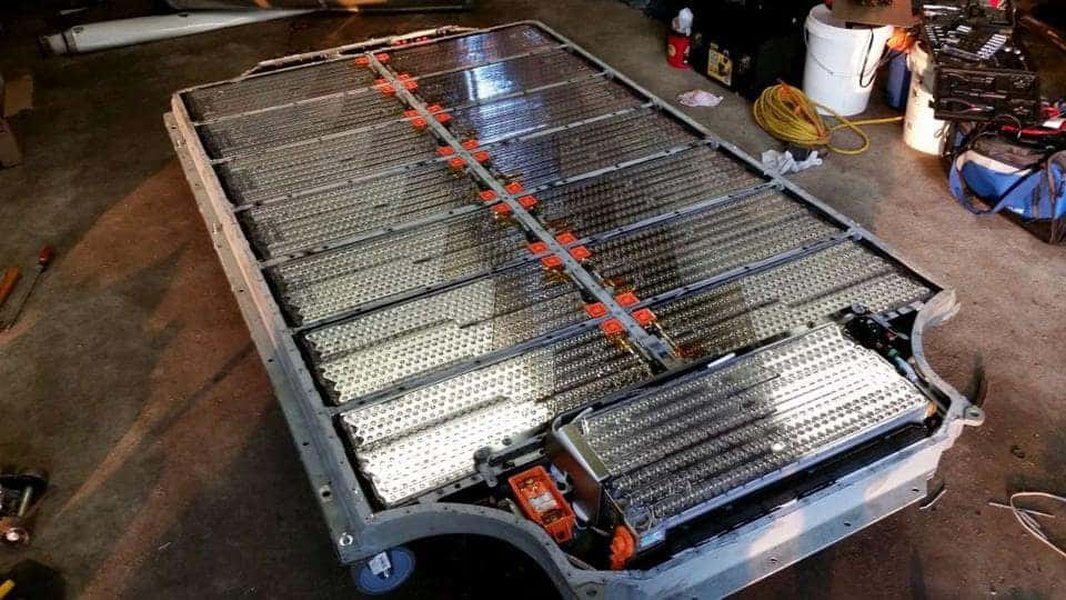
A Tesla Model 3 battery pack being prepared for removal.
Battery Pack (Parts Only)
- Standard Range (LFP, ~50-55 kWh): Estimates for the bare battery pack range from $7,000 to $10,000.
- Long Range / Performance (~75-82 kWh): For these higher-capacity packs, the cost for the part alone typically falls between $12,000 and $15,000.
These prices are for new or Tesla-remanufactured OEM (Original Equipment Manufacturer) units, and they can fluctuate based on supply, demand, and regional availability within the US. Tesla generally does not publicly list these specific component prices.
Labor Charges
Replacing a high-voltage battery is a complex and time-consuming procedure requiring specialized tools and certified technicians. Labor costs are a significant factor:
- Hourly Rates: Tesla Service Centers in the US typically charge between $175 and $210 per hour for labor. Independent shops may offer slightly lower rates.
- Job Duration: A straightforward battery swap can take anywhere from 3 to 8 hours. However, if complications arise (e.g., corrosion, damaged connectors, or extensive diagnostics), the job could extend beyond 10 hours.
- Total Labor Estimate: Based on these factors, expect labor costs to range from $1,000 to $3,000.
Miscellaneous Parts and Diagnostics
Beyond the main battery pack and core labor, other expenses can add to the total bill:
- Ancillary Parts: New connectors, seals, coolant, and other small components might be needed, adding an estimated $100 to $300.
- Diagnostics and Programming: Thorough diagnostics are essential to correctly identify the issue, and post-installation software calibration is critical for proper integration. This can add $250 to $500.
Considering all these elements, the "out the door" Tesla Model 3 battery replacement cost 2026 can indeed reach the $11,000 to $18,000 range for a comprehensive repair at an official service center.
Official Tesla Service Center vs. Third-Party Repair Shops: A Cost Comparison
When facing an out-of-warranty battery replacement, US Model 3 owners generally have two main avenues: utilizing a Tesla Service Center or seeking assistance from an independent EV specialist. Each option presents distinct advantages and cost implications.
Tesla Service Center Pricing and Offerings
Official Tesla Service Centers provide the most direct route, guaranteeing genuine new or Tesla-remanufactured battery packs. The work is performed by factory-trained technicians using proprietary tools and software, ensuring optimal compatibility and performance. They typically offer a warranty on replacement parts, often 4 years/50,000 miles.
- New OEM Battery Pack: This is generally the most expensive option, with costs for the part alone potentially reaching $14,000-$15,000 for Long Range models.
- Remanufactured Battery Pack: If available, Tesla may offer a remanufactured unit, which can be slightly less costly than a brand-new one, sometimes starting around $9,500 for the part. Availability can vary.
- Total Installed Cost: With labor and miscellaneous fees, a full replacement at a Tesla Service Center often totals between $14,000 and $18,000+.
Independent EV Repair Shops: Affordable Alternatives
For many Model 3 owners, especially those with out-of-warranty vehicles, independent EV repair specialists offer more economical and flexible solutions. Reputable American shops like Gruber Motor Company, Electrified Garage, Recell, GreenTec Auto, and EV's Republic specialize in Tesla battery services across various US regions.
- Refurbished Battery Packs: These shops often source, test, and install refurbished battery packs. Costs for these can range from $6,500 to $14,500 installed, depending on the pack size and specific shop.
- Module-Level Repair: A significant advantage of third-party specialists is their capability to perform module-level repairs. Instead of replacing the entire pack, they can diagnose and replace only the faulty modules, drastically reducing costs. This can range from $3,000 to $7,000.
- Used Battery Packs: Some third-party providers might offer tested used packs from salvaged vehicles, which can be the lowest upfront cost option (e.g., $5,000-$10,000 installed), though warranties might be shorter or less comprehensive.
- Lower Labor Rates: Independent shops may have slightly lower hourly labor rates compared to Tesla, further contributing to savings.

A technician performing diagnostics on a Tesla battery pack at an independent service center.
Comparison of Tesla Model 3 Battery Replacement Options
Choosing a third-party specialist requires careful vetting. Ensure they have extensive experience with Teslas, provide transparent diagnostics, and offer a solid warranty on their work and parts. Always get multiple quotes to compare.
How Tesla Warranty Coverage Affects Replacement Costs
The Tesla Model 3’s Battery and Drive Unit Limited Warranty is a critical factor in determining whether you'll bear the full cost of a battery replacement. Understanding its terms is paramount for US owners.
Standard Warranty Provisions
Tesla typically covers its Model 3 batteries against defects and significant degradation for a period of 8 years or 100,000 to 120,000 miles, whichever comes first (mileage varies by model variant):
- Standard Range: 8 years or 100,000 miles.
- Long Range / Performance: 8 years or 120,000 miles.
A key condition for warranty coverage is that the battery must retain at least 70% of its original capacity during the warranty period. If your battery falls below this threshold or experiences a manufacturing defect, Tesla should replace or repair it at no cost to you.
Post-Warranty Options and Considerations
Once your Model 3 is outside its original warranty period, you are fully responsible for the battery replacement cost. However, Tesla has introduced options like the Battery Extended Service Agreement (ESA) for eligible Model 3 and Y vehicles.
- Battery ESA: This optional agreement can extend coverage by an additional 2 years or 30,000 miles after the original warranty expires. It involves a premium payment and a per-visit deductible (e.g., $500). Importantly, it must be purchased while the original warranty is still active.
- Insurance Claims: If the battery failure is due to accidental damage (e.g., road debris impact, collision), your comprehensive auto insurance policy might cover the repair or replacement, subject to your deductible. Documenting the cause of damage is crucial here.
For more in-depth information, consider exploring our guide on Tesla Battery Warranty Coverage.
Is Battery Module Replacement Cheaper Than a Full Pack Replacement for the Model 3?
Yes, in many cases, battery module replacement is significantly cheaper than a full battery pack replacement for a Tesla Model 3. This option is particularly valuable for out-of-warranty vehicles where the issue is localized rather than indicative of widespread degradation.
Understanding Module-Level Repair
A Tesla battery pack is composed of several modules, each containing multiple individual battery cells. Often, only one or a few modules fail or degrade prematurely, rather than the entire pack. Independent EV repair shops possess the expertise and equipment to:
- Diagnose Specific Faults: Pinpoint the exact faulty module or even specific cells within a module.
- Replace Components: Carefully remove and replace only the compromised module(s) with healthy units from donor packs or reconditioned modules.
- Calibrate: Rebalance and calibrate the battery management system (BMS) to ensure the newly integrated module(s) function seamlessly with the rest of the pack.

An individual Tesla Model 3 battery module with wiring.
Cost Savings and Limitations
While a full pack replacement at a Tesla Service Center can cost $14,000-$18,000+, a module-level repair from a third-party specialist typically ranges from $3,000 to $7,000. This is a fraction of the cost and makes battery repair a much more economically viable option for many owners.
However, this approach is only feasible if:
- The failure is isolated to a few modules.
- There isn't widespread degradation across the entire pack.
- There is no significant physical damage (e.g., from a collision) to the entire pack housing or multiple modules.
Tesla Service Centers generally prefer to replace the entire sealed battery pack unit, which is why third-party specialists are the go-to for module-level repairs.
How Battery Health Affects the Decision to Repair or Replace
Evaluating the overall health of your Tesla Model 3 battery is paramount when deciding between repair, replacement, or even selling the vehicle. Battery health directly impacts range, performance, and charging capabilities.
Key Indicators of Battery Health
- Capacity Retention: This is typically expressed as a percentage of the original usable capacity. Tesla's warranty often covers issues if capacity drops below 70%. Many owners monitor this via the Tesla app or third-party diagnostic tools.
- Range Loss: A significant and consistent reduction in driving range compared to initial estimates is a primary indicator of degradation.
- Charging Behavior: Slower charging speeds, premature charging cut-offs, or an inability to charge to 100% (for LFP batteries) or desired daily limits can signal battery issues.
- Warning Messages: The vehicle's display may show specific warning messages or diagnostic codes related to the high-voltage battery system.
Repair vs. Replace Decisions Based on Health
- Minor Issues (Single Fault): If diagnostics reveal a single faulty module, a bad sensor, or a coolant leak impacting battery performance, a targeted component or module repair is often the most cost-effective solution. This assumes the overall pack health is still strong.
- Moderate Degradation (Localized): If a few modules show significant degradation but the rest of the pack is healthy, a third-party refurbished pack or multiple module replacements can restore much of the original range and performance at a lower cost than a new OEM pack.
- Severe, Widespread Degradation: When the entire battery pack exhibits significant capacity loss (e.g., below 70% or 60%) or experiences widespread cell failures, a full pack replacement (new OEM or a high-quality refurbished unit) becomes more necessary to restore the vehicle's usability and value.
To further understand battery assessment, refer to our resource on Used EV Battery Inspection Checklist.
Strategies for Reducing Tesla Model 3 Battery Replacement Costs
If you're facing an out-of-warranty battery replacement for your Tesla Model 3, several strategies can help you manage or significantly reduce the financial burden. The goal is to find the cheapest way to replace Tesla Model 3 battery while ensuring quality and reliability.
Practical Tips for US Owners
- Get Multiple Quotes: Never settle for the first estimate. Obtain detailed quotes from both an official Tesla Service Center and at least one or two reputable independent EV specialists (e.g., Recell, GreenTec Auto, EV’s Republic, Electrified Garage) in your area. Compare not just the total cost, but also the breakdown of parts, labor, warranty terms, and the proposed solution (new, remanufactured, refurbished, or module repair).
- Explore Third-Party Specialists: These independent shops are often your best bet for significant savings. They specialize in various repair options not typically offered by Tesla, such as module-level repair or installing refurbished battery packs. Verify their experience with Teslas and check customer reviews.
- Inquire About Module-Level Repair: If diagnostics indicate a localized issue, specifically ask if module replacement is a viable option. This can save thousands compared to a full pack swap.
- Consider Refurbished or Tested Used Packs: Many third-party providers offer refurbished packs that have been rigorously tested and come with their own warranty (though typically shorter than OEM). Used packs from reputable dismantlers can be even cheaper but require careful inspection and a clear understanding of their history and warranty.
- Check for Insurance Coverage: If the battery damage resulted from an impact, road debris, or other accidental events, contact your comprehensive auto insurance provider. They might cover the repair or replacement cost, minus your deductible.
- Timing and Availability: Sometimes, waiting for better parts availability or scheduling the repair during a less busy period for a shop might yield a more favorable quote.
- Negotiate if Just Out of Warranty: If your vehicle is just slightly outside the warranty period or mileage, it might be worth politely inquiring with Tesla if any "goodwill" assistance or consideration is possible, especially if you have a strong service history with them.
By actively pursuing these options, you can navigate the repair process more effectively and potentially save a considerable amount on your Tesla Model 3 out of warranty battery repair.
Is It Worth Replacing Your Tesla Model 3 Battery Out of Warranty?
This is arguably the most critical question for many Model 3 owners facing a significant repair bill. The decision to replace the battery versus selling the car depends on several financial and personal factors.
Making the Financial Justification
- Vehicle's Current Value: Research the private-party and trade-in value of your Model 3 in its current, working condition (assuming the battery issue hasn't rendered it inoperable). Compare the estimated total replacement cost to this value. As a general rule, if the repair cost exceeds 50% of the car's market value post-repair, it becomes harder to justify economically.
- Your Long-Term Plans: Do you intend to keep your Model 3 for several more years (e.g., 3-5+ years)? If so, a new or thoroughly refurbished battery can significantly extend the vehicle's lifespan, restoring its original range and performance, effectively making it feel like a newer car. This investment might be worthwhile to avoid a new car payment and depreciation.
- Overall Vehicle Condition: Assess the rest of your car. Is it in excellent condition otherwise, with low maintenance needs, or are other major components nearing the end of their service life? A battery replacement makes more sense for a well-maintained vehicle.
- Availability of Affordable Options: With the rise of reputable third-party repair options (refurbished packs, module repair), the financial burden of battery replacement has become more manageable. If you can secure a cost-effective and reliable repair, it strengthens the economic viability of keeping the car.
Alternative: Selling the Car As-Is
If the repair costs are prohibitive, or you were already considering an upgrade, selling your Model 3 with a failed or failing battery is an option. You'll likely receive less for it, but it avoids the repair bill and allows you to put that capital toward a new or different vehicle. Some dealerships, online car buyers, or even EV specialists might purchase cars with battery issues for parts or repair.
Ultimately, the decision balances personal preference, financial capacity, and the specific circumstances of your vehicle's condition. For many who enjoy their Model 3 and wish to avoid the immediate financial impact of a new vehicle purchase, a strategic battery replacement remains a compelling choice.

Conceptual diagram illustrating the thermal behavior of a Tesla Model 3 battery during operation.
Frequently Asked Questions (FAQ)
What is the average Tesla Model 3 battery replacement cost in 2026?
In 2026, the average cost for a full Tesla Model 3 battery replacement out of warranty in the US ranges from $11,000 to $18,000. This includes the battery pack and associated labor. Third-party options can sometimes reduce this cost significantly.
How much does Tesla Model 3 battery cost as a part?
The battery pack itself is the most expensive component. For a Standard Range LFP pack, expect $7,000-$10,000. For Long Range or Performance nickel-based packs, the part alone can cost $12,000-$15,000 from Tesla or reputable suppliers.
Does Tesla replace batteries for free under warranty?
Yes, Tesla replaces batteries for free if the failure falls within the 8-year/100,000-120,000 mile warranty period and the battery retains less than 70% of its original capacity due to defect or degradation.
What is the cheapest way to replace a Tesla Model 3 battery?
The cheapest option is often a module-level repair or installing a refurbished battery pack from a reputable third-party EV specialist. Module repairs can cost $3,000-$7,000, while refurbished packs typically range from $8,000-$15,000 installed.
How long do Tesla Model 3 batteries typically last?
Tesla Model 3 batteries are designed for longevity, often lasting well beyond their 8-year warranty, with many retaining over 85% capacity after 100,000 miles. Expected lifespan can reach 300,000-500,000 miles or 10-20 years with proper care.
Can I replace just a single module in my Tesla Model 3 battery?
Yes, if the battery fault is isolated to one or a few modules, specialized third-party shops can diagnose and replace only the faulty modules. This is a much more cost-effective solution than replacing the entire battery pack.
Conclusion
Navigating an out-of-warranty Tesla Model 3 battery replacement can be a significant financial decision for US owners. In 2026, costs typically range from $11,000 to $18,000, with the battery pack itself accounting for the majority of the expense, and labor adding $1,000 to $3,000. While official Tesla Service Centers offer OEM parts and expertise, independent EV specialists present more affordable alternatives through refurbished packs, module-level repairs, and competitive labor rates. Understanding your vehicle's specific battery variant, seeking multiple quotes, and considering the overall health and remaining value of your Model 3 are crucial steps in making the most informed and cost-effective decision. For many, choosing a strategic repair path can extend the life of their beloved EV without the immediate need for a new vehicle purchase.
