

Spot the crucial warning signs, understand what they mean, and protect your hybrid's longevity.
- Decreased Fuel Economy & Warning Lights: The most immediate indicators of a failing hybrid battery are a noticeable drop in your car's MPG and dashboard warning lights such as "Check Hybrid System" or the "red triangle of death."
- Performance Loss & Engine Overwork: You'll experience reduced acceleration and sluggishness, compelling your gasoline engine to run more frequently and louder, particularly at low speeds where electric assist should dominate.
- Erratic Behavior & Diagnostic Codes: Unstable battery charge displays (yo-yo effect) and specific OBD2 error codes like P0A80 signal internal cell imbalance and degradation, requiring professional diagnosis to confirm the extent of the issue.
Hybrid vehicles are celebrated for their fuel efficiency and reduced emissions, but like all automotive components, their high-voltage battery packs have a finite lifespan. Recognizing hybrid battery failure symptoms early is paramount to preventing unexpected breakdowns and costly repairs. This comprehensive guide is designed for both first-time hybrid owners and seasoned drivers, offering a detailed roadmap to identify the top warning signs of a dying hybrid battery, understand their causes, and know the crucial steps to take next. Our focus is to empower you to catch these issues before they leave you stranded, ensuring your hybrid continues to serve you reliably on American roads.
Decoding the Whisper: What are the First Signs of a Dying Hybrid Battery?
A failing hybrid battery rarely gives up without a fight. Instead, it offers a series of progressive indicators, often starting subtly and escalating over time. Paying close attention to your vehicle's performance and dashboard alerts can save you significant hassle and expense. The earliest and most common signs typically involve a noticeable drop in fuel efficiency, unusual fluctuations in the battery charge indicator on your dashboard, and the internal combustion engine running more frequently than usual. You might also notice reduced acceleration and a general feeling of sluggishness from your vehicle.
The Top 10 Hybrid Battery Failure Symptoms to Watch For
Here’s a breakdown of the most common and critical signs that your hybrid battery may be nearing the end of its life, ranked from the most obvious to more subtle indicators:
1. Dashboard Warning Lights: Your Car's SOS Signal
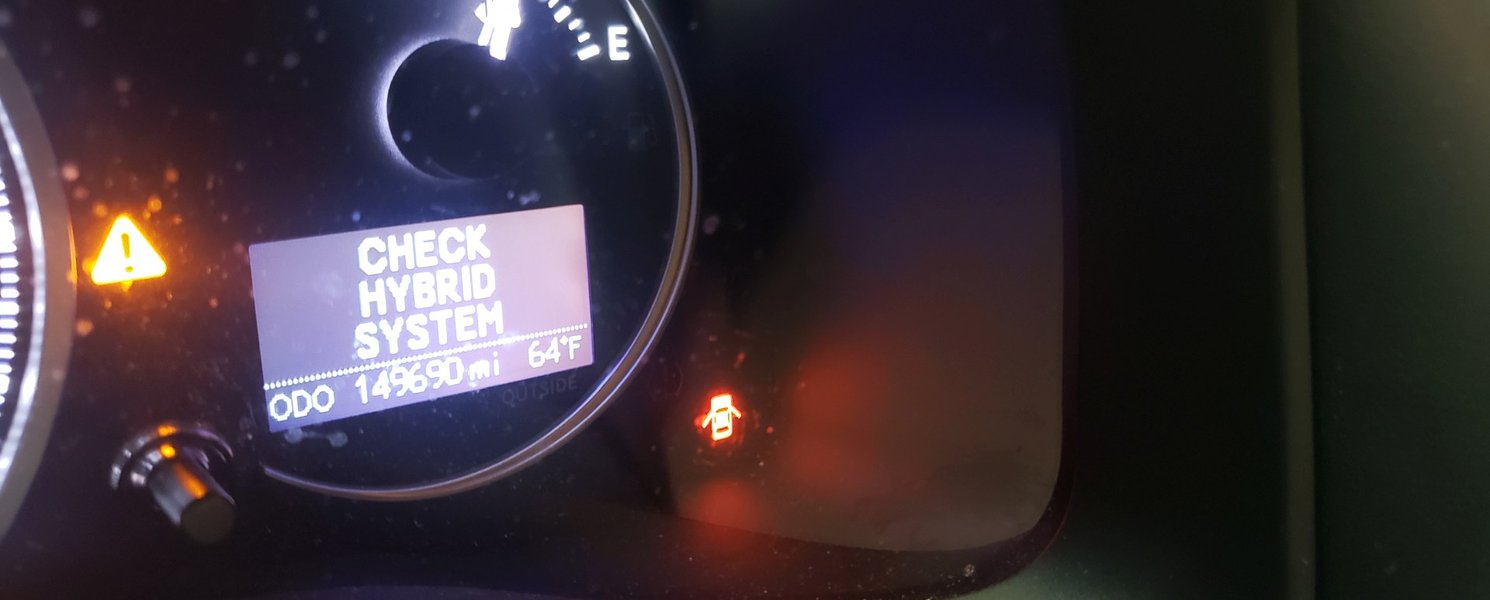
The most direct and urgent indicator is often a specialized warning light on your dashboard. This could be a "Check Hybrid System" message, a battery symbol with an exclamation mark, or the infamous "red triangle of death" prevalent in Toyota Prius models. These lights are triggered when your car's Battery Control Module (BCM) detects a significant issue, such as cell imbalance, voltage discrepancies, or overheating within the NiMH battery pack or lithium-ion cells.
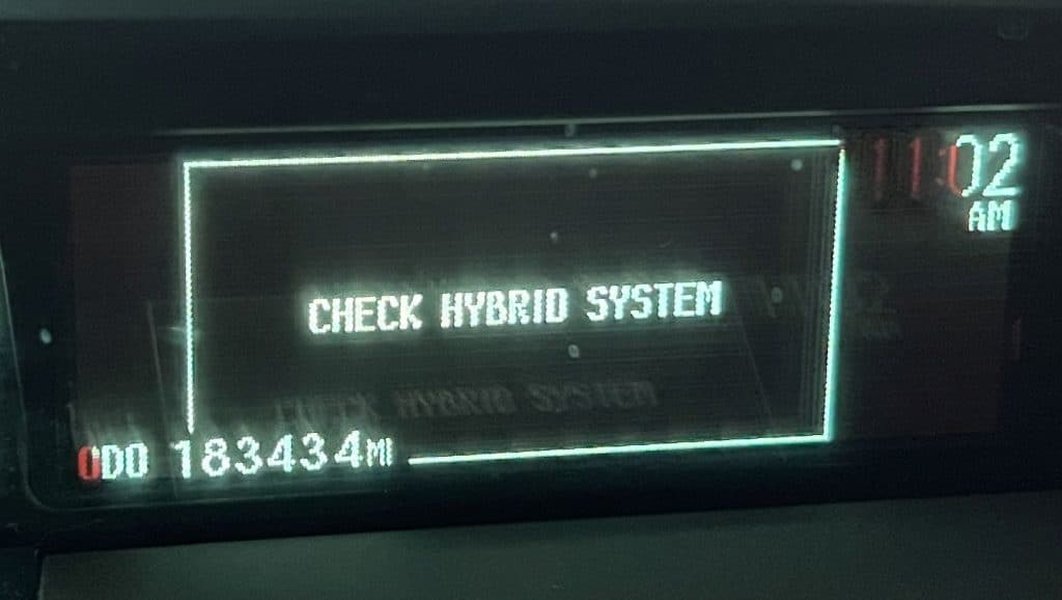
A typical "Check Hybrid System" warning light indicating a potential issue with the hybrid battery.
2. Decreased Fuel Economy (MPG Drop): The Hybrid's Promise Fades
One of the primary reasons to own a hybrid is its superior fuel economy. If you observe a sudden and sustained drop in your miles per gallon (MPG) without any changes in your driving habits, it's a strong indicator that the hybrid battery isn't efficiently assisting the gasoline engine. A healthy hybrid battery allows the internal combustion engine (ICE) to shut off more frequently or run at lower loads. When the battery's State of Health (SOH) declines, the ICE has to work harder, consuming more fuel and directly impacting your wallet.
3. Gasoline Engine Running More Frequently: The Unnatural Rattle
A properly functioning hybrid seamlessly switches between electric and gasoline power. If you notice your gasoline engine engaging more often, running for longer durations, or unexpectedly kicking on at low speeds where electric power typically dominates, it signifies that the battery is struggling to provide adequate power. This symptom is particularly noticeable in stop-and-go city driving.
4. Reduced Acceleration and Power: Feeling Sluggish
Hybrids are known for their immediate torque delivery from the electric motor, providing brisk acceleration. If your vehicle feels sluggish, hesitates when accelerating, or struggles to climb hills, it suggests that the battery cannot deliver the necessary power to the electric motor. This performance degradation often stems from weakened battery cells that can't discharge sufficient current.
5. Erratic Battery Charge Display: The "Yo-Yo" Effect
Keep a close eye on your hybrid's battery charge indicator. If it jumps erratically from full to empty, never seems to reach a full charge, or depletes rapidly after charging, it's a clear sign of internal problems like cell imbalance. This "yo-yo" behavior indicates that certain modules within the battery pack are failing to hold a stable charge, making the overall battery unreliable.
6. Strange Noises from the Battery Area: A Symphony of Trouble
Unusual sounds emanating from the rear of your car, where the battery is typically located, can be a subtle yet crucial warning. Listen for persistent buzzing, clicking, whining, or a cooling fan that runs constantly and louder than usual. A failing battery generates excess heat due to internal resistance in degrading cells, forcing the cooling system to work overtime to prevent damage.
7. Inability to Hold Charge Overnight: The Morning Surprise
If you park your hybrid with a seemingly decent battery charge, only to find it significantly depleted the next morning, it indicates a severe issue with the battery's ability to retain its charge. This rapid self-discharge suggests advanced cell degradation or internal leakage within the battery pack, signifying impending failure.
8. Reduced Electric-Only Operation or "EV Mode" Failure: Losing Your Green Edge
Many hybrids can operate solely on electric power for short distances or at low speeds. If you notice that your electric-only range has drastically decreased or that your car rarely engages EV mode, it means the battery can no longer provide sufficient power for this function. This is a direct consequence of a diminished State of Health (SOH).
9. Increased Regenerative Braking: A Subtle Compensation
While more subtle, some drivers might notice a feeling of more aggressive regenerative braking. This can occur as the hybrid system attempts to compensate for the battery's reduced capacity by trying to capture every possible bit of energy during deceleration. It's the car's way of trying to keep a struggling battery somewhat charged.
10. Physical Signs: Swelling or Leakage (Rare but Critical)
In extremely advanced stages of failure, you might observe physical signs such as swelling of the battery casing or visible leakage. These are extremely serious indicators requiring immediate attention. Continuing to drive a vehicle with such symptoms can pose significant safety risks and lead to catastrophic damage to other expensive components.
Model-Specific Hybrid Car Battery Problems Signs Across Popular US Models
While the core principles of hybrid battery failure symptoms are consistent, some models exhibit particular tendencies. Here’s a comparison focusing on popular US hybrid models:
| Hybrid Model | Most Common Symptoms | Typical Failure Mileage | Key Diagnostic Clues |
|---|---|---|---|
| Toyota Prius (Gen 2-4) | Red triangle warning, MPG drop, engine runs constantly, "yo-yo" SOC gauge | 100,000-150,000 miles | P0A80, P3011–P3029 (weak blocks), loud cooling fan |
| Honda Civic Hybrid | IMA light, reduced acceleration, charging issues, engine constantly on | 80,000-120,000 miles | P0A7F, P1433–P1449 (cell imbalance), sluggish launch |
| Ford Escape Hybrid | Check engine light, constant engine running, reduced electric mode, increased fan noise | 90,000-130,000 miles | P0A80, P0A7F, SOC instability often precedes codes |
| Lexus RX450h | MPG decrease, louder fan from cargo area, hesitation, reduced power | 110,000-160,000 miles | P0A80, P3011–P3029, similar to Prius symptoms but might be masked by insulation |
| Toyota Camry Hybrid | Reduced EV assist, MPG drop, "Check Hybrid System" light, weaker mid-range power | 100,000-150,000 miles | P0A80, P0A7F, harsher engine engagement |
| Honda Accord Hybrid | Charge fluctuations, reduced electric operation, harsher engine engagement, MPG drop | 90,000-140,000 miles | P0A7F, drive feel changes are early indicators |
Understanding Dashboard Warning Lights Specific to Hybrid Battery Problems
Modern hybrids are equipped with sophisticated diagnostic systems that communicate potential issues through dashboard lights. Familiarizing yourself with these alerts can help you act quickly:
- "Check Hybrid System" or Hybrid System Malfunction Message: This is a direct pointer to a problem within the high-voltage battery or its control system. It's often the most critical warning.
- Red Triangle (Toyota/Lexus): Known among owners as the "master warning," this red triangle with an exclamation point typically indicates a severe issue with the vehicle, often appearing in conjunction with hybrid-specific diagnostic trouble codes (DTCs).
- Battery Icon with Exclamation Point: Commonly seen in Honda hybrids, this light signals issues with the battery's charge level, capacity, or internal health.
- Check Engine Light: While not always specific to the hybrid battery, the "Check Engine" light can illuminate if the internal combustion engine is being overworked due to a struggling hybrid system. It's crucial to get the codes read.
- PHEV-Specific Charging Alerts: For Plug-in Hybrid Electric Vehicles (PHEVs), you might see warnings related to reduced charging capacity or thermal issues during charging.
How to Tell if Hybrid Battery is Bad: Leveraging OBD2 Tools and Professional Diagnostics
If you suspect your hybrid battery is failing, beyond observing the physical symptoms, an OBD-II (On-Board Diagnostics II) scanner can provide crucial data to confirm the problem. These tools can read Diagnostic Trouble Codes (DTCs) that point directly to battery issues and offer insights into its State of Health (SOH).
Using OBD2 Tools for Initial Assessment
For US hybrid owners, an inexpensive OBD2 reader combined with a hybrid-specific app (like "Dr. Prius" for Toyota models) can be incredibly insightful. Here’s how to use it:
- Acquire a Compatible OBD2 Scanner: Ensure it's a Bluetooth-enabled unit that can connect to your smartphone.
- Install a Hybrid-Specific App: These apps provide advanced data beyond generic OBD2 scanners, allowing you to view individual cell voltages, battery temperature readings, and the overall SOH percentage.
- Connect and Scan: Plug the scanner into your car's OBD2 port (usually under the dashboard) and connect it to the app. Run a full system scan.
- Analyze Data: Look for specific codes like P0A80 (indicating "Replace Hybrid Battery Pack") or codes in the P3011–P3029 range (pointing to specific weak battery blocks/modules). Critically, observe the voltage differences between individual battery cells or blocks; large discrepancies are a tell-tale sign of cell imbalance.
- Perform Load Tests: With the car in "READY" mode and parked, you can perform simple load tests by switching between light acceleration and regenerative braking to see how individual cell voltages react. Significant drops or spikes in specific cells confirm issues.
While these tools are powerful for initial diagnosis, remember that hybrid systems are high-voltage and complex. Most American repair shops charge $100-$200 for a comprehensive hybrid battery diagnosis. This investment is often worthwhile to get an accurate assessment before committing to costly repairs.
An OBD2 scanner displaying diagnostic information about a hybrid system issue.
When to Replace Hybrid Battery: Lifespan and Factors Affecting Longevity
Hybrid batteries are designed for durability, but they do have a finite lifespan. In the US, most hybrid battery packs are expected to last 8–15 years or approximately 100,000–150,000 miles. Many owners report their batteries exceeding these figures, especially in milder climates. It's important to note that federal emissions laws require manufacturers to warranty hybrid components, including the battery, for at least 8 years or 100,000 miles in many models, with some states offering even longer terms.
What Accelerates Hybrid Battery Failure?
Several factors can hasten the degradation of your hybrid battery:
- Extreme Temperatures: Both prolonged exposure to very high (e.g., Arizona summers) and very low temperatures can significantly stress battery cells, leading to premature aging and reduced SOH.
- Infrequent Driving: Hybrid batteries prefer regular use. Letting a hybrid sit for extended periods, especially with a low or very high charge, can lead to self-discharge and cell degradation.
- Aggressive Driving Habits: Frequent hard acceleration and braking (even with regenerative braking) can put more stress on the battery pack compared to smooth, consistent driving.
- Clogged Battery Cooling System: The battery cooling fan and its intake vents are crucial for maintaining optimal battery temperatures. If these vents become clogged with dust, pet hair, or debris, the battery can overheat, accelerating cell degradation.
- Manufacturing Defects: Though rare, some battery packs might have inherent defects that lead to early failure.
- Age and Mileage (Calendar Aging): Even under ideal conditions, the chemical components within the battery naturally degrade over time, regardless of how much it's used. This "calendar aging" is an inevitable factor.
Hybrid Battery Repair Options and Cost Comparison (US Market)
Once hybrid battery failure symptoms are confirmed, you generally have a few options for repair. The choice often depends on the severity of the degradation, your budget, and how long you plan to keep the vehicle. Costs can vary significantly across different American repair shops, but here’s a general overview:
| Repair Option | Description | Typical US Price Range (Parts + Labor) | Pros | Cons | Best For |
|---|---|---|---|---|---|
| Battery Reconditioning | Rebalancing individual cells, cleaning bus bars, and optimizing the existing pack to restore capacity and balance. | $800 - $1,500 | Most affordable, environmentally friendly, can restore performance for several years. | Not a permanent fix if cells are too degraded; results can vary; shorter warranty. | Early-stage degradation, mild cell imbalance, budget-conscious owners. |
| Individual Cell/Module Replacement | Identifying and replacing only the severely degraded cells or modules within the pack. | $1,000 - $2,000 | More targeted than reconditioning, extends life by replacing specific faulty parts. | Requires expertise; risk of other older cells failing later; potential for mismatch with existing cells. | Localized faults (e.g., 1-2 bad modules), and trying to avoid full pack replacement. |
| Refurbished Battery Pack | A previously used battery pack that has been rebuilt with a combination of good used and/or new cells, tested, and rebalanced. | $1,500 - $3,000 | More affordable than new OEM, often comes with a decent warranty (e.g., 2-3 years), quicker installation. | Lifespan can be variable depending on the quality of refurbishment; not "brand new." | Moderate degradation, multiple bad cells, good balance of cost and expected longevity. |
| Aftermarket New Battery | A brand-new battery pack manufactured by a third-party company, not the original car maker. | $1,800 - $4,000 | New cells at a lower cost than OEM, typically good warranty (3-5 years), readily available. | Quality and performance can vary between brands; not always identical to OEM specifications. | Budget-conscious owners seeking new components without the OEM premium. |
| New OEM Battery Pack | A brand-new, factory-manufactured battery directly from the vehicle's original equipment manufacturer. | $2,500 - $8,000+ | Maximum expected lifespan, manufacturer's warranty (often 8 years/100,000 miles), optimal performance and compatibility. | Highest cost, can sometimes have longer lead times for ordering. | Complete battery failure, long-term keepers, high-value vehicles, or those under warranty. |
For more detailed information on hybrid battery costs and specific repair options, you can explore resources like our guide on hybrid battery replacement costs.
Proactive Measures: Extending Hybrid Battery Life After Early Warning Signs
If you've identified early hybrid battery warning signs, there are proactive steps you can take to potentially extend its life and delay the need for costly replacements:
- Maintain the Battery Cooling System: Regularly inspect and clean the air intake vents for your hybrid battery, typically located near the rear seats or in the trunk. Dust, pet hair, and debris can clog these, leading to overheating. Consider periodic professional cleaning of the cooling fan and ducts.
- Drive Regularly: Avoid letting your hybrid sit unused for long periods. Regular driving, ideally for at least 30-60 minutes weekly, helps keep the battery cells active and balanced.
- Moderate Driving Habits: While hybrids are designed for efficiency, excessively aggressive acceleration and braking can put undue stress on the battery pack. Smooth, consistent driving helps maintain a healthy charge-discharge cycle.
- Avoid Extreme Temperatures: When possible, park your hybrid in shaded areas during hot US summers and in a garage during extreme cold. Protecting the battery from temperature extremes is vital for its longevity.
- Consider Early Reconditioning: If symptoms are minor and detected early, battery reconditioning services can be an effective way to rebalance cells and restore some lost capacity. This can buy you significant time before a full replacement is needed. Learn more in our hybrid battery reconditioning guide.
- Promptly Address Warning Lights: Don't ignore any dashboard warning lights, especially the "Check Hybrid System" alert. Get your car diagnosed by a qualified mechanic or use an OBD2 scanner to read the codes as soon as possible.
When to Stop Driving and Call a Mechanic: Urgent Warning Signs
While some early symptoms can be monitored, there are critical indicators that demand immediate attention. If you experience any of these urgent warning signs, it is highly advisable to stop driving your hybrid immediately and call a certified mechanic or a towing service. Continuing to drive with severe issues can damage other expensive components, lead to being stranded, or even pose safety risks:
- Red Triangle Warning Light with Significant Performance Loss: If your Toyota or Lexus displays the red triangle alongside severely reduced power, it indicates a critical system fault.
- Vehicle Entering "Limp Mode": When your hybrid suddenly limits its speed and power to a crawl, it's a protective measure by the system. This indicates a serious underlying problem.
- Burning Smell or Smoke: Any burning odor or visible smoke coming from the battery area or under the car is a severe emergency and requires immediate attention.
- Complete Loss of Hybrid System Functionality: If the car won't enter "READY" mode, fails to start, or the hybrid system completely shuts down, it's unsafe to operate.
- Visible Battery Leakage or Swelling: As mentioned earlier, these physical signs indicate a catastrophic battery failure.
Ignoring these urgent signs can escalate repairs significantly, potentially damaging the inverter, transaxle, or other parts of the hybrid powertrain. For complex diagnostic codes like P0A80, which signals battery pack deterioration, an early intervention is key. Read more about understanding and potentially fixing this common code in our P0A80 code fix guide.
Frequently Asked Questions About Hybrid Battery Failure Symptoms
Conclusion: Empowering Hybrid Owners
Understanding the hybrid battery failure symptoms is crucial for any hybrid vehicle owner. By paying attention to early warning signs such as reduced fuel economy, dashboard lights, and performance changes, you can take proactive steps to address issues before they escalate. Leveraging OBD2 tools for early diagnosis, maintaining your battery's cooling system, and making informed decisions about repair options like battery reconditioning versus replacement can significantly extend your hybrid's lifespan and save you from unexpected breakdowns and costly repairs. Stay vigilant, stay informed, and enjoy the continued efficiency of your hybrid vehicle.
