

Protecting your high-end electric vehicle from rapid depreciation after a total loss has never been more critical.
Key Takeaways for Luxury EV Owners
- New Car Replacement Insurance covers the cost of a brand-new, equivalent vehicle after a total loss, bypassing depreciation.
- Unlike Gap Insurance, which only covers the loan balance, new car replacement ensures you get a new car, not just debt relief.
- Luxury EVs like the Lucid Air and Porsche Taycan experience accelerated depreciation, making this coverage a vital investment.
For discerning owners of high-end electric vehicles (EVs) such as the Lucid Air or Porsche Taycan, protecting your significant investment extends beyond standard insurance. New Car Replacement Insurance is an optional coverage that pays for a brand-new vehicle of the same make and model if your car is totaled due to a covered event, rather than just its depreciated value. This is particularly crucial for luxury EVs, which often face unique depreciation patterns and higher replacement costs compared to conventional vehicles, safeguarding your financial well-being after a total loss.
Unpacking New Car Replacement Coverage: What It Entails
New Car Replacement Coverage is an advanced add-on to your existing auto insurance policy, offering superior protection for your recently purchased vehicle. Should your EV be declared a total loss due to an accident, theft, or other specified peril, this policy guarantees you receive the necessary funds to acquire a brand-new vehicle that matches the make, model, and trim of your original, rather than merely its actual cash value (ACV) at the time of the incident. This presents a substantial advantage, as conventional comprehensive and collision policies typically only compensate for the depreciated value of your vehicle.
Why Standard Coverage Falls Short for Premium Electric Vehicles
Standard insurance policies determine payouts based on your car's actual cash value (ACV). This figure inherently accounts for depreciation, meaning your car's value begins to decline the moment it leaves the dealership lot. For a new luxury EV, this depreciation can be substantial, especially within the initial years of ownership. If your high-end EV is deemed a total loss, a standard policy payout might prove insufficient to procure a new replacement, thereby leaving you with a considerable financial deficit.
Luxury EVs such as the Porsche Taycan and Lucid Air, renowned for their cutting-edge technology and premium materials, command higher sticker prices. This often translates to more expensive parts and specialized repair procedures, contributing to accelerated depreciation and a higher total loss replacement cost. The intricate battery systems, advanced driver-assistance systems (ADAS), and sophisticated components also contribute to higher repair and replacement expenses, further impacting the ACV in a total loss scenario.

The Porsche Taycan, a prime example of a luxury EV benefiting from new car replacement coverage.
New Car Replacement vs. Gap Insurance: A Crucial Distinction
It is a common misconception among new car owners to conflate new car replacement coverage with gap insurance. While both aim to mitigate financial loss following a total loss event, their purposes are fundamentally distinct.
Important Note: While gap insurance covers the outstanding balance on a loan or lease, it does not guarantee you will have sufficient funds to purchase a new car. New car replacement, conversely, ensures you obtain a new vehicle, irrespective of your loan status. For holistic financial protection on a financed luxury EV, it is frequently recommended to carry both. Gap insurance settles your debt, while new car replacement empowers you to replace your vehicle.
Why Luxury EV New Car Replacement Policy is Indispensable
Luxury electric vehicles differentiate themselves from conventional internal combustion engine cars in several key aspects that underscore the significance of new car replacement coverage.
Rapid Initial Depreciation
While all new cars experience depreciation, luxury EVs, particularly in their initial models, can undergo more significant value drops. This phenomenon is partly attributable to the rapid evolution of battery technology, software, and market competition. If your new Lucid Air or Porsche Taycan is totaled merely a year after its purchase, its market value might be considerably lower than your original purchase price, leaving you with a substantial deficit if relying solely on an ACV payout for a new one. In the US market, luxury car depreciation rates can average 20-25% annually in the early years.
Exorbitant Replacement Costs
The premium sticker prices associated with high-end EVs like the Lucid Air Grand Touring (starting around $111,000) or the Porsche Taycan Turbo S (ranging from $170,000 to $210,000) mean that even a modest percentage of depreciation translates into a substantial monetary loss. Replacing these sophisticated vehicles with new ones constitutes a considerable expense. New car replacement coverage helps bridge the gap between a depreciated payout and the actual cost of a new vehicle.
Specialized Parts and Repair Expenses
EVs are characterized by complex battery packs, advanced electronic systems, and unique body structures. Repairing these components necessitates specialized knowledge, advanced equipment, and frequently, expensive original equipment manufacturer (OEM) parts. If an EV is deemed a total loss, the cost to replace it can be considerably higher than that of a comparable gasoline-powered vehicle.
Continuous Technological Advancements
The EV market is an arena of rapid innovation. A new car replacement policy ensures that you can replace your vehicle with the latest model year, potentially incorporating newer technologies, improved ranges, and enhanced features that may not have been available in your original purchase. This helps mitigate the impact of technology obsolescence on your investment.
Peace of Mind for Your Investment
For many luxury EV owners, the acquisition represents more than mere transportation; it signifies a lifestyle choice and a significant financial commitment. Knowing that a total loss will not disrupt your financial plans or compel you into a less desirable replacement provides invaluable peace of mind.
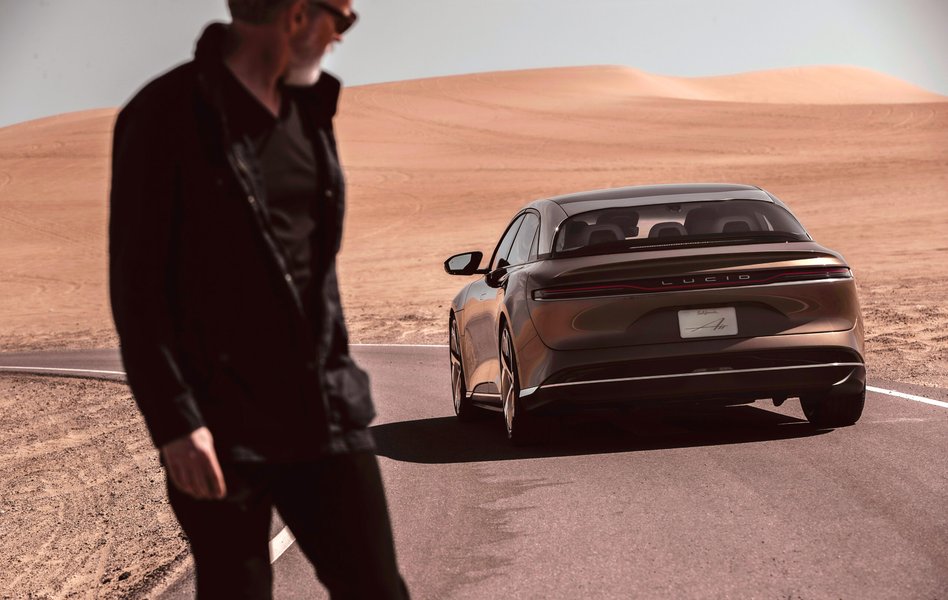
The Lucid Air exemplifies a luxury EV where new car replacement insurance offers vital protection.
Leading US Insurers Offering New Car Replacement for EVs
While the availability and specific terms of new car replacement coverage can vary by insurer and state, several reputable insurance companies in the US are known to provide this crucial endorsement, particularly for high-end EVs. When seeking a policy for your luxury EV (e.g., Mercedes EQS, BMW iX, or Rivian R1S), it's essential to compare quotes and explicitly inquire about the terms for new car replacement.
- Liberty Mutual: Offers "New Car Replacement" and "Better Car Replacement" options, often available for vehicles under one or two years old with specific mileage limits.
- Nationwide: Provides "Brand New Car Replacement" or "Auto Replacement Coverage" as an add-on, typically for cars up to a certain age or mileage.
- Erie Insurance: Their "Auto Security" package can include new car replacement for eligible new cars, usually if they are less than two years old, in participating states.
- Travelers: Offers "New Car Replacement" coverage for vehicles up to two model years old.
- USAA: Provides "Car Replacement Assistance" which offers additional funds towards a new vehicle, similar in principle to new car replacement (available to military members and families).
- AAA: Offers "New Car Added Protection," which can be beneficial for EV owners concerned about rapid depreciation.
- Allstate: While Allstate offers robust EV insurance packages, their new car replacement options should be specifically inquired about, as they often have specific terms and eligibility criteria.
Availability changes by state and underwriting rules, so always confirm model eligibility (e.g., Lucid Air, Porsche Taycan, Mercedes-Benz EQS, BMW iX, Rivian R1S), state availability, and whether trim or MSRP limits apply.
Eligibility Requirements for a Luxury EV New Car Replacement Policy
To qualify for new car replacement coverage, your vehicle typically needs to be new or nearly new. While specific requirements can vary significantly by insurer and state, general eligibility criteria usually include:
Vehicle Age Limitations
- Most policies require your car to be relatively new, often within the first 1-5 years of ownership or a specific number of model years (e.g., current model year plus 1-2 previous model years). Commonly, this is limited to 1-2 years from the original purchase date.
Mileage Restrictions
- There is usually a mileage cap, such as under 15,000 to 24,000 miles, for the coverage to remain active. Some insurers may set a fixed total mileage limit (e.g., 24,000-30,000 miles).
Original Owner Status
- The coverage is almost exclusively for the original owner of the vehicle or the first titled owner/lessee in the US.
Mandatory Comprehensive & Collision Coverage
- You must have comprehensive and collision coverage on your policy, as new car replacement is an insurance endorsement added on top of these foundational coverages.
Vehicle Type and Use
- While most personal vehicles qualify, some insurers may have restrictions on certain exotic or highly modified vehicles, or those used for commercial purposes like ride-sharing. Luxury EVs generally qualify, but it's always best to confirm directly with the insurer.
State Availability
- The endorsement may not be offered in every state, and its forms and definitions can vary based on state insurance regulations.
The Process: How New Car Replacement Coverage Works in a Total Loss Scenario
When your luxury EV is declared a total loss, the process with new car replacement coverage typically unfolds as follows:
- Claims Reporting: You report the incident to your insurance company and formally file a claim.
- Damage Assessment: An adjuster evaluates the damage to your vehicle to determine if the repair costs exceed a certain percentage of your vehicle's actual cash value (ACV), typically 70-80% of its value, which triggers a total loss declaration.
- Total Loss Declaration: If repairs are deemed economically unfeasible, your insurer declares your EV a total loss.
- Eligibility Confirmation: The insurer confirms that your EV meets the policy's age, mileage, and ownership rules for new car replacement.
- Replacement Valuation: The carrier determines the cost of a brand-new vehicle of the same make, model, and trim (or the nearest equivalent if your exact model or trim is discontinued or out of stock).
- Documentation Submission: You provide any required documents, including title, loan information, and original purchase paperwork.
- Payout Issuance: You receive the funds (minus your deductible). If you have a lienholder, they are typically paid first, with any remaining balance going towards your new EV.
- New Vehicle Procurement: Your insurance company either arranges for or reimburses you for purchasing a new, equivalent vehicle. Some policies require you to purchase the replacement within a set timeframe and within the US market.
This process ensures that if your Porsche Taycan, for example, is totaled, you could get a 2026 model if yours was a 2025, effectively bypassing the depreciation hit.
Cost Analysis: Is New Car Replacement Coverage a Worthwhile Investment for Luxury EVs?
The cost of adding new car replacement coverage to your luxury EV policy is an additional premium on top of your full coverage. This price varies based on several factors:
- Vehicle Value: Higher-value vehicles like the Lucid Air Sapphire or Porsche Taycan Turbo GT will naturally incur higher premiums for this add-on.
- Insurer: Different insurance companies have varying pricing structures for endorsements.
- Driver Profile: Your driving record, age, location, and other personal factors will influence the overall premium.
- Coverage Limits & Deductible: A lower deductible or a longer coverage period (e.g., 3 years vs. 1 year) can increase the cost.
Typically, new car replacement insurance might add an estimated $200-$500 annually to your premium, though this can be higher for very high-end EVs. For a luxury EV costing $80,000-$150,000, this represents a relatively small percentage of your overall insurance costs. Given the significant price tags of these vehicles (e.g., a new Porsche Taycan ranging from $116,629 to $199,185, and a Lucid Air from $76,335 to $98,270 for new models, according to iSeeCars), this additional cost is a relatively small investment to protect tens or even hundreds of thousands of dollars.
Is New Car Replacement Worth It for Lucid Air Insurance?
For Lucid Air owners, particularly considering its rapid depreciation in early years and high replacement costs, this coverage is highly advisable. If your Lucid Air were totaled, this policy would prevent you from losing tens of thousands of dollars due to depreciation, ensuring you can acquire another brand-new model.
Porsche Taycan New Car Replacement Coverage: A Prudent Choice?
Absolutely. The Porsche Taycan's sporty appeal, advanced technological features, and inherent brand prestige contribute to its significant initial cost. Protecting this substantial investment with new car replacement coverage ensures that if your Taycan is totaled, you can replace it with another, complete with its cutting-edge features and exhilarating driving dynamics intact, without being financially penalized by standard depreciation calculations.
The rule of thumb is: if the difference between the actual cash value (ACV) payout and the brand-new manufacturer's suggested retail price (MSRP) would significantly impact your budget, then the new car replacement endorsement is likely a worthwhile investment.
Maximizing Your Protection: Tips for Negotiating the Best Terms
When considering new car replacement coverage for your high-end EV, it pays to be proactive and informed:
- Shop Around Extensively: Obtain quotes from multiple insurers, specifically inquiring about their new car replacement programs and their terms for luxury electric vehicles. Providers like Liberty Mutual, Nationwide, and Erie Insurance are excellent starting points in the US.
- Understand Eligibility Criteria: Clarify the exact age and mileage limits for the coverage. Some insurers may offer more generous terms (e.g., up to 3-5 years) than others.
- Bundle Your Policies: Often, combining your auto insurance with homeowners or renters insurance can unlock significant discounts, helping to offset the cost of the new car replacement endorsement.
- Maintain a Stellar Driving Record: A clean driving history is consistently the most effective way to secure lower premiums across all types of coverage.
- Inquire About EV-Specific Discounts: Some insurers offer specialized discounts for owning an EV or for vehicles equipped with advanced safety features, which are common in luxury EVs.
- Scrutinize the Fine Print: Thoroughly understand any exclusions or limitations, such as caps on payouts, limits on cosmetic damage, or specific types of losses not covered. Ensure you know how "closest equivalent" is defined if your exact model or trim is unavailable.
- Document Your Vehicle's MSRP: Keep your original buyer's order, window sticker, and option list handy for accurate replacement pricing should a total loss occur.
New Luxury EV Buyers vs. Existing Owners: Who Benefits Most?
New Luxury EV Buyers
If you are purchasing a new luxury EV, it is highly recommended to add the new car replacement endorsement at the point of purchase or during your initial policy inception. This approach locks in your eligibility for the full coverage window and is particularly beneficial if you anticipate high annual mileage or face increased risks associated with urban parking.
Existing Owners Upgrading Coverage
If you currently own a luxury EV and are still within the typical vehicle age and mileage limits, you can often add this coverage mid-term. Contact your insurance agent to inquire about the process, any potential inspection requirements, and the effective date of the new coverage. This is a critical consideration for models like the Rivian R1S, where early depreciation can be a concern.
Important Considerations for US Luxury EV Coverage
- Endorsement Nuances: Be aware that endorsement names and policy forms can vary significantly among insurers. Always read your specific policy documents for precise definitions and terms.
- Taxes and Fees: Some carriers include taxes and registration fees in their replacement payout, while others do not. Verify this detail in writing.
- State-Specific Regulations: Insurance product filings and availability are governed by state laws. Your options and the exact terms of coverage will differ based on your ZIP code in the US.
- Discontinued Models: In the event your specific model or trim is discontinued, policies usually specify that a "comparable new vehicle" will be provided or compensated for.
Frequently Asked Questions About New Car Replacement Coverage for EVs
Conclusion: A Smart Investment for Your High-End EV
Owning a luxury electric vehicle like the Lucid Air or Porsche Taycan represents a significant financial and technological investment. Standard auto insurance policies, based on actual cash value, can leave a substantial gap between your payout and the cost of a new replacement due to rapid depreciation and the high cost of EV components. New car replacement insurance bridges this gap, ensuring that a total loss doesn't become a financial burden, allowing you to get back into a brand-new, equivalent vehicle. For US luxury EV owners, this specialized insurance endorsement offers invaluable peace of mind and robust financial protection.
Recommended Further Reading
- Unlock Your Ride: The Ultimate 2026 DIY Car Key Fob Programming Guide
- Conquering Android Auto Communication Error 8: Your Ultimate Troubleshooting Roadmap
