

Safely Revive Your Electric Vehicle's 12V Battery Without Damaging Sensitive Electronics
Jump Start Electric Car Safety: Your Definitive Guide for 2026
Yes, you can absolutely jump start an electric car, but there's a crucial distinction: you are only jump starting its 12-volt auxiliary battery, never the high-voltage traction battery. Understanding this difference is paramount to ensuring Jump Start Electric Car Safety and preventing costly damage to your vehicle's sophisticated electronic systems.
Key Insights for EV Jump Starting
- 12V Battery Only: Always focus on the smaller 12-volt auxiliary battery, which powers your EV's accessories and initiates the startup sequence, never the main high-voltage propulsion battery.
- Owner's Manual is Gold: Each EV model has specific jump points and procedures. Consult your owner's manual for precise instructions to avoid mistakes.
- Portable Jump Starters Preferred: Using a portable booster pack is generally safer and more convenient than a donor vehicle, as it minimizes voltage spikes and protects sensitive electronics.

Illustration depicting the proper connection for jump starting an EV's 12V battery.
Electric vehicles (EVs) are rapidly becoming a common sight on American roads, offering efficient and environmentally friendly transportation. However, like any other vehicle, an EV can experience a dead battery, leaving owners in a predicament. This comprehensive guide provides clear, step-by-step instructions on how to jump start an electric car safely, highlighting the critical differences from traditional gasoline-powered cars and offering brand-specific advice for popular US models like Tesla, Nissan Leaf, Chevrolet Bolt, Ford Mustang Mach-E, Hyundai Ioniq, and Rivian. Our goal is to empower you with the knowledge to perform an electric car dead battery jump start without damaging any delicate components.
Understanding Your EV's Dual Battery System
One of the most significant differences between an EV and a gasoline car lies in their electrical architecture. Electric vehicles operate with two distinct electrical systems:
- High-Voltage Traction Battery: This large battery pack (typically 300-800 volts) powers the electric motors that drive the vehicle. It's responsible for propulsion and typically charges via a charging station.
- 12-Volt Auxiliary Battery: Similar in function to the battery in a conventional car, this smaller, low-voltage battery powers all the vehicle's ancillary systems. These include the onboard computers, infotainment system, lights, power windows, door locks, and, crucially, the EV startup sequence.
When an EV "won't start," it's almost always due to a depleted 12V auxiliary battery, not a drained main traction battery. The 12V battery needs sufficient charge to "wake up" the vehicle's computers and allow the high-voltage system to engage. Without it, your EV is effectively bricked, even if its main battery is fully charged.
The 12V Battery: The Heart of Your EV's Initial Operations
Unlike gasoline vehicles where the 12V battery provides a large burst of current to turn over a starter motor, in an EV, its role is more about initialization. It provides the steady low-voltage power needed for the vehicle's numerous Electronic Control Units (ECUs) to boot up. Once these systems are active, the EV's internal DC-DC converter takes over, drawing power from the high-voltage traction battery to keep the 12V battery charged. This elegant system ensures the main battery's energy is efficiently managed.
Can You Jump Start an Electric Car Like a Gas Car?
While the goal of connecting jumper cables to revive a dead battery is the same, the procedure for an EV requires greater precision and awareness of the unique electrical systems. You will still use jumper cables or a portable booster pack, but the connection points and precautions differ significantly. The primary difference is the absolute necessity of avoiding the high-voltage components.
What's Similar to a Gas Car Jump Start?
- You're still dealing with a 12V battery.
- Jumper cables (or a booster pack) are the primary tools.
- The aim is to provide enough power to allow the vehicle to start its internal processes.
What's Different About an EV Jump Start?
- Only the 12V: You must connect solely to the 12V auxiliary battery terminals or designated jump points, never the high-voltage system.
- Sensitive Electronics: EVs have more intricate computer systems that are vulnerable to voltage spikes or incorrect connections.
- Hidden Batteries/Jump Points: The 12V battery might be located in unconventional places (e.g., under the hood, in the frunk, or in the trunk) and may require accessing specific terminals.
- No Using EVs as Donors: Most EV manufacturers strongly advise against using an EV to jump start another vehicle (gas or electric) due to the risk of damaging the EV's DC-DC converter and 12V system.
Critical Warning: Never Tamper with High-Voltage Components
Under no circumstances should you attempt to connect jumper cables to the high-voltage traction battery or any orange-colored cables. These are indicators of high-voltage systems and touching them can result in severe electrical shock, fire, or catastrophic damage to your vehicle. Always identify the dedicated 12V auxiliary battery or jump points as specified in your owner's manual.
Step-by-Step Guide: How to Jump Start an Electric Car Safely
Before beginning, always consult your EV's owner's manual for specific instructions and the precise location of the 12V battery or designated jump points. Safety is paramount, so wear insulated gloves and eye protection.
What You'll Need:
- Quality jumper cables (rated for at least 200 amps, heavy-duty).
- Another vehicle with a working 12V battery (preferably gasoline or diesel) OR a portable jump starter (booster pack).
- Safety glasses and insulated gloves.
- Your EV's owner's manual.
Procedure Using Another Vehicle:
- Position Vehicles: Park the donor vehicle close enough to your EV so the jumper cables can reach comfortably, ensuring the vehicles are not touching. Both vehicles must be turned completely OFF, and their parking brakes engaged.
- Locate the EV's 12V Battery/Jump Points: Refer to your owner's manual. Common locations include under the hood (often a frunk in Teslas), in the trunk, or sometimes under a rear seat. Many EVs have clearly marked jump leads or terminals designed for this purpose.
-
Connect Positive Cables (Red):
- Attach one red (+) clamp to the positive (+) terminal of the dead EV's 12V auxiliary battery (or designated positive jump point).
- Attach the other red (+) clamp to the positive (+) terminal of the donor car's 12V battery.
-
Connect Negative Cables (Black):
- Attach one black (-) clamp to the negative (-) terminal of the donor car's 12V battery.
- Attach the other black (-) clamp to an unpainted metal surface on your dead EV's chassis, away from the battery and any moving parts. This serves as a ground point. Avoid connecting directly to the EV's negative battery terminal unless explicitly instructed by the manual.
- Start the Donor Vehicle: Start the engine of the donor car and let it run for 5-10 minutes. This allows a sufficient charge to transfer to the EV's 12V battery. Do not rev the engine aggressively.
- Attempt to Power On Your EV: Try to turn on your electric vehicle. If it doesn't immediately enter its "Ready" state, wait another 5 minutes and try again.
-
Disconnect Cables Carefully: Once your EV powers on, disconnect the cables in the reverse order of connection:
- First, remove the black (-) clamp from your EV's ground point.
- Second, remove the black (-) clamp from the donor vehicle's negative terminal.
- Third, remove the red (+) clamp from the donor vehicle's positive terminal.
- Finally, remove the red (+) clamp from your EV's 12V positive terminal.
- Recharge the 12V Battery: Drive your EV for at least 20-30 minutes, or leave it in a "Ready" state. This allows the vehicle's internal DC-DC converter to fully recharge the 12V battery from the high-voltage system.
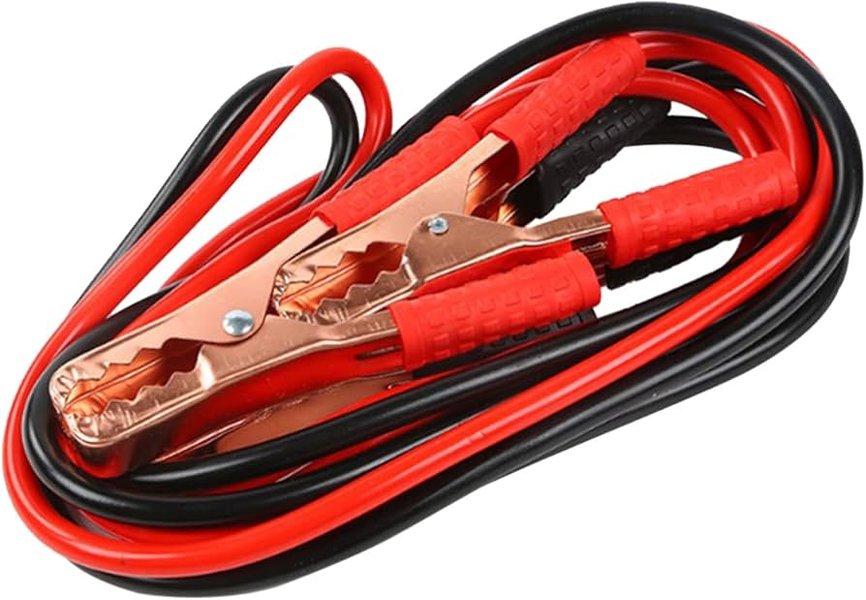
Example of heavy-duty jumper cables suitable for jump starting.
Procedure Using a Portable Jump Starter (Booster Pack - Recommended):
A booster pack offers a safer and often more convenient alternative, as it eliminates the risks associated with a second vehicle and voltage fluctuations.
- Prepare Jump Starter: Ensure your portable jump starter is fully charged according to its instructions.
- Locate EV's 12V Battery/Jump Points: As above, consult your owner's manual to find the 12V battery or designated jump points.
-
Connect Cables:
- Attach the red (+) clamp from the jump starter to the positive (+) terminal of the EV's 12V battery or jump point.
- Attach the black (-) clamp from the jump starter to a suitable metal ground point on the EV's chassis, away from the battery.
- Activate Jump Starter: Turn on the portable jump starter. Most units have an indicator light when properly connected.
- Attempt to Power On Your EV: Try to turn on your electric car.
- Disconnect Cables: Once the EV powers on, disconnect the cables in reverse order (negative first, then positive).
- Recharge the 12V Battery: Drive your EV for at least 20-30 minutes to allow the internal systems to fully recharge the 12V battery.
EV Jump Start Guide 2026: Brand-Specific Procedures for US Models
While the general principles remain consistent, specific access points and manufacturer recommendations vary among EV brands. Always cross-reference with your vehicle's owner's manual.
Can You Jump Start a Tesla?
Yes, you can jump start a Tesla's 12-volt battery. Tesla vehicles (Model S, Model 3, Model X, Model Y) have a 12V auxiliary battery, often located in the frunk (front trunk) behind a removable panel or near the windshield cowl. Newer Teslas may use a lithium-ion 12V battery, while older models have lead-acid versions. If the 12V battery is completely dead, you may need to apply external 12V power to the tow eye cover area to remotely open the frunk and access the battery terminals.
- Tesla Model 3/Y: Look for jump posts behind a removable cover in the frunk.
- Tesla Model S/X: Similar access to jump posts in the frunk.
- Important Tesla Note: Tesla explicitly advises against using a Tesla vehicle to jump start another car, as it can damage the Tesla's electrical systems and potentially void the warranty.
How to Jump Start a Nissan Leaf
The Nissan Leaf typically has its 12V auxiliary battery located under the hood, much like a conventional car. The terminals are usually easily accessible. Follow the general jump starting procedure, ensuring you connect to the marked positive and negative terminals and use a chassis ground point if not connecting directly to the negative post.
Chevrolet Bolt EV/EUV Jump Starting
Chevrolet Bolt models generally have their 12V battery located under the hood. Some earlier models might have it in the rear cargo area. Consult your manual for the exact location and any specific jump points. The process is straightforward, adhering to standard safety guidelines.
Ford Mustang Mach-E Jump Start Process
The Ford Mustang Mach-E provides accessible jump start points. The positive terminal is often found under the frunk access panel, and a negative connection point on the chassis serves as a ground. Ford's owner's manual provides detailed diagrams for these connections.
Hyundai Ioniq 5/6 and Kia EV6 Jump Start Notes
Hyundai and Kia EVs, such as the Ioniq 5/6 and EV6, also feature 12V auxiliary batteries that can be jump started. Their manuals will specify the location, which is often under the hood or in the rear. Some models even have a dedicated "12V reset" button or feature to try before resorting to an external jump, which can help if the 12V system is merely in a low-power state.
Rivian R1T/R1S Jump Starting
Rivian vehicles, known for their robust design, also rely on a 12V auxiliary battery. Owners should refer to their Rivian owner's manual for the precise location of the 12V battery terminals and any specific instructions. Given their advanced systems, using a portable booster pack is often recommended to ensure clean power delivery.
American Roadside Assistance and Dealerships
If you're unsure about any step or prefer professional assistance, reputable American roadside assistance services like AAA offer EV-specific support. Additionally, contacting your specific EV brand's US dealership (e.g., a Tesla Service Center, Ford EV-certified dealer) can provide expert guidance or service, ensuring warranty compliance.
Critical Safety Warnings: Avoid Damaging Your EV
To ensure jump starting electric car safely, it's essential to be aware of actions that can cause severe damage.
Never Jump Start the High-Voltage Traction Battery!
This is the single most important rule. The large battery pack that powers your EV's motors operates at extremely high voltages (hundreds of volts). Attempting to connect jumper cables to this system can lead to:
- Severe Electrical Shock: Potentially life-threatening injury or fatality.
- Explosion or Fire: High currents can cause rapid overheating, leading to combustion.
- Irreparable Damage: Catastrophic failure of expensive components like the main battery, inverter, and power electronics, costing thousands of dollars to repair.
- Voided Warranty: Any damage resulting from improper jump starting will almost certainly void your vehicle's warranty.
High-voltage components are typically identifiable by bright orange cables and warning labels. Always steer clear of these.
Do Not Use an EV to Jump Start Another Car
Most EV manufacturers, including Tesla, strongly advise against using your electric vehicle's 12V battery to jump start another car (either a gasoline vehicle or another EV). Here's why:
- Damage to the EV's 12V Battery: The 12V auxiliary battery in an EV is not designed to deliver the high cranking amps required to start a conventional engine, potentially leading to its premature failure or damage.
- Overload of the DC-DC Converter: The DC-DC converter manages the charging of the 12V battery from the high-voltage system. Trying to jump another car can overload this critical and expensive component, leading to malfunction.
- Battery Management System Issues: The intricate Battery Management System (BMS) in EVs can be sensitive to unusual loads, potentially causing software glitches or errors.
- Voided Warranty: Engaging in this activity often falls outside approved usage and can void your vehicle's warranty.
If a gasoline vehicle needs a jump, recommend they call roadside assistance or find another conventional vehicle to assist.
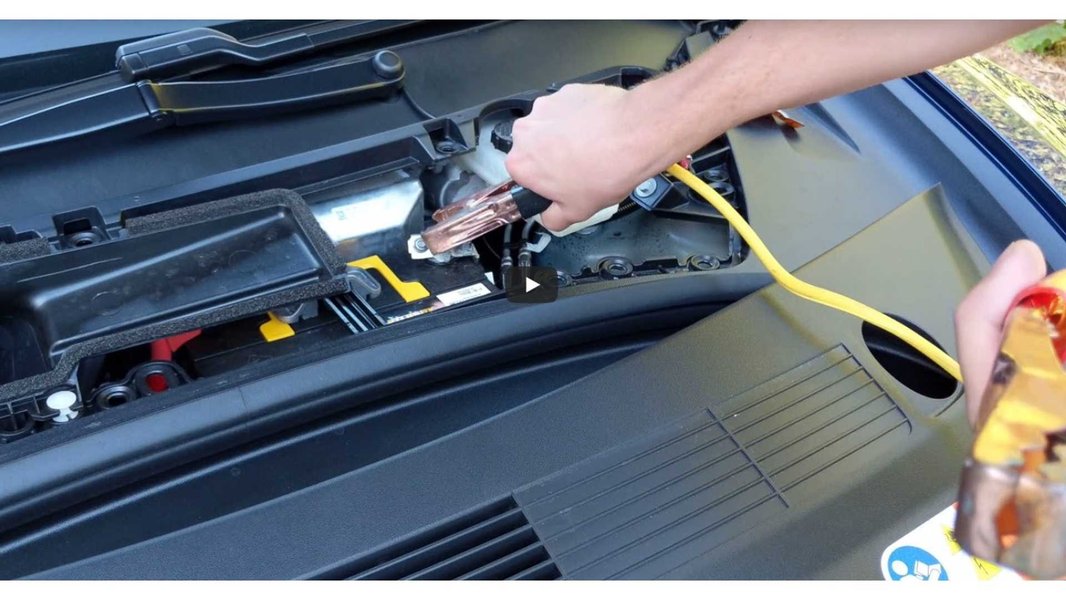
A visual reminder not to use an EV to jump start another vehicle.
What to Do If Jump Starting Doesn't Work
If your EV still won't enter its "Ready" state after a careful jump starting attempt, don't despair. Several factors could be at play:
- Completely Dead 12V Battery: The 12V auxiliary battery might be too old, damaged, or deeply discharged to accept a charge, even from a jump. It may require replacement.
- Faulty Connections: Double-check all jumper cable connections to ensure they are clean, secure, and correctly placed on the terminals and ground point.
- Insufficient Charging Time: Some EVs may require a longer period (up to 15-20 minutes) connected to the donor vehicle or booster pack to accumulate enough charge in the 12V system.
- DC-DC Converter Failure: If the 12V battery isn't recharging even when the EV is "on," the DC-DC converter (which charges the 12V from the main battery) might be faulty. This requires professional service.
- Other Electrical Fault: A blown fuse, a wiring issue, or a more complex problem with the vehicle's computer system could be preventing startup.
In these situations, it's best to contact your EV manufacturer's roadside assistance, a service like AAA, or have your vehicle towed to a certified US dealership for diagnosis and repair. Many dealerships are specifically equipped to handle EV-specific battery and electrical issues.
Tips for Preventing a Dead 12V Battery in Your EV
Proactive maintenance can significantly reduce the chances of needing an electric car dead battery jump start:
- Regular Driving/Charging: Your 12V battery charges from the main traction battery whenever the EV is "on" or being charged. Avoid letting your EV sit for extended periods without use or charging, especially if the main battery is low.
- Monitor Main Battery State of Charge: Keeping your main traction battery above 20% generally ensures the 12V system has power for charging.
- Avoid Accessory Drain: Ensure all non-essential accessories (dash cams, phone chargers, aftermarket devices) are unplugged when the vehicle is parked for long durations.
- Annual 12V Battery Health Check: Have your 12V auxiliary battery tested annually by your dealership during routine service. Most EV 12V batteries last 3-5 years, similar to gasoline cars, but can degrade faster with extreme temperatures or deep discharges.
- Address Warning Messages: Pay attention to any dashboard warning messages related to the 12V system and have them checked promptly.
- Software Updates: Keep your EV's software up to date, as manufacturers often release updates that optimize power management for the 12V system.
Best Portable Jump Starters Recommended for EV Owners
Investing in a high-quality portable jump starter is a smart move for any EV owner, providing peace of mind and convenience. When choosing a booster pack, look for these features:
- Lithium-Ion Technology: These are lighter, more compact, and hold a charge longer than older lead-acid units.
- Sufficient Peak Amps: While EVs don't need the same high cranking amps as gas cars, a unit with at least 800-1000 peak amps provides robust and stable power for sensitive EV electronics.
- Advanced Safety Features: Look for reverse polarity protection, spark-proof technology, and over-current/over-voltage protection to safeguard your vehicle.
- USB Charging Ports: Many modern booster packs double as power banks for charging phones and other devices, which can be useful in an emergency.
- Built-in LED Flashlight: Handy for nighttime jump starts.
- Quality Clamps and Cables: Durable, insulated clamps that make solid contact.
Popular and highly-rated portable jump starters for 2026 that are well-suited for EVs include the NOCO Boost Plus GB40, DBPOWER 800A, and various models from Clore Automotive's Jump-N-Carry line.
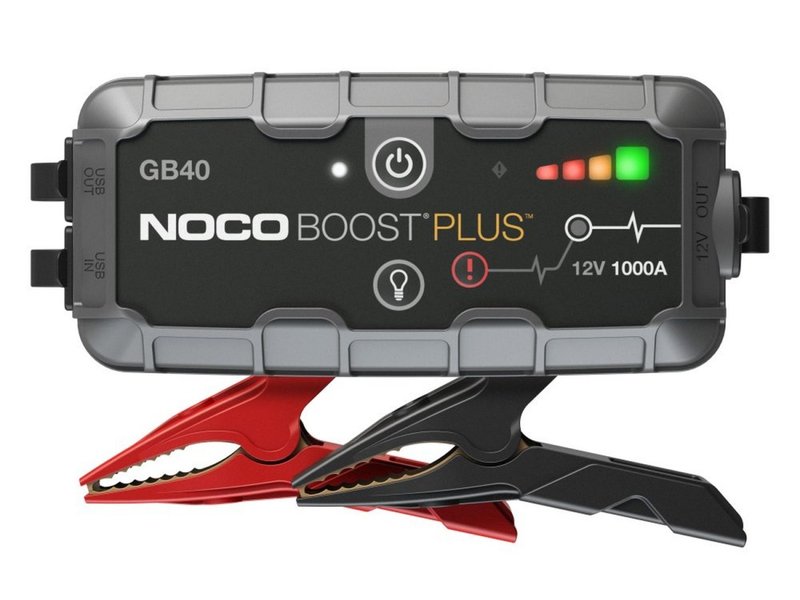
The NOCO Boost Plus GB40, a highly recommended portable jump starter for EVs.
How to Jump Start EV Without Damaging Electronics
The key to preventing electronic damage during an EV jump start boils down to adherence to manufacturer guidelines and careful execution:
- Consult Your Owner's Manual: This cannot be stressed enough. It's the definitive source for your specific EV model's jump start points and procedures.
- Use a Portable Jump Starter: As mentioned, these provide a more controlled and stable power source compared to a donor vehicle, minimizing the risk of voltage spikes.
- Correct Polarity: Always connect positive to positive and negative to ground. Reversed polarity can instantly fry delicate electronic control units.
- Ground to Chassis: When using a donor vehicle or if instructed by your manual, connect the negative clamp to an unpainted metal part of the EV chassis, away from the battery, to ensure a good ground and prevent sparks near the battery.
- Ensure All Systems Are Off: Before connecting cables, ensure both vehicles (if using a donor car) are off, and all accessories (lights, radio, climate control) in the EV are turned off.
- Disconnect in Reverse Order: This minimizes the chance of accidental short circuits or sparks.
- Allow for Charging: After a successful jump, let your EV run or drive for 20-30 minutes to allow the DC-DC converter to fully recharge the 12V auxiliary battery.
"Only the 12‑volt auxiliary system should ever be jumped. Never attach cables to high‑voltage components; doing so is extremely dangerous and will result in severe damage to the vehicle."
FAQ: Common Questions About Jump Starting Electric Cars
Can you jump start an electric car with a gas car? Yes, you can jump start the 12-volt auxiliary battery of an electric car using a traditional gas car. The process is similar to jump starting a conventional vehicle, but you must ensure to connect only to the EV's 12V battery terminals. What battery do you jump start in an electric car? You only jump start the 12-volt auxiliary battery in an electric car. This smaller battery powers the vehicle's low-voltage electronics and the EV startup sequence. Never attempt to jump start the main high-voltage traction battery. What happens if you jump start an EV incorrectly? Jump starting an EV incorrectly, especially by connecting to the high-voltage system, can cause severe electrical shock, fire, or irreparable damage to expensive components like the main battery and DC-to-DC converter. Incorrect connections can also damage the 12V battery itself. Can an electric car jump start another car? It is generally not recommended to use an electric car to jump start another vehicle (either an ICE car or another EV). The 12V battery in an EV is not designed to provide the high cranking power needed, and doing so can damage the EV's 12V battery, DC-to-DC converter, or void its warranty. Where is the 12-volt battery in an EV typically located? The 12-volt battery in an EV can be located in various places depending on the model. Common locations include under the hood (often in the frunk for vehicles like Tesla), in the trunk, or sometimes under a seat. Always consult your EV's owner's manual for the exact location. Should I use a portable jump starter or another car for an EV jump start? A portable jump starter (booster pack) is often the safest and most convenient option for an EV jump start, as it eliminates the risks associated with connecting to another vehicle. If using another car, ensure it's a conventional petrol or diesel vehicle and follow all safety precautions diligently. How long should I drive my EV after a jump start? After successfully jump starting your EV, it's recommended to drive it for at least 20-30 minutes. This allows the vehicle's internal charging system (which draws power from the high-voltage battery) to adequately recharge the 12V auxiliary battery. Will a dead 12V battery prevent my EV from charging? Yes, if the 12V auxiliary battery is too low, the EV may not be able to "wake up" its computer systems to initiate the charging process from a wall or DC fast charger. A brief 12V jump usually restores the startup sequence so charging can begin.Conclusion
Jump starting an electric car, specifically its 12-volt auxiliary battery, is a manageable task for any EV owner, provided you understand the critical differences from gasoline vehicles and prioritize safety. By following the detailed steps, consulting your owner's manual, and recognizing the paramount importance of avoiding the high-voltage system, you can confidently address an electric car dead battery jump start. Equipping yourself with a reliable portable booster pack and knowing when to call for professional assistance from services like AAA will further ensure a safe and stress-free EV ownership experience. Regular maintenance and awareness of your vehicle's 12V system health are your best defenses against unexpected power loss.
