

Don't let the "Replace Hybrid Battery" code leave you stranded—understand your options.
The P0A80 code is a critical diagnostic trouble code (DTC) in hybrid vehicles, commonly interpreted as "Replace Hybrid Battery Pack." It indicates that your vehicle's high-voltage battery management system (BMS) has detected significant degradation or an imbalance within the hybrid traction battery, signaling the need for attention. Addressing the P0A80 Hybrid Battery Fix promptly is crucial to restore your hybrid's performance and fuel efficiency, often without the need for a full, costly replacement.
Essential Insights for Your P0A80 Hybrid Battery Fix
- Voltage Imbalance: The P0A80 code is primarily triggered by a significant voltage difference between individual battery modules within the hybrid pack, often indicating weak or failing cells.
- Repair Options Vary Widely: Solutions range from affordable cell balancing or individual module replacement to more substantial refurbished or new OEM battery packs, offering different cost and longevity profiles.
- Don't Panic, Diagnose First: While the code suggests replacement, thorough diagnosis can often pinpoint specific issues, allowing for more targeted and budget-friendly repairs for your hybrid vehicle.
Decoding the P0A80 Code: What It Truly Means
The P0A80 code, often seen in popular US models like the Toyota Prius, Honda Civic Hybrid, Ford Escape Hybrid, Lexus CT200h, and Toyota Camry Hybrid, is your vehicle's way of communicating a problem with its high-voltage battery pack. Specifically, the hybrid vehicle battery management system (HVBMS) has identified that the battery modules are not performing uniformly. This usually manifests as a significant voltage difference between battery blocks under load, triggering the powertrain control module (PCM) to log the code and illuminate the check engine light or "Check Hybrid System" warning.
For instance, in many Toyota hybrid vehicles, the P0A80 code is set when a voltage variation of approximately 1.2-1.3 volts between the highest and lowest battery blocks is detected, or if one block reads 1 volt or more lower than others. This inconsistency points to one or more weak modules within the NiMH battery pack, impacting the overall state of health of the hybrid traction battery.

A common sight for hybrid owners: the "Check Hybrid System" warning that often accompanies a P0A80 code.
Why P0A80 Causes So Much Worry for Hybrid Owners
The P0A80 code often strikes fear into hybrid owners due to the perceived high cost of hybrid battery replacement. Dealership quotes for a new OEM battery can range from $2,500 to over $8,000, not including labor. However, it's vital to understand that a P0A80 doesn't always necessitate a complete battery replacement. Targeted repairs like module replacement or cell balancing can often resolve the issue at a fraction of the cost, making a thorough diagnosis by a certified hybrid technician crucial.
Understanding P0A80 Symptoms and Causes
Before the check engine light even appears, your hybrid vehicle might exhibit several symptoms indicating a failing battery. Recognizing these early signs can help you address the issue proactively.
What You Might Experience: Common Symptoms
- Dashboard Warning Lights: The illuminated check engine light, the dreaded "Red Triangle of Death," or the "Check Hybrid System" message are primary indicators.
- Reduced Fuel Economy: A noticeable drop in MPG (often 10-15 MPG) as the gasoline engine works harder to compensate for the struggling electric motor.
- Sluggish Acceleration & Reduced Power: Your vehicle may feel hesitant, especially when accelerating or going uphill, due to inadequate assistance from the electric motor. It might struggle to maintain highway speeds.
- Inability to Use Electric-Only Mode: The vehicle may rely almost entirely on the gasoline engine, even at low speeds where it would normally operate in EV mode.
- Constantly Running Cooling Fan: The hybrid battery cooling fan, typically located in the trunk area, might run frequently and loudly at high speeds, indicating overheating of the battery pack.
- Erratic Battery Gauge Behavior: The battery state of charge (SOC) meter may show rapid fluctuations, draining quickly or jumping to full unexpectedly.
- Starting Problems or Stalling: In severe cases, the vehicle may struggle to start or stall unexpectedly.
- Activation of Additional Diagnostic Trouble Codes (DTCs): P0A80 often appears alongside other codes such as P0A7F (Hybrid Battery Pack Deterioration), P0AA6 (Hybrid Battery System Voltage Isolation Problem), or P3011-P3024 (indicating specific weak battery blocks).

A hybrid warning light on the dashboard, often signaling underlying battery issues.
What Triggers the P0A80 Code: Primary Causes
The root causes of P0A80 primarily involve the natural degradation and imbalance of the hybrid battery pack. Hybrid batteries, whether Nickel-Metal Hydride (NiMH) or Lithium-ion (Li-ion), have a finite lifespan. Here are the most common causes, from most to least likely:
-
Weak or Failing Battery Modules (NiMH/Li-ion)
This is the most frequent cause. Over time, individual cells or modules within the hybrid traction battery lose their ability to hold a charge effectively and develop higher internal resistance. This is particularly common in vehicles with high mileage (100,000+ miles) or those operating in extreme temperatures. When one or more cells become significantly weaker, the overall performance of the pack suffers.
-
Cell/Block Voltage Imbalance
As cells degrade, they don't charge and discharge uniformly. This creates a voltage discrepancy that the BMS detects. If the difference between the highest and lowest voltage blocks exceeds a certain threshold (e.g., 1.2-1.3 volts for Toyota), the P0A80 code is triggered. This imbalance can accelerate the degradation of otherwise healthy cells.
-
Overall Battery Pack Deterioration (End-of-Life)
Simply put, the battery pack has reached the end of its useful life. All modules may be generally weak, leading to a diminished state of health for the entire battery.
-
Corroded or Loose Busbar Connectors
The busbar connectors link the individual battery modules. Corrosion on these connectors or a loose connection can create resistance, leading to localized heating and inaccurate voltage readings. The BMS may interpret these false voltage drops as a failing module, even if the module itself is still functional.
-
Battery Cooling System Problems
Hybrid batteries require precise temperature management. If the battery cooling fan becomes clogged with debris (e.g., pet hair, dust) or fails entirely, the battery can overheat. Overheating significantly accelerates battery degradation and can directly trigger the P0A80 code, often accompanied by P0A7F (Hybrid Battery Pack Over Temperature).
-
Faulty Battery Management System (BMS) or HV Battery ECU
In rare instances, the issue may not be with the battery itself but with the electronics that monitor it. Faulty sensors, wiring harnesses, or the hybrid battery ECU (Engine Control Unit) can sometimes send incorrect signals, leading to a false P0A80 code. This might be accompanied by codes like P0AFC.

A 12-volt battery, which can sometimes be a culprit behind false hybrid system warnings.
Diagnosing the P0A80 Hybrid Battery Fix: A Step-by-Step Approach
Accurate diagnosis is paramount before committing to any repair for a P0A80 code. A general mechanic might suggest an immediate full replacement, but a certified hybrid specialist can often provide a more nuanced and cost-effective solution.
1. Initial Code Reading and Freeze Frame Data Analysis
- Scan All DTCs: Use an OBD-II scanner capable of reading hybrid-specific codes. While P0A80 is central, look for accompanying codes like P0A7F (battery deterioration), P0AA6 (isolation fault), P0A93 (inverter cooling), P3000 (battery control system), or P3011-P3024 (specific weak block identifiers for Toyota/Lexus).
- Review Freeze Frame Data: This data captures the vehicle's operating conditions (speed, engine load, battery voltage, temperature, SOC) at the exact moment the P0A80 code was set. This provides valuable clues about what triggered the fault.
2. Inspecting Basic System Components
-
12-Volt Auxiliary Battery Health
A weak or failing 12-volt battery can cause a cascade of electrical issues, sometimes triggering false hybrid system error codes. Test its voltage and load capacity, and replace it if it's below specification. Disconnecting and reconnecting the 12V battery can sometimes temporarily clear codes, but the underlying issue will persist.
-
Hybrid Battery Cooling System Check
Visually inspect the air intake vents, cooling fan, and ducts for dust, debris, or blockages. Pet hair is a common culprit. Ensure the cooling fan operates correctly. For models like the Toyota Camry Hybrid (2007-2011) and Lexus CT200h, a clogged HV battery cooling fan can directly lead to P0A80 or P0A7F.
-
Visual Inspection of Battery Pack (with Safety)
If safe access is possible and with appropriate PPE, visually inspect the hybrid battery pack for signs of corrosion on busbars and terminals, as well as any loose or damaged wiring harnesses. Corrosion significantly increases resistance and can impact performance.
3. Advanced Hybrid Battery System Testing
-
Monitoring Individual Battery Blocks
Using a professional-grade diagnostic tool (like Techstream for Toyota or Dr. Prius app), monitor individual battery block voltages, internal resistance, and state of charge in real-time. Look for significant discrepancies (e.g., more than 1 volt difference) between battery blocks, especially under load (e.g., during acceleration or regenerative braking). This helps identify specific weak modules.
For a Toyota Prius, the NiMH HV battery assembly typically consists of 28 modules grouped into 14 blocks. Each healthy module should show around 7.2-7.6 volts, with a total pack voltage of approximately 215V. A consistent low voltage in one block under load is a strong indicator of failing modules.
-
Temperature Sensor Readings
Monitor temperature sensors within the battery pack. A consistently high temperature reading in one area can indicate localized stress or inadequate airflow, which can contribute to accelerated degradation.
-
Rapid SOC Swings
Observe if the battery state of charge meter rapidly changes, swinging from high to low or vice versa without corresponding driving conditions. This often points to low usable capacity and high internal resistance in one or more modules.
Hybrid Battery Cell Balancing Guide: A Potential P0A80 Fix?
Hybrid battery cell balancing is a process aimed at equalizing the state of charge and voltage across all individual cells or modules within a battery pack. Its main goal is to ensure all battery cells operate at the same level, maximizing efficiency and lifespan. When a P0A80 code arises due to cell imbalance rather than outright module failure, balancing can sometimes be a viable, less expensive repair.
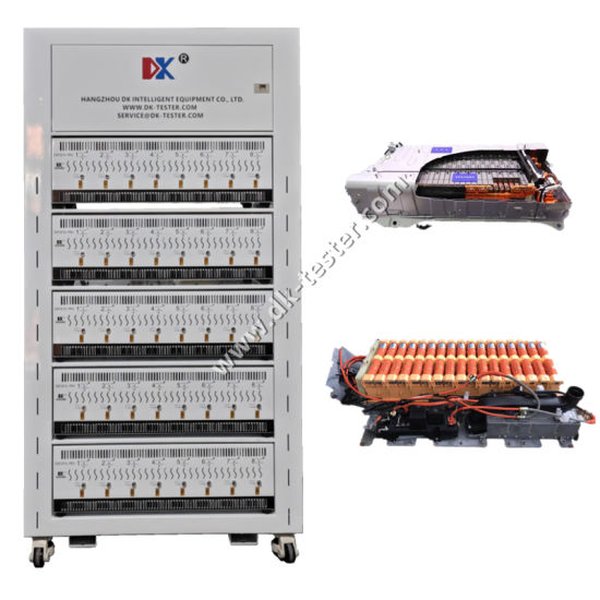
Specialized equipment used for balancing and reconditioning hybrid battery cells.
How Cell Balancing Works
There are two primary methods for cell balancing:
-
Passive Balancing
This method dissipates excess energy from higher-charged cells as heat, bringing them down to the level of lower-charged cells. It's simpler and lower-cost but can be inefficient and generate heat. It works by discharging the stronger cells until they match the weaker ones.
-
Active Balancing
This method redistributes energy from higher-charged cells to lower-charged ones, transferring power rather than simply dissipating it. Active balancing is more efficient and helps prolong battery life by ensuring all cells contribute equally. Hybrid methods, like flyback converter-based systems, can reduce the highest voltage and boost the lowest voltage simultaneously.
When is Cell Balancing Effective for P0A80?
Cell balancing can be effective if the P0A80 code is triggered by a relatively minor imbalance and not by a severely degraded or failed module. High-quality cell balancing, especially for NiMH modules, often requires specialized equipment and can take a minimum of 20 hours for full effect. However, if a module has developed high internal resistance or significantly lost capacity, balancing alone will not restore it to full health. In such cases, balancing might offer a temporary reprieve, but the P0A80 will likely return.
Hybrid Battery Replacement Cost: Options and Considerations
If diagnosis confirms that cell balancing is insufficient, or if there are severely degraded modules, a hybrid battery replacement or module replacement becomes necessary. The cost can vary significantly based on the type of battery, the vehicle's make and model, and whether you choose a new, refurbished, or used battery.
Types of Hybrid Battery Replacements and Their Costs (US Market)
Here's a breakdown of common options and their approximate costs:
| Repair Option | Typical Cost Range (USD) | Warranty Coverage | Pros | Cons | Best For |
|---|---|---|---|---|---|
| Individual Cell/Module Replacement | $500-$1,500 (plus labor) | 30-90 days (limited) | Lowest upfront cost, targets specific weak points. | Often a temporary fix, other aged modules may fail soon. | Budget fixes on older vehicles, 1-2 weak modules only. |
| Battery Reconditioning/Balancing Service | $800-$1,800 | 6-12 months (limited) | Restores some lost capacity, can delay full replacement. | Temporary for severely degraded packs, may not clear persistent P0A80. | Packs with mild imbalance and no clearly failed modules. |
| Refurbished/Remanufactured Battery Pack | $1,500-$4,000 (plus labor) | 1-3 years (standard) | Good value, environmentally friendly, often includes warranty. | Quality can vary between rebuilders, not as long-lasting as new OEM. | Most daily drivers seeking value and reliability, best cost-effective solution. |
| New OEM Battery Pack | $2,500-$8,000+ (plus labor) | 8-10 years (extensive) | Highest quality, longest lifespan, optimal performance, strongest warranty. | Most expensive option. | Newer vehicles, long-term ownership, or those seeking maximum reliability. |
Labor Costs and Other Incidentals (US)
- Labor: Hybrid battery replacement labor prices typically range from $500 to $1,500 in the US, but can be higher depending on your location and the repair shop. Dealerships often charge more per hour ($150-$220/hr) than independent hybrid specialists.
- Additional Parts: You might incur costs for new inverter coolant, clips, connectors, and diagnostic fees.
- Specific Models: The cost varies significantly by make and model. While a Toyota Prius refurbished unit is often in the $1,500-$4,000 range, a Ford Focus hybrid battery can be much more expensive.
It's essential to check your vehicle's warranty status, as many hybrid batteries are covered for 8 to 10 years or 100,000 to 150,000 miles. California and other CARB states often have extended warranties for hybrid components (up to 10 years/150,000 miles).
P0A80 Toyota Prius Fix: Specifics for Popular US Models
The P0A80 code is particularly prevalent in certain hybrid models as they age and accumulate mileage. Understanding model-specific nuances can help in diagnosis and repair.
Toyota Prius (2nd, 3rd, and 4th Generation)
As the highest-selling hybrid in the US, many Toyota Prius units are now reaching the 10-15 year age range where battery issues become common. For a Prius, P0A80 typically signifies that one or more of its 28 NiMH modules (grouped into 14 blocks) has failed or significantly degraded. While some DIY enthusiasts attempt individual module replacement, professional assessment of the entire pack's state of health is crucial, as other aged modules may soon follow suit.
Toyota Camry Hybrid and Lexus CT200h
For models like the Toyota Camry Hybrid (particularly 2007-2011 models) and the Lexus CT200h, P0A80 can sometimes be linked to a clogged HV battery cooling fan (often accompanied by code P0A7F). Cleaning the fan can sometimes resolve the issue if caught early, but persistent codes usually point to internal battery degradation that requires more comprehensive intervention.
Honda Civic Hybrid and Ford Escape Hybrid
These models also frequently experience P0A80 due to aging NiMH battery packs. Similar diagnostic steps apply, focusing on identifying weak modules and assessing the overall pack health. Remanufactured or refurbished packs from American parts suppliers are a popular and cost-effective choice for these vehicles.

A hybrid battery pack, often the culprit behind a P0A80 code.
Can You Drive with a P0A80 Code? A Critical Warning for Hybrid Owners
Most hybrid vehicles will enter a "limp mode" or "fail-safe" mode when a P0A80 code is present. In this mode, the vehicle relies heavily on the gasoline engine and significantly reduces or eliminates electric motor assistance. This results in:
- Severely Reduced Performance: Sluggish acceleration, difficulty maintaining speed, and overall reduced responsiveness.
- Poor Fuel Economy: The primary benefit of a hybrid—fuel efficiency—will be lost as the electric motor cannot adequately assist.
- Potential for Further Damage: Continuing to operate with a failing battery can put additional strain on other hybrid system components (like the inverter or transaxle), leading to more extensive and expensive repairs down the line.
- Risk of Stalling: In severe cases, the battery deterioration can progress to the point where the vehicle becomes undriveable or stalls unexpectedly, leaving you stranded.
If the P0A80 code appears, it is advisable to get your vehicle to a qualified hybrid technician as soon as possible. Short, cautious trips to a service facility are typically safe, but prolonged driving should be avoided. Plan for roadside assistance if the vehicle becomes completely undriveable.
Will Reconditioning Permanently Fix P0A80?
The question of whether hybrid battery reconditioning can permanently resolve a P0A80 code is common among hybrid owners looking for a more affordable solution. While reconditioning and cell balancing can reduce voltage spread and improve the overall state of charge, they typically do not offer a permanent fix for severely aged or high-mileage NiMH battery packs.
Reconditioning aims to restore lost capacity and balance modules through controlled charge/discharge cycles. It can be highly effective for batteries suffering from mild imbalance or sulfation. However, if individual modules have developed high internal resistance or significant capacity loss due to irreversible degradation, reconditioning will only provide temporary relief. These modules will inevitably relapse under load, and the P0A80 code will likely return.
Related Codes to Check with P0A80
When you encounter a P0A80, it's common for other diagnostic trouble codes to appear alongside it. These related codes offer more specific information about the nature of the hybrid battery issue and are crucial for a complete diagnosis:
- P0A7F: Hybrid Battery Pack Deterioration / Over Temperature. This code directly indicates battery degradation or that the hybrid battery pack is overheating. It often accompanies P0A80 and can be caused by a failing cooling fan or excessive internal resistance within the battery.
- P3000: Hybrid Battery Control System Malfunction. This is a generic code indicating a problem with the battery control system. It frequently appears with P0A80 and suggests a broad issue with how the battery is being managed.
- P0AA6: Hybrid Battery System Voltage Isolation Problem. This code points to an issue where the high-voltage system is not properly isolated from the chassis, which can be a serious safety concern and might be related to damaged battery components or wiring. This code should prompt immediate attention.
- P0A93: Inverter Cooling System Performance. While not directly a battery code, an issue with the inverter's cooling system can impact the battery's ability to charge or discharge effectively, indirectly contributing to P0A80. It's essential to fix inverter cooling issues before further battery testing.
- P3011 - P3024: Individual Battery Block Malfunction. These codes are highly specific, pinpointing which particular battery block (e.g., Block 1, Block 2, etc.) is underperforming or failing. For Toyota/Lexus NiMH batteries, these codes are invaluable for identifying exactly which modules need attention for individual module replacement.
A comprehensive scan that captures all present and pending codes is essential for an accurate diagnosis and effective P0A80 Hybrid Battery Fix.
FAQ: P0A80 Hybrid Battery Code Questions
Conclusion: Navigating Your P0A80 Hybrid Battery Fix
The P0A80 code, while daunting, does not always signify the end of your hybrid vehicle's life or demand a prohibitively expensive repair. By understanding its meaning, recognizing the symptoms, and performing a thorough diagnosis, you can make an informed decision about the best course of action. Whether it's individual cell replacement, professional reconditioning, or a full refurbished or new OEM pack, a viable and often cost-effective solution exists for your P0A80 Hybrid Battery Fix. Prioritizing timely and accurate diagnosis by a hybrid specialist will ensure your vehicle returns to optimal performance and efficiency, keeping you on the road for years to come.
