

Unraveling the complexities of fault and coverage in the evolving landscape of self-driving car technology.
In the United States today, autonomous driving insurance is rapidly evolving to address the intricate liability questions surrounding advanced driver-assistance systems (ADAS) like Tesla's Autopilot and Full Self-Driving (FSD). While these systems enhance driving capabilities, the critical question remains: who is at fault in a software-driven crash? For Level 2 systems, which include current Tesla Autopilot and FSD (Supervised), primary liability typically rests with the human driver, as constant supervision is legally required. However, the legal and insurance landscapes are beginning to recognize the increasing role of manufacturer accountability, especially as accident data reveals the safety benefits of autonomous miles and as court precedents shift.
Unpacking Autopilot and FSD: Beyond the Hype
Understanding the true capabilities versus common perceptions of Tesla's advanced features.
Many consumers harbor misconceptions about the capabilities of advanced driver-assistance systems (ADAS) like Tesla's Autopilot and Full Self-Driving (FSD). It is crucial to differentiate between the marketed names of these systems and their actual operational levels, as defined by the Society of Automotive Engineers (SAE). Autopilot offers features such as Traffic-Aware Cruise Control and Autosteer, providing assistance with steering, acceleration, and braking within a single lane. FSD expands on this with functionalities like Navigate on Autopilot, Auto Lane Change, Autopark, Summon, and Traffic Light and Stop Sign Control. Despite their evocative names, both Autopilot and FSD are classified as Level 2 autonomous systems.
The distinction between what these systems do and what people assume they do is paramount for understanding self driving car insurance liability. These systems are designed to assist, not replace, the human driver. Under current U.S. laws and National Highway Traffic Safety Administration (NHTSA) guidance, the driver remains responsible for monitoring the environment and retaking control at any time when using Level 2 systems.
Who Is Truly At Fault in a Tesla Autopilot Crash?
Delving into liability allocation in Level 2 autonomous vehicle incidents.
Determining fault in accidents involving autonomous driving features, particularly in Level 2 systems like Tesla Autopilot and FSD, remains a complex legal challenge. In most Tesla Autopilot crashes, courts have typically assigned liability to the human driver rather than Tesla. This is primarily because Tesla's documentation explicitly states that drivers must maintain attention and be prepared to take over immediately. The company's terms of service often include a liability waiver that emphasizes the driver's ultimate responsibility.
However, the landscape is not entirely black and white. Tesla can be held liable if there is credible evidence that Autopilot or FSD malfunctioned, had a defective design or software, or if the company failed to adequately warn users about the system's limitations. Recent U.S. court cases, such as a federal jury finding Tesla one-third liable in a fatal crash in Miami in August 2025, indicate a growing trend where manufacturers may be held accountable for misleading safety claims or design flaws. Proving fault in a self-driving car accident often involves multiple potential defendants, including the driver, the vehicle manufacturer, and software developers, requiring extensive forensic data analysis.
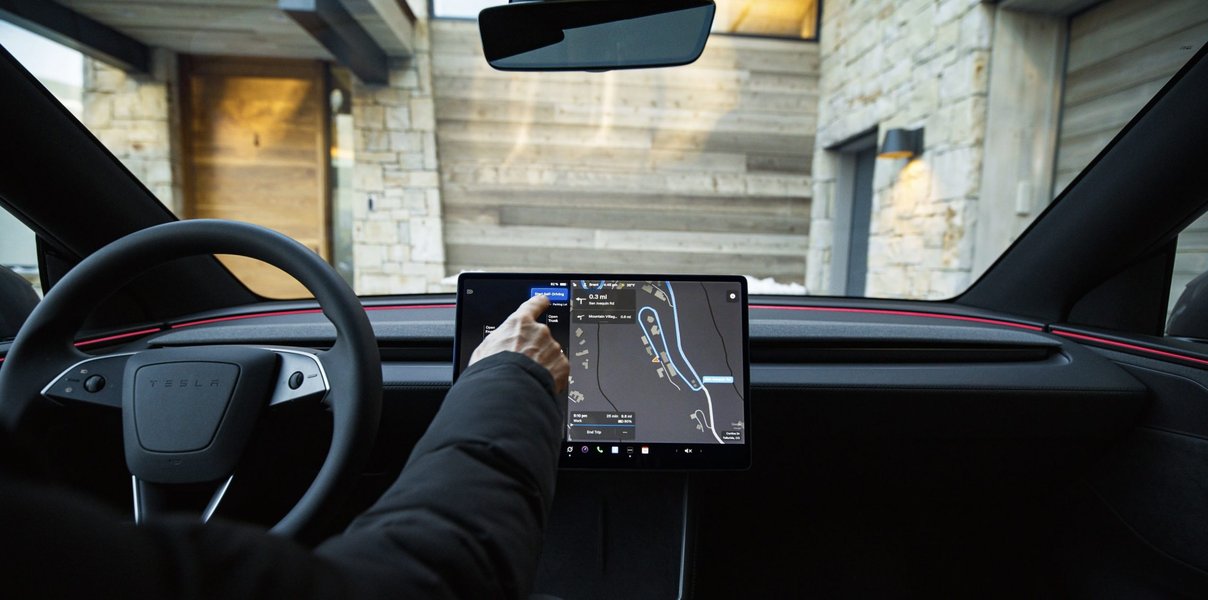
Tesla FSD Supervised display showing real-time road visualization.
The Critical Divide: Level 2 vs. Level 3 Autonomy
The distinction between SAE Level 2 and Level 3 automation is pivotal for insurance liability. Most current systems, including Tesla's FSD (Supervised), operate at Level 2, demanding constant driver supervision. In contrast, Level 3 conditional automation allows the system to manage all driving functions under specific conditions, without requiring the driver to constantly monitor the road. For Level 3 systems, such as Mercedes-Benz's Drive Pilot available in some U.S. states, the manufacturer may assume legal liability when the system is engaged. This represents a substantial shift in the allocation of fault in autonomous crashes, moving from driver-centric responsibility to manufacturer accountability during periods of system engagement.
How Insurance Companies Handle Autopilot and FSD-Related Claims in 2026
Adapting coverage models to the complexities of autonomous driving features.
The insurance industry is rapidly adapting to the emergence of autonomous driving technology. Traditional insurers typically treat Tesla vehicles like any other car, assessing fault based on driver negligence principles. However, innovative providers are introducing usage-based models that recognize the safety improvements of autonomous systems. Standard auto insurance policies generally cover accidents that occur while Autopilot or FSD is engaged, treating them similarly to any other collision. Nevertheless, insurers may pursue subrogation claims against Tesla if evidence suggests a manufacturing defect or software malfunction contributed to the accident.
FSD Insurance Coverage 2026: The Rise of Specialized Policies
A significant development in 2026 is the introduction of specialized autonomous driving insurance policies. Lemonade, for instance, launched an autonomous car insurance product offering Tesla owners approximately 50% lower rates for miles driven with FSD engaged. This policy, available initially in Arizona and Oregon (as of February 26, 2026), represents a major external validation of Tesla's safety claims and signals a shift toward usage-based insurance models that differentiate between human and autonomous driving miles. This approach requires Tesla vehicles with Hardware 4 (HW4) or higher and firmware version 2025.44.25.5 or higher.
Tesla Insurance, the company's own offering, also provides discounts for FSD (Supervised) usage. As of 2026, if you drive 50% or more of your miles with FSD (Supervised) enabled, you can receive up to a 10% discount on certain coverages. This discount is calculated monthly based on the percentage of FSD miles driven and your Safety Score, relying on vehicle telemetry data for assessment.
Comparing Insurance Approaches for Tesla FSD Users:
| Feature | Lemonade Autonomous Car (AZ, OR) | Tesla Insurance (select states incl. AZ, TX) | Traditional Insurers (e.g., Progressive/Allstate) |
|---|---|---|---|
| Maximum FSD Discount | ~50% on per-mile rates | Up to 10% on eligible coverages | No broad FSD-specific discount yet |
| Discount Calculation | Per-mile, based on actual FSD engagement | Monthly, based on percentage of miles driven with FSD and Safety Score | Driving behavior telematics (UBI), claims history |
| Minimum FSD Usage Required | Any FSD miles get the discount | At least 1% FSD usage; full discount at 50%+ | N/A |
| Data Collection | Direct Tesla Fleet API: separates FSD vs. manual miles; software version; sensor health | Vehicle telemetry & Safety Score metrics | Standard driving behavior telematics |
| Liability Handling | Standard coverage; discount changes per-mile pricing only | Standard coverage; driver liable for Level 2 | Driver liability unless proven defect |

Lemonade's groundbreaking 50% discount for Tesla FSD miles.
Autonomous Vehicle Insurance Laws in the US: A Developing Framework
Navigating federal oversight, state regulations, and the evolving legal landscape.
The legal framework for autonomous driving insurance and liability in the U.S. is still evolving, with a patchwork of federal and state regulations. The National Highway Traffic Safety Administration (NHTSA) actively monitors the safety of vehicle automation and investigates crashes involving ADAS, such as Tesla Autopilot. These investigations help determine if a system worked as promised and contribute to shaping future regulations, though NHTSA does not directly allocate civil liability; that remains within state tort law.
State-Specific Considerations for Tesla FSD Accident Liability
Over 40 U.S. states have enacted legislation related to autonomous vehicles, though insurance requirements vary widely. Some states are at the forefront of regulating these technologies:
- California: Requires specific insurance endorsements for testing autonomous vehicles and has robust AV testing oversight. However, for consumer Level 2 use, liability remains with the driver.
- Texas: Features relatively relaxed rules around autonomous driving operation, with a clearer path for commercial driverless operations backed by company-held insurance. Personal Level 2 use still places liability on the driver.
- Arizona: Has attracted numerous autonomous vehicle companies with favorable regulations and is home to active robotaxi operations. Lemonade's new FSD-linked pricing is also live here, though the driver remains responsible for Level 2 systems.
The trend line indicates that as Level 3 and Level 4 autonomy expand, expect more system-centric and product liability exposure. For now, driver negligence remains central for Level 2 incidents.
Real-World Cases: Shaping Autopilot Accident Liability
Key legal outcomes influencing the future of autonomous vehicle liability.
Several high-profile cases have been instrumental in shaping the current liability landscape for autonomous vehicle accidents. These legal battles highlight the complexities involved in determining fault when advanced driver-assistance systems are engaged.
The 2018 Mountain View Tesla Crash:
The National Transportation Safety Board (NTSB) investigation found that the driver's overreliance on Autopilot and his failure to maintain control were the primary causes. However, the NTSB also criticized Tesla's design limitations and the lack of adequate safeguards to prevent driver misuse.
The 2025 Miami Federal Jury Verdict:
A federal jury found Tesla one-third liable in a fatal crash and ordered the company to pay $243 million in damages. This verdict cited misleading safety claims and design flaws, marking a significant shift toward manufacturer accountability and setting a precedent for product liability claims against Tesla. Such cases underscore that while the driver is responsible for supervision, manufacturers are not immune to liability if their systems are found to be defective or their marketing misleading.
“Proving fault in a self-driving crash isn’t about guessing; it’s about logs, sensor data, and how the system performed relative to its stated limits.”
Outcomes in these cases heavily hinge on evidence—vehicle logs, software versions, sensor performance, and compliance with usage guidelines. It is increasingly clear that strong forensic proof is essential to shift blame from the driver to the software or manufacturer.
Protecting Yourself: Legal and Insurance Considerations for Autonomous Vehicle Owners
Essential steps for drivers to mitigate risk and ensure adequate coverage.
As a Tesla or other autonomous vehicle owner, understanding your responsibilities and protecting yourself legally and through insurance is paramount. Driver responsibilities and best practices remain critical even with sophisticated ADAS.
Driver Responsibilities and Best Practices:
- Stay Engaged: Even with advanced driver assistance systems (ADAS), the human driver is generally responsible for monitoring the road and being ready to take control. Never treat Level 2 systems as fully autonomous.
- Maintain Vigilance: Stay alert, keep your hands on the wheel, and be prepared to intervene immediately. Inadequate user warnings from manufacturers or negligence regarding system updates could create grounds for product liability claims against the automaker.
- Adhere to Usage Guidelines: Read and follow your Tesla insurance policy and the owner’s manual warnings. Keep software updated, heed alerts, and do not use features outside intended roads or conditions.
Documentation and Evidence Preservation:
Following any incident involving autonomous features, proper documentation is vital:
- Contact law enforcement to create an official report.
- Preserve vehicle data through Tesla's built-in logging systems. Turn on dashcam/Sentry and ensure clips are saved.
- Document the specific software version and driving conditions at the time of the incident.
- Avoid making statements about fault before consulting legal counsel.
- If you purchased FSD outright, notify your insurer so that the total vehicle value reflects the added software cost. Some carriers require this for total loss valuation.
EV-Specific Insurance Needs and Software Features
Electric Vehicles (EVs) often have specific insurance needs due to their advanced technology and potentially higher repair costs. Autonomous features, especially paid upgrades like FSD, should be reported to your insurance provider. Some insurers may view these as modifications. The rise of telematics and usage-based insurance (UBI) means that driving behavior and FSD usage are increasingly factored into premium calculations, as seen with Tesla Insurance and Lemonade's new autonomous car insurance product.
- Higher repair costs for sensors, cameras, and calibration after collisions.
- Over-the-air (OTA) software status can influence valuation and diagnostics.
- Battery damage assessment and high-voltage safety add time and expense, which should be factored into coverage limits and rental/loss-of-use (LOU) needs.
The Future of Autonomous Vehicle Insurance
Anticipating shifts in liability and evolving insurance models.
As technology advances toward Level 3 and Level 4 autonomy, insurance models will increasingly shift liability from drivers to manufacturers. This transition will likely see personal auto insurance lines shrink while product liability coverage expands significantly. The move towards higher levels of autonomy implies that the vehicle's systems will assume more responsibility, inherently shifting the burden of fault to the entities responsible for those systems.
Regulatory Evolution:
The NHTSA continues to develop frameworks for autonomous vehicle safety, while states are creating a patchwork of regulations that manufacturers must navigate. Federal legislation may eventually standardize these requirements across the U.S., providing a clearer path for liability assignment.
Insurance Industry Adaptation:
Major insurers are developing specialized products for autonomous vehicles, with some exploring manufacturer-focused liability policies that would cover software failures and sensor malfunctions. This proactive approach by the insurance industry indicates a recognition of the impending changes in liability allocation. As data continues to prove the safety benefits of autonomous driving, we can expect more favorable insurance rates for vehicles equipped with these technologies, further incentivizing their adoption.

SAE International's levels of driving automation, illustrating the progression of vehicle autonomy.
