

Key Insights into the P0420 Code Challenge
- P0420 doesn't always mean a dead catalytic converter: This common code signifies "Catalyst System Efficiency Below Threshold (Bank 1)," but often, other less expensive issues like faulty oxygen sensors or exhaust leaks are the true culprits.
- Live data analysis is crucial for accurate diagnosis: Monitoring upstream and downstream oxygen sensor waveforms provides vital clues. A downstream sensor mirroring the upstream's rapid fluctuations points to a failing catalytic converter, while an erratic or stuck downstream signal suggests a sensor issue.
- Comprehensive diagnostic steps save costly misdiagnoses: Before replacing expensive parts, conduct a thorough visual inspection for exhaust leaks, check for other diagnostic trouble codes (DTCs), perform a catalytic converter temperature test, and analyze fuel trims to identify underlying engine problems.
The sudden illumination of the "Check Engine" light is a familiar and often unsettling experience for any vehicle owner. When an OBD-II scanner reveals a P0420 Error Code Fix is needed, your mind might immediately gravitate towards the most dreaded and costly repair: a catalytic converter replacement. This assumption, however, can lead to significant financial strain and unnecessary work. While a failing catalytic converter is a possible cause, it's far from the only one. Understanding the nuances of this common diagnostic trouble code (DTC) is paramount to an accurate and cost-effective repair.
This comprehensive guide aims to demystify the P0420 code, providing you with the knowledge and systematic steps necessary to accurately distinguish between a failing catalytic converter and other, often simpler, problems. By the end of this article, you will be equipped to make informed decisions about your vehicle's health, potentially saving you hundreds or even thousands of dollars in misdiagnosed repairs. Let's embark on a journey to truly understand what your car is trying to tell you.
Decoding the P0420 Error: What Your Car is Really Saying
Beyond the "Check Engine" light, understanding the message behind P0420.
The Core Meaning: "Catalyst System Efficiency Below Threshold (Bank 1)"
The P0420 code is a diagnostic trouble code that translates to "Catalyst System Efficiency Below Threshold (Bank 1)." In essence, your vehicle's Powertrain Control Module (PCM), often referred to as the car's computer, has detected that the catalytic converter on "Bank 1" of your engine is not performing its job of cleaning exhaust gases as efficiently as it should. Bank 1 typically refers to the side of the engine that contains cylinder number one. In inline engines, there's usually only one bank, which is considered Bank 1.
The catalytic converter is a vital component of your vehicle's emission control system. Its primary function is to convert harmful pollutants produced during combustion—such as carbon monoxide (CO), unburned hydrocarbons (HC), and nitrogen oxides (NOx)—into less harmful substances like carbon dioxide (CO2), water vapor (H2O), and nitrogen (N2). This chemical reaction is facilitated by precious metals (like platinum, palladium, and rhodium) embedded within a ceramic honeycomb structure inside the converter.
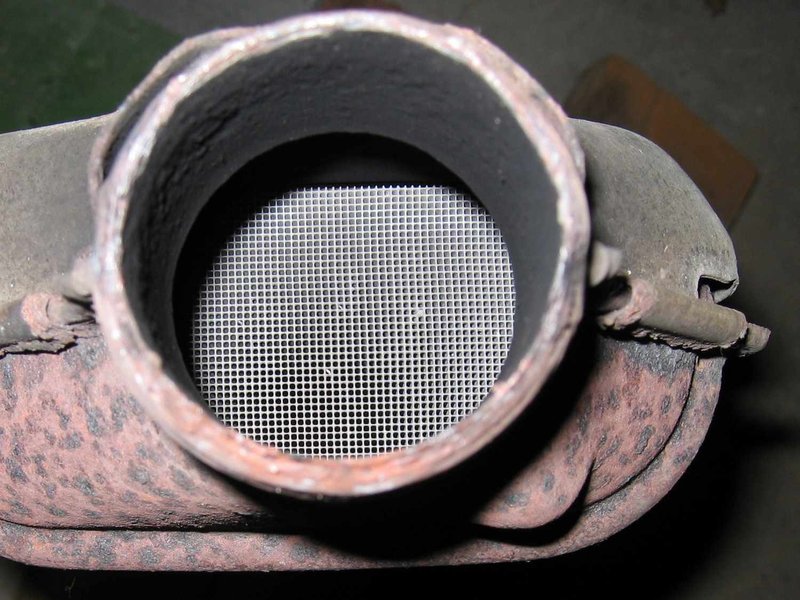
A cutaway view of a catalytic converter, revealing its honeycomb structure and precious metal coatings.
The Role of Oxygen Sensors in Monitoring Efficiency
To monitor the catalytic converter's efficiency, the PCM relies on two crucial oxygen (O2) sensors for each bank:
- Upstream O2 Sensor (Sensor 1): Located before the catalytic converter, this sensor measures the oxygen content in the exhaust gases directly from the engine. Its readings rapidly fluctuate as the engine's air-fuel mixture constantly adjusts to maintain optimal combustion.
- Downstream O2 Sensor (Sensor 2): Positioned after the catalytic converter, this sensor measures the oxygen content after the exhaust gases have passed through the converter. If the catalytic converter is functioning correctly, it will "store" and "release" oxygen as part of its chemical reactions, leading to much more stable and slower-changing voltage readings from the downstream sensor compared to the upstream sensor.
The P0420 code is triggered when the PCM observes that the readings from these two sensors become too similar. This similarity suggests that the catalytic converter is no longer effectively storing and releasing oxygen, indicating a reduction in its pollutant-converting efficiency. Essentially, the downstream sensor is starting to "mirror" the upstream sensor's rapid fluctuations, signaling to the PCM that the catalyst is not doing its job.
"The P0420 code is essentially your car's way of telling you its emissions control system isn't as clean as it should be, specifically concerning the catalytic converter on Bank 1. But don't let that send you directly to replacing it; a thorough diagnosis is always the first step."
Pinpointing the Problem: Bad O2 Sensor vs. Failing Catalytic Converter
Crucial differences that prevent misdiagnosis and save money.
Distinguishing between a faulty oxygen sensor and a genuinely failing catalytic converter is the most critical step in addressing a P0420 code. A misdiagnosis can lead to unnecessarily expensive repairs, such as replacing a perfectly good catalytic converter. While both components are integral to the emission system, their failure modes and diagnostic signatures differ significantly.
Common Symptoms and Their True Origins
While the illuminated check engine light is the universal symptom for P0420, other indicators can help you differentiate the underlying problem:
- Reduced Engine Performance: A truly clogged or failing catalytic converter can significantly restrict exhaust flow, leading to noticeable sluggishness, delayed acceleration, and a lack of power, especially under load or at higher speeds. A faulty O2 sensor, while affecting efficiency, typically causes less severe performance issues.
- Poor Fuel Economy: Both a failing O2 sensor (which can lead to an incorrect air-fuel mixture) and an inefficient catalytic converter (which impacts overall engine efficiency) can result in decreased fuel mileage.
- "Rotten Egg" Smell: A strong odor of sulfur or rotten eggs from the exhaust is a classic sign of an overloaded or failing catalytic converter. This smell occurs when the converter can no longer process hydrogen sulfide in the exhaust, allowing it to escape into the atmosphere. A bad O2 sensor alone is unlikely to cause this distinct smell.
- Engine Misfires or Rough Idling: While misfires can damage a catalytic converter, they are symptoms of engine problems that precede converter failure, rather than being direct symptoms of the P0420 itself. However, a severely clogged converter can cause back pressure that might lead to misfires.
- Rattling Noise: A rattling sound from underneath the vehicle, especially when tapping the catalytic converter, often indicates that the internal ceramic honeycomb structure has broken apart, signifying a mechanically failed converter. O2 sensors do not typically produce such sounds.
A Systematic Diagnostic Approach for the P0420 Code
Follow these steps to accurately identify the root cause.
A methodical diagnostic process is key to an effective P0420 Error Code Fix. Jumping to conclusions can be costly. Here's a step-by-step guide:
Step 1: Scan for All Codes and Gather Freeze Frame Data
The first action should always be to connect an OBD-II scanner and retrieve all stored diagnostic trouble codes. Do not clear them yet. The presence of other codes can provide critical context. For instance, misfire codes (P0300-P0306), fuel trim codes (P0171, P0172), or O2 sensor heater circuit codes (P0135, P0141) should be addressed first, as they often cause or contribute to P0420. Additionally, examine the "freeze frame data," which records engine parameters (like RPM, vehicle speed, coolant temperature, and fuel trims) at the exact moment the P0420 code was set. This snapshot can offer valuable clues about the operating conditions under which the problem occurred.
Step 2: Conduct a Thorough Visual Inspection
Before diving into electrical tests, perform a detailed visual inspection of the exhaust system and associated components:
- Exhaust Leaks: Critically inspect the entire exhaust system, particularly upstream of the catalytic converter and around the O2 sensors. Look for signs of soot, cracks, holes, loose connections, or failing gaskets. An exhaust leak before the downstream O2 sensor can introduce outside air, skewing sensor readings and falsely triggering a P0420. This is a very common and often overlooked cause.
- O2 Sensor Wiring and Connectors: Check the wiring harnesses and connectors for both upstream and downstream O2 sensors. Look for signs of physical damage, fraying, corrosion, burns, or loose connections. Damaged wiring can lead to erratic or incorrect sensor signals.
- Catalytic Converter Physical Damage: Inspect the catalytic converter itself for any external dents, rust, or other signs of physical damage. A muffled rattle when tapping the converter might indicate a broken internal substrate.
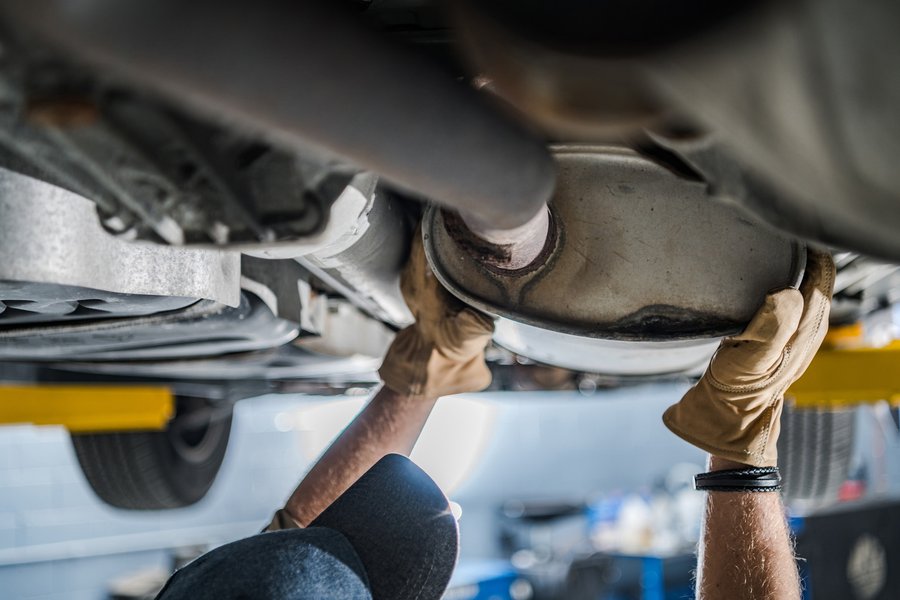
A mechanic performing a visual inspection of an exhaust system for potential leaks or damage.
Step 3: Analyze Live O2 Sensor Data with an OBD-II Scanner
This is arguably the most insightful diagnostic step. You'll need an OBD-II scanner capable of displaying live data streams. Warm up the engine to operating temperature and observe the voltage readings for Bank 1 Sensor 1 (upstream) and Bank 1 Sensor 2 (downstream):
- Healthy System: The upstream O2 sensor (Sensor 1) should show rapid, consistent fluctuations between approximately 0.1V and 0.9V. The downstream O2 sensor (Sensor 2), however, should exhibit a much more stable and slower-changing signal, typically hovering around 0.4V to 0.7V. This indicates the catalytic converter is efficiently storing and releasing oxygen.
- Failing Catalytic Converter: If the catalytic converter is losing efficiency, the downstream O2 sensor's waveform will begin to "mirror" the upstream sensor's rapid fluctuations. The PCM interprets this as the converter not doing its job, as there's little difference in oxygen content before and after the catalyst.
- Faulty Downstream O2 Sensor: If the downstream sensor's voltage is stuck at a high or low value, shows no activity, or fluctuates erratically without matching the upstream sensor in a mirroring pattern, the sensor itself is likely faulty. This can give a false impression of catalytic converter failure.
Step 4: Perform a Catalytic Converter Temperature Test
A working catalytic converter generates heat through its chemical reactions. You can test this using an infrared thermometer:
- Drive the vehicle for at least 15-20 minutes to ensure the exhaust system is thoroughly heated.
- Safely lift and support the vehicle.
- Measure the temperature at the inlet pipe of the catalytic converter.
- Immediately measure the temperature at the outlet pipe of the catalytic converter.
- Expected Results: A healthy catalytic converter should show an outlet temperature that is significantly hotter than the inlet temperature, typically by at least 20-50°F (10-30°C). If the temperatures are nearly identical, or if the outlet is cooler than the inlet, it indicates the converter is not performing its chemical reactions efficiently and likely needs replacement.
Step 5: Evaluate Engine Performance and Fuel Trims
Underlying engine issues can lead to catalytic converter failure. Using your OBD-II scanner, check fuel trims (Short Term Fuel Trim - STFT and Long Term Fuel Trim - LTFT):
- Fuel Trims: Significant positive fuel trims (+10% or more) indicate a lean condition (engine adding more fuel), possibly due to vacuum leaks, low fuel pressure, or dirty fuel injectors. Large negative fuel trims (-10% or more) suggest a rich condition (engine removing fuel), potentially caused by leaking fuel injectors, high fuel pressure, or a faulty Mass Air Flow (MAF) sensor. Both lean and rich conditions can overwhelm and damage a catalytic converter over time.
- Misfires: Any active or pending misfire codes (P030X) must be addressed immediately. Unburned fuel entering the catalytic converter from misfiring cylinders can quickly overheat and melt the converter's internal substrate.
Comparison Table: Bad O2 Sensor vs. Failing Catalytic Converter
A quick reference for common diagnostic indicators.
This table summarizes the key distinctions to help you make an informed decision when diagnosing a P0420 code.
| Characteristic/Test |
Points to Faulty O2 Sensor (Bank 1 Sensor 2) | Points to Failing Catalytic Converter (Bank 1) |
|---|---|---|
| Check Engine Light |
P0420, possibly with O2 sensor heater codes (P0135, P0141) or circuit codes . |
Often P0420 as the primary code; may be accompanied by misfire/fuel codes if those caused the failure. |
| Engine Performance |
Often normal or slightly reduced fuel economy, no major power loss. |
Noticeable lack of power, sluggish acceleration, poor throttle response, especially uphill. |
| Exhaust Smell |
Typically no unusual smell, though rich conditions from a faulty upstream O2 sensor might cause a fuel smell. | Strong "rotten egg" (sulfur) smell from the tailpipe. |
| Live Data (Downstream O2) |
Stuck high/low, flatline, or erratic, not consistently mirroring upstream. Might show heater circuit failure. |
Waveform closely mirrors the upstream O2 sensor's rapid fluctuations; very little or no difference. |
| Temperature Test (IR Thermometer) |
Inlet and outlet temperatures are often similar or show inconsistent differences, as the converter may still be functional. | Little to no temperature difference between inlet and outlet, or outlet is even cooler, indicating no chemical reaction. |
| Physical Inspection |
Wiring damage, corroded connector, physical damage to the sensor itself. |
Rattling sound from converter, heat discoloration, or external damage. No exhaust leaks. |
| Associated Codes | P013x, P014x (O2 sensor related), no misfires or severe fuel trims directly. | May have P030x (misfire), P017x (fuel trim), or P040x (EGR) codes, which likely led to converter failure. |
Implementing the P0420 Error Code Fix: Repair Options
From simple fixes to major component replacements.
Once you have thoroughly diagnosed the problem using the steps above, you can confidently proceed with the appropriate repair. Remember, addressing the root cause is paramount to preventing the P0420 code from returning.
Fixing Exhaust Leaks or Faulty O2 Sensors
If your diagnosis points to an exhaust leak, specifically one upstream of the downstream O2 sensor, repair it immediately. This could involve tightening clamps, replacing gaskets, or welding a crack. An exhaust leak is one of the most common and simplest causes of a P0420 code.

A technician inspecting an exhaust system for potential leaks or issues.
If live data unequivocally indicates a faulty downstream O2 sensor (e.g., stuck voltage, erratic readings inconsistent with mirroring the upstream sensor, or O2 heater circuit codes), replacing the sensor is the next logical step. Always opt for an OEM or high-quality aftermarket sensor, as cheaper alternatives may not function correctly or last long. This is generally a much more affordable and straightforward repair than replacing the catalytic converter.
Addressing Underlying Engine Issues
If your diagnostic process revealed misfire codes, significant fuel trim issues, or other engine-related DTCs, these problems must be rectified before considering the catalytic converter. Ignoring them will likely cause a new catalytic converter to fail prematurely. This involves repairing vacuum leaks, replacing spark plugs, ignition coils, fuel injectors, or addressing issues with the MAF sensor.
Catalytic Converter Replacement: When It's Truly Necessary
If all other potential causes have been thoroughly investigated and ruled out, and live data strongly suggests the catalytic converter itself is inefficient (i.e., the downstream O2 sensor mirrors the upstream), then replacement is the appropriate P0420 Error Code Fix. It's crucial to understand that catalytic converters are designed to last the life of the vehicle, often over 100,000 to 150,000 miles. Their failure is usually a symptom of another underlying issue that has damaged them over time.
- Choosing a Replacement: You can choose between an Original Equipment Manufacturer (OEM) converter, which guarantees fit and performance but is typically the most expensive, or a high-quality aftermarket converter. Ensure any aftermarket option is compliant with your state's emissions regulations (e.g., California Air Resources Board - CARB compliant, if applicable).
- Professional Installation: Replacing a catalytic converter often requires specialized tools, welding, and precise installation. Professional installation is highly recommended to ensure proper fitment and sealing, which is critical for system integrity and preventing future P0420 codes.
Important Note: Never replace a catalytic converter without first identifying and fixing the underlying issue that caused its failure. Otherwise, the new converter is likely to fail prematurely as well.
Are Catalytic Converter Cleaners Effective?
For mildly fouled or carbon-clogged catalytic converters, certain fuel additives marketed as "catalytic converter cleaners" *might* offer a temporary improvement or preventative measure. These work by helping to burn off carbon deposits that can accumulate on the catalyst surface. However, they are rarely a miracle cure for a severely melted, poisoned, or mechanically broken catalytic converter. If the converter is truly degraded, a cleaner will not restore its full efficiency.
Prevention: Safeguarding Your Catalytic Converter and Avoiding P0420
Proactive measures to ensure long-term emission system health.
The best P0420 Error Code Fix is the one you never have to make. Protecting your catalytic converter and associated emission components involves consistent vehicle maintenance and prompt attention to any engine issues:
- Regular Maintenance: Adhere to your vehicle's recommended maintenance schedule, including oil changes, spark plug replacements, air filter checks, and PCV valve inspections. A well-maintained engine runs cleaner and more efficiently, reducing stress on the catalytic converter.
- Promptly Address Engine Misfires: Never ignore a check engine light indicating a misfire (P030X codes). Raw, unburned fuel entering the exhaust system from a misfiring cylinder is extremely damaging to a catalytic converter, causing it to overheat and melt its internal substrate.
- Fix Oil and Coolant Leaks: Oil or coolant leaking into the combustion chamber and subsequently entering the exhaust system can "poison" the catalytic converter's precious metals, rendering it ineffective. Address any leaks of these fluids immediately.
- Use Quality Fuel: Use the octane level and fuel type recommended by your vehicle manufacturer. While not a direct cause, consistently using substandard fuel can contribute to carbon buildup and affect combustion efficiency.
- Avoid Excessive Short Trips: Catalytic converters need to reach their optimal operating temperature (several hundred degrees Fahrenheit) to function efficiently. Frequent very short trips where the engine never fully warms up can prevent the converter from self-cleaning and contribute to carbon buildup.
- Regular Exhaust System Inspections: Periodically check your exhaust system for any signs of leaks, corrosion, or physical damage. Early detection of a small leak can prevent a false P0420 code.
FAQs About the P0420 Code and Its Solutions
Common questions and expert answers for greater clarity.
Conclusion: Empowering Your P0420 Error Code Fix Journey
The P0420 error code, while daunting, doesn't have to be a source of immediate panic or unnecessary financial drain. By adopting a methodical, diagnostic approach, you can accurately pinpoint the true cause, distinguishing between a relatively inexpensive oxygen sensor replacement or exhaust leak repair and a costly catalytic converter. Armed with the knowledge of how your emission system works, the tell-tale signs of different failures, and the systematic diagnostic steps outlined in this guide, you are empowered to make informed decisions about your vehicle's maintenance.
Remember, your car's check engine light is a communication tool. Learning to interpret its messages and responding with logical, step-by-step troubleshooting is the key to maintaining your vehicle's performance, fuel efficiency, and environmental compliance, all while saving money and avoiding the dreaded "parts cannon" approach to repairs. Trust the process, and you'll find the right P0420 Error Code Fix.
