

Don't let a "Check Engine Light" lead to costly guesses; understand, diagnose, and fix your small EVAP leak with confidence.
Key Insights into the P0442 Code
- Gas Cap First: The most common and often cheapest fix for a P0442 code is a loose, worn, or faulty gas cap. Always start your diagnosis here.
- Small vs. Large: P0442 signifies a "small leak" in your EVAP system, roughly the size of a pinhole (0.020-0.040 inches). This differentiates it from larger leaks indicated by codes like P0455.
- Smoke Test is Key: Because these leaks are so small, a visual inspection often isn't enough. Professional smoke testing is the most reliable method to pinpoint the exact source of a P0442 leak.
Few things cause a driver's heart to sink faster than an illuminated "Check Engine Light." While this light can signal a wide array of problems, encountering a P0442 code can be particularly perplexing. This code indicates a "small leak" in your vehicle's Evaporative Emission Control System (EVAP). Unlike some engine codes that immediately impact performance, a P0442 often doesn't make your car feel different, leading many to wonder about its importance. However, addressing it is crucial for both environmental reasons and passing mandatory emissions tests.
In this comprehensive guide, we'll strip away the jargon and provide a clear, step-by-step approach to understanding, diagnosing, and ultimately resolving a P0442 code. We'll explore exactly what this code means, how it differs from other EVAP codes, delve into its most common culprits, walk you through effective diagnostic techniques (including the indispensable smoke test), and offer realistic repair cost estimates. Our goal is to empower you to tackle this common automotive issue with knowledge, avoiding unnecessary expenses and frustrating guesswork.
Unpacking the P0442 Code: What's Happening Under the Hood?
The P0442 code, an OBD-II (On-Board Diagnostics II) generic trouble code, specifically points to an "Evaporative Emission Control System Leak Detected (Small Leak)." To truly grasp what this means, let's briefly look at the EVAP system's function.
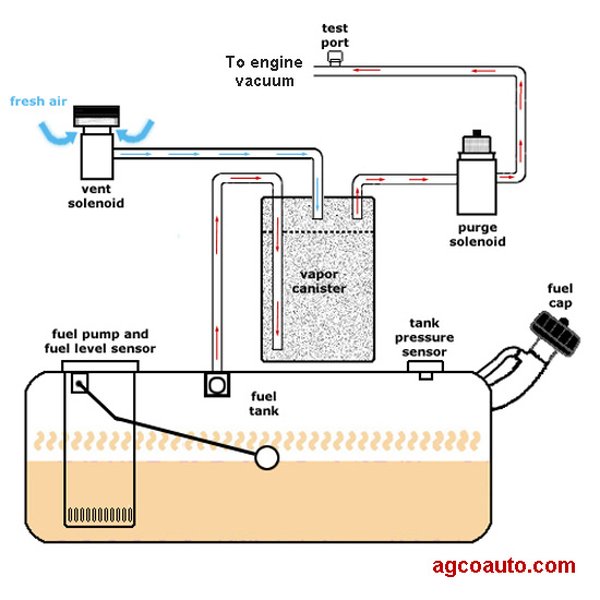
An illustrative diagram highlighting the interconnected components of a vehicle's EVAP system.
Your car's EVAP system is an environmental safeguard, meticulously designed to prevent harmful gasoline vapors from escaping into the atmosphere. Instead of allowing these vapors to pollute, the system captures them from the fuel tank and temporarily stores them in a charcoal canister. When the engine is running under specific conditions, these stored vapors are drawn into the engine to be safely burned during the combustion process. This not only reduces air pollution but also slightly improves fuel efficiency.
The vehicle's Powertrain Control Module (PCM) or Engine Control Module (ECM) constantly monitors this sealed system. It does so by performing various self-tests, often by creating a vacuum or pressure within the system and monitoring its ability to hold that state. When the PCM detects a pressure or vacuum decay that corresponds to a leak of a very specific size—typically between 0.020 and 0.040 inches in diameter (about the size of a pinhole)—it flags the P0442 code and illuminates your check engine light. This precise measurement highlights the sensitivity of modern emission monitoring systems.
The EVAP System at a Glance
To understand how a leak impacts the system, it helps to know its main players:
- Fuel Tank: The source of gasoline vapors.
- Gas Cap: The primary seal that prevents vapors from escaping directly from the filler neck.
- Charcoal Canister: A reservoir filled with activated carbon that absorbs and stores fuel vapors.
- Purge Valve (or Purge Solenoid): Controls the flow of stored fuel vapors from the canister into the engine's intake manifold for combustion.
- Vent Valve (or Vent Solenoid): Allows fresh air into the EVAP system during purging and seals the system during leak tests.
- Hoses and Lines: The network of tubes connecting all these components, forming a sealed pathway for vapors.
- Fuel Tank Pressure Sensor: Monitors pressure changes within the fuel tank, providing crucial data to the PCM for leak detection.
P0442 vs. P0455: Deciphering EVAP Leak Codes
It's common for drivers to confuse P0442 with other EVAP-related codes, particularly P0455. While both indicate a leak in the evaporative system, they signal different severity levels and often point to different typical causes. Understanding these distinctions can significantly narrow down your diagnostic path.
| Code | Meaning | Typical Leak Size/Nature | Common Culprits | Detection Difficulty |
|---|---|---|---|---|
| P0442 | EVAP System Leak Detected (Small Leak) | ~0.020–0.040 inches (pinhole-sized) | Worn gas cap seal, hairline hose cracks, minor purge/vent valve leaks, minor canister cracks | Often requires specialized equipment like a smoke machine |
| P0455 | EVAP System Leak Detected (Large Leak) | ≥ ~0.080 inches (significant opening) | Missing or very loose gas cap, completely disconnected EVAP hose, major component failure | Often visually identifiable; smoke test can confirm easily |
| P0456 | EVAP System Leak Detected (Very Small Leak) | < 0.020 inches (microscopic leak) | Micro-cracks in hoses, slight valve weeping, hardened gas cap seal | Extremely difficult; nearly always requires a smoke test and patience |
| P0440 | EVAP System Malfunction (General) | Unspecified | A broader code often set alongside other specific EVAP codes or indicating a general system fault | Requires further diagnosis, often leading to one of the above codes |
The critical takeaway here is that P0442 sits squarely in the "small leak" category. This means the leak is subtle enough to escape casual visual inspection but significant enough to prevent the EVAP system from maintaining its seal during self-tests.
"While a P0455 might be obvious from a missing gas cap, a P0442 requires a more investigative approach due to its elusive nature."
Recognizing the Symptoms of a P0442 Code
Unlike many diagnostic trouble codes that can dramatically impact your vehicle's drivability or performance, the symptoms associated with a P0442 code are often very subtle, or even non-existent beyond the illuminated check engine light. This lack of obvious issues can sometimes lead drivers to delay addressing the problem, but it’s still important to resolve.
- Illuminated Check Engine Light: This is almost always the first, and often the only, noticeable symptom. Your vehicle's engine will likely run perfectly normally otherwise.
- Failed Emissions Test: In regions that require emissions testing for vehicle registration, an active P0442 code will cause your vehicle to fail. This is because the code indicates that your car is releasing unburned fuel vapors into the atmosphere, which is an environmental compliance issue.
- Slight Fuel Odor: Occasionally, you might detect a faint smell of gasoline, particularly around the fuel filler area or after refueling. This is a direct result of the fuel vapors escaping the sealed system. However, for a small leak, this odor might be very minor or only noticeable under specific conditions (e.g., in a warm garage).
- Minor Fuel Economy Reduction: While rarely significant enough for most drivers to consciously notice, a persistent small leak can lead to a very slight decrease in overall fuel efficiency over time, as some of your fuel's energy content is literally evaporating.
- Rough Idle (Rare): In some cases, if the leak is associated with a purge valve that isn't sealing properly and is allowing unmetered air into the intake manifold, it could potentially cause a slightly rough or unstable idle. However, this is less common for P0442 specifically, which usually affects the integrity of the vapor containment rather than direct engine operation.
It’s important to note that if you experience a strong, persistent gasoline smell, it could indicate a larger leak that requires immediate attention for safety reasons, even if only a P0442 code is present.
Pinpointing the Problem: Common Causes of a P0442 Code
The nature of a "small leak" means the causes can range from incredibly simple, DIY-friendly fixes to more complex component failures that require professional tools and expertise. Here's a breakdown of the most frequent culprits behind a P0442 code, generally ordered from most common and easiest to check, to less common or more involved:
1. Gas Cap Issues (The Usual Suspect)
Believe it or not, the gas cap is the single most common cause of a P0442 code. It plays a vital role in sealing the EVAP system. Problems here account for a significant percentage of all small EVAP leaks.
- Loose Cap: Simply not tightening the gas cap enough after refueling is a surprisingly frequent reason. If it doesn't click several times (for caps designed to do so), it might not be sealed properly.
- Worn or Damaged Seal: Over time, the rubber O-ring or gasket on the gas cap can harden, crack, or become flattened, losing its ability to create an airtight seal against the filler neck.
- Cracked Cap: Physical damage to the cap itself can compromise its sealing integrity.
- Incorrect Aftermarket Cap: Not all aftermarket gas caps provide the same sealing quality as an OEM (Original Equipment Manufacturer) cap. Using a non-OEM cap might lead to recurring P0442 codes.
- Capless Fuel Systems: Even vehicles with capless fuel fillers can experience issues if the sealing flaps or components within the filler neck become dirty, stuck open, or damaged.
2. Cracked or Damaged EVAP Hoses and Lines
The EVAP system relies on a network of hoses and rigid lines to transport fuel vapors. These components are constantly exposed to engine heat, road debris, and general wear and tear, making them susceptible to small leaks.
- Age-Related Deterioration: Rubber and plastic hoses become brittle, develop hairline cracks, or dry rot over time, especially in older vehicles.
- Physical Damage: Hoses can be chafed, cut, or otherwise damaged by contact with other components, road hazards, or during other repair work.
- Loose Connections: Hose clamps or quick-connect fittings can loosen, or their internal seals can degrade, leading to small gaps.
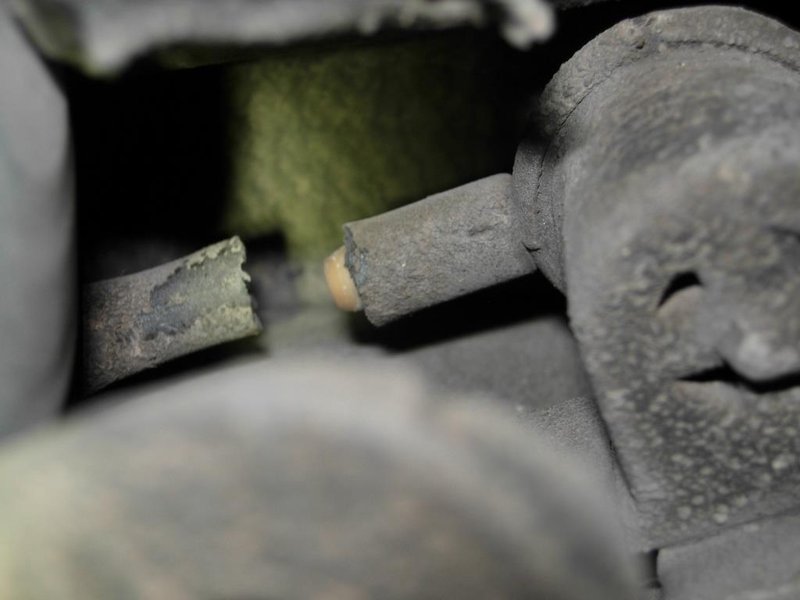
Cracked or brittle EVAP hoses are common leak sources due to age and exposure.
3. Faulty Purge Valve or Vent Valve
These two valves are crucial for the EVAP system's operation, and if either fails to seal correctly, a P0442 can be triggered.
- Purge Valve (Solenoid) Issues: If the purge valve gets stuck slightly open or develops an internal leak, it can allow a continuous, uncontrolled flow of air or vapors, preventing the system from holding pressure during a test.
- Vent Valve (Solenoid) Problems: The vent valve's job is to seal the EVAP system during leak detection tests. If it fails to close completely due to an internal fault, dirt, or debris (e.g., spider webs, dust) in its filter, the system cannot build or hold pressure, leading to a detected leak.
4. Damaged Charcoal Canister
The charcoal canister itself can become a source of leaks.
- Cracks: Physical impact (e.g., from road debris) can crack the canister's housing.
- Saturation: "Topping off" your fuel tank repeatedly can force liquid gasoline into the charcoal canister, damaging the activated carbon inside and potentially causing internal component failures or blockages that prevent proper sealing.
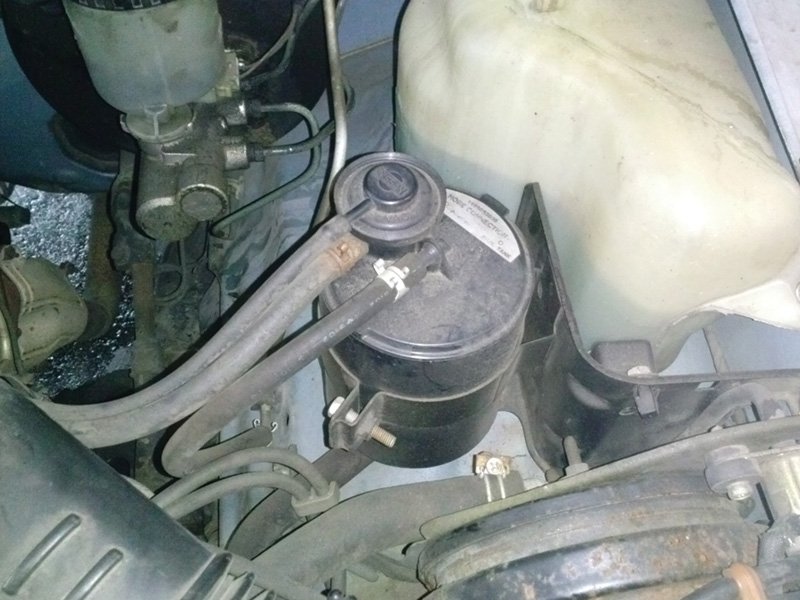
The charcoal canister stores fuel vapors and can develop cracks or become saturated.
5. Leaking Fuel Tank or Filler Neck
While less common for a "small leak" code, the fuel tank itself or its filler neck can be the source.
- Corrosion: Especially in older vehicles or those in rust-prone climates, the metal filler neck can corrode, preventing the gas cap from forming a perfect seal.
- Physical Damage: A minor impact to the fuel tank from road debris or a minor accident could create a small crack.
6. Faulty Fuel Tank Pressure Sensor
In rare instances, the issue isn't a physical leak but a faulty sensor.
- Incorrect Readings: A malfunctioning fuel tank pressure sensor might send inaccurate data to the PCM, leading the computer to falsely conclude that a leak exists, even if the system is perfectly sealed. This is usually diagnosed after all other potential leak sources have been ruled out.
Diagnosing the P0442 Code: A Step-by-Step Approach
Successfully diagnosing a P0442 code requires a systematic approach. Resist the urge to randomly replace parts; this often leads to wasted money and frustration. Instead, start with the simplest and most common causes, progressing to more complex diagnostics as needed.
Step 1: Confirm the Code and Check Freeze Frame Data
Begin by using an OBD-II scanner to confirm that P0442 is indeed the active code. While you're there, check for any other related EVAP codes (like P0440, P0441, P0456). Also, examine the "freeze frame data." This data provides a snapshot of engine conditions (engine speed, coolant temperature, fuel trim, fuel level) at the exact moment the code was set. Pay particular attention to the fuel level, as EVAP tests typically run when the tank is between 1/4 and 3/4 full. If the code was set outside this range, it might provide a clue or suggest waiting for another drive cycle.
Step 2: The Gas Cap Inspection and Test (Your First and Easiest Fix)
Since the gas cap is the most frequent culprit, this is always your starting point.
- Tighten It: Ensure your current gas cap is securely tightened until it clicks (if your cap is designed to do so). Many P0442 codes are resolved simply by a loose cap.
- Inspect for Damage: Remove the gas cap and visually inspect it. Look for any cracks on the cap's body, especially around the sealing surface. Check the rubber O-ring or gasket for signs of drying, cracking, tears, hardening, or flattening. A healthy gasket should feel pliable.
- Clean: Clean the sealing surface of the gas cap and the filler neck itself to ensure no debris is preventing a proper seal.
- Replace if Suspect: If the cap shows any signs of wear or damage, or if it doesn't click securely, replace it with a new, OEM-quality gas cap for your specific vehicle. Aftermarket caps, even if they look similar, might not seal correctly.
- Clear and Drive: After tightening or replacing the gas cap, clear the P0442 code using your OBD-II scanner. Then, drive your vehicle for a few days (completing several drive cycles) to allow the EVAP system to re-run its self-tests. If the gas cap was the issue, the check engine light should stay off.
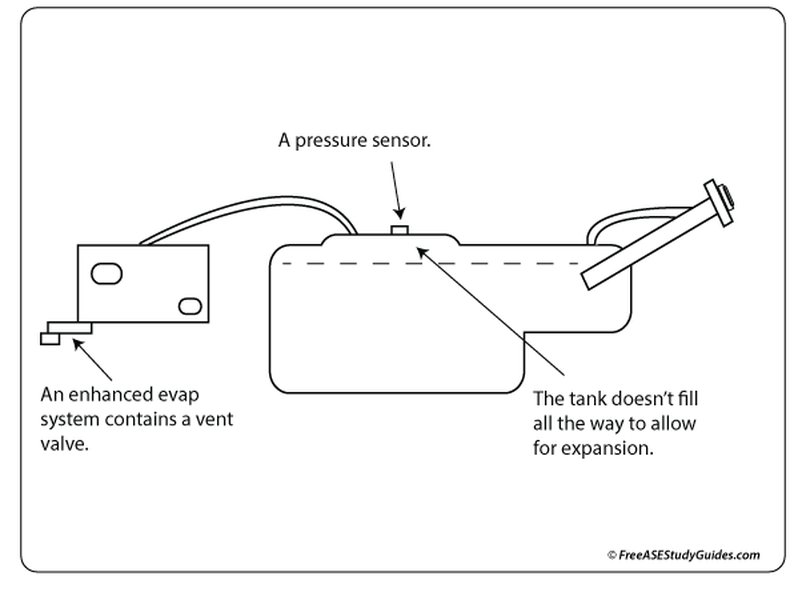
A worn or damaged gas cap seal is a very common cause of P0442.
Step 3: Visual Inspection of EVAP Hoses and Components
If the gas cap wasn't the solution, a thorough visual inspection of the accessible EVAP components is the next logical step.
- Locate Components: Consult your vehicle's service manual or online diagrams to identify the locations of the charcoal canister, purge valve, vent valve, and the associated hoses and lines. These are typically found in the engine bay, under the vehicle near the fuel tank, and along the frame rail.
- Inspect Hoses and Lines: Carefully examine all visible EVAP hoses and vacuum lines. Look for:
- Hairline cracks, especially where hoses bend or are exposed to heat.
- Dry rot or brittleness in rubber hoses.
- Loose connections or dislodged clamps.
- Signs of chafing or physical damage.
- Inspect Canister and Valves: Look for any visible cracks or physical damage to the charcoal canister. Inspect the purge and vent valves for any obvious damage or signs of leaks around their connections.
- Examine Filler Neck: Check the metal filler neck for excessive rust or corrosion where the gas cap seals. Severe corrosion can prevent even a new cap from sealing properly.
Step 4: Advanced Diagnosis with a Smoke Machine (The Gold Standard)
Because P0442 signifies a small leak, visual inspections often fail to reveal the culprit. This is where an EVAP smoke machine becomes invaluable. Professional technicians almost universally rely on this tool for accurate diagnosis of small EVAP leaks.
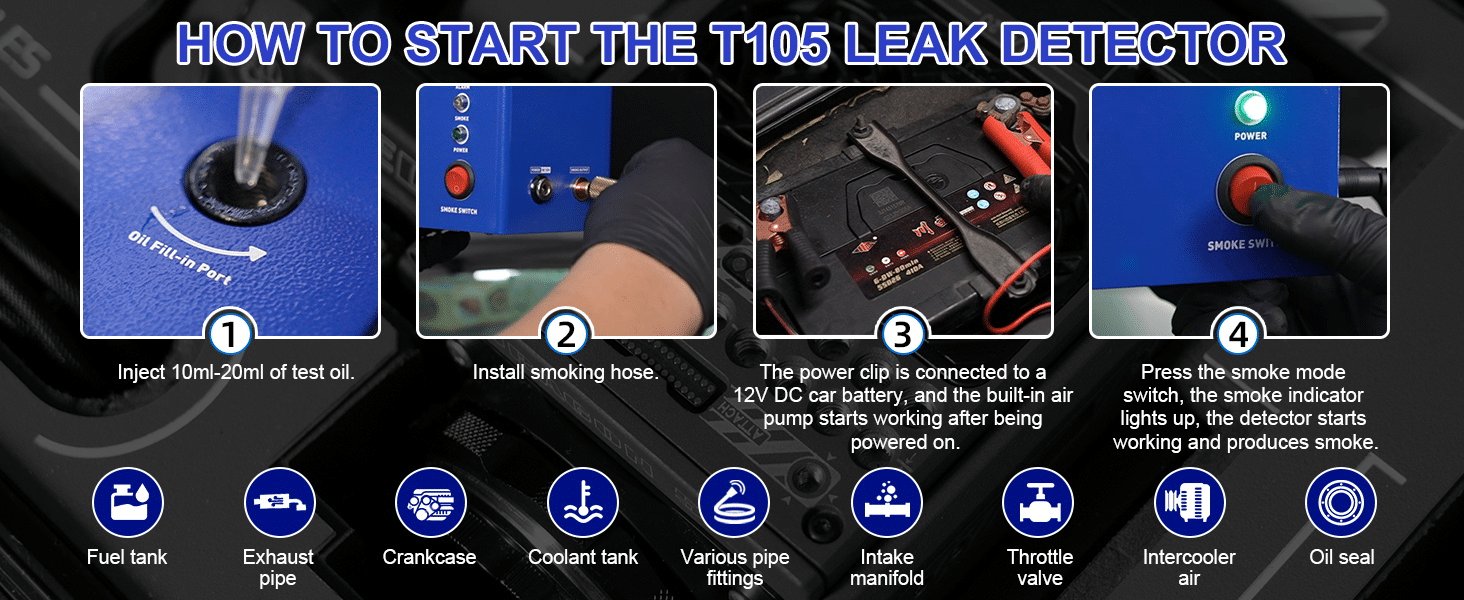
A smoke machine is crucial for pinpointing elusive small EVAP leaks.
How an EVAP Smoke Test Works:
- Seal the System: The technician will cap off or close any atmospheric vents in the EVAP system.
- Introduce Smoke: A specialized smoke machine is connected to a service port (often a Schrader valve, like a tire valve, or a main EVAP line) in the EVAP system. The machine then introduces a non-toxic, visible smoke under low pressure into the sealed system.
- Observe for Leaks: The technician meticulously inspects all EVAP components, hoses, and connections. Any escaping smoke will reveal the precise location of the leak, even pinhole-sized ones that would be invisible to the naked eye. This includes areas like the gas cap seal, hose connections, the canister itself, and around the purge and vent valves.
- Component Testing: During a smoke test, a skilled technician might also use an advanced scan tool to command the purge and vent valves open and closed. This allows them to test if these valves are sealing properly when closed, as a valve that leaks slightly internally can also set a P0442.
"The smoke test transforms invisible fuel vapor leaks into undeniable visual evidence, making it the most effective way to track down a P0442."
Why Small Leaks are so Hard to Find Without a Smoke Machine:
- Minimal Flow: A leak of 0.020 inches simply doesn't allow enough vapor to escape to create a consistent, noticeable odor or visual cue.
- Intermittent Sealing: Micro-cracks in hoses or minor valve imperfections might expand and contract with temperature changes or vibrations, making the leak intermittent.
- Hidden Locations: Many EVAP components and lines are tucked away under the vehicle, behind shields, or on top of the fuel tank, making visual inspection incredibly difficult without lifting the car and having a smoke trail to guide you.
Step 5: Professional Help for Persistent Codes
If you've systematically worked through the gas cap check and visual inspections, and the P0442 code persists, it's highly recommended to seek professional assistance. Mechanics have access to specialized smoke machines, advanced diagnostic scan tools, and the experience to interpret complex EVAP system behavior, which is often required to track down these elusive small leaks.
Understanding P0442 Code Repair Costs: What to Expect
The cost to fix a P0442 code can vary significantly based on the underlying cause, your vehicle's make and model, and labor rates in your geographical area. However, compared to many other check engine light repairs, fixing a P0442 is often on the more affordable side, especially if it's a simple gas cap issue.
| Cause of P0442 | Typical Part Cost (Estimate) | Typical Labor Cost (Estimate, if applicable) | Total Estimated Cost Range |
|---|---|---|---|
| Loose Gas Cap | $0 (if just tightened) | $0 | $0 |
| Faulty/Damaged Gas Cap | $15 - $50 | $0 - $20 (for inspection/re-seating) | $15 - $70 |
| Cracked EVAP Hose/Line | $10 - $100 (depending on hose type and length) | $50 - $200 (diagnosis and replacement) | $60 - $300 |
| Faulty Purge Valve | $30 - $150 | $75 - $150 | $105 - $300 |
| Faulty Vent Valve | $40 - $200 | $80 - $180 | $120 - $380 |
| Damaged Charcoal Canister | $100 - $450 | $100 - $300 | $200 - $750+ |
| Leaking Fuel Filler Neck (Corrosion) | $50 - $250 | $150 - $400 | $200 - $650+ |
| Leaking Fuel Tank (Small Crack) | $300 - $800+ | $300 - $800+ | $600 - $1600+ |
| Professional Diagnostic Smoke Test | N/A | $100 - $200 (often applied to repair cost if approved) | $100 - $200 |
Important Note: While diagnostic fees for a smoke test might seem like an added cost, they are often well worth it. Accurately pinpointing the leak prevents you from replacing parts unnecessarily, which can quickly become more expensive than the diagnostic fee itself. Always inquire about a shop's diagnostic policy; many will waive or apply the diagnostic fee to the total repair cost if you proceed with them.
Can You Safely Drive with a P0442 Code?
In most cases, yes, it is generally safe to drive your vehicle with a P0442 code illuminated. This code typically does not cause immediate drivability issues, performance problems, or put your engine at risk of damage. The P0442 code is primarily related to emissions control, not direct engine operation.
However, "safe to drive" does not mean "safe to ignore" long-term. Here's why addressing it promptly is still important:
- Emissions Test Failure: This is the most practical consequence. An active P0442 code will prevent your vehicle from passing an emissions inspection, which is required for registration renewal in many states.
- Environmental Impact: The primary purpose of the EVAP system is to protect the environment by containing harmful fuel vapors. Ignoring the code means your vehicle is contributing to air pollution by releasing these hydrocarbons.
- Potential Worsening: A "small leak" doesn't always stay small. Over time, a minor crack or worn seal can degrade further, potentially leading to a larger EVAP leak code (like P0455) or other, more significant issues that could be more costly to repair.
- Subtle Fuel Efficiency: While usually minor, a persistent small leak means you're literally losing some of your fuel to evaporation, translating into a slight reduction in fuel economy over the long run.
Unless you notice a strong smell of gasoline, which could indicate a larger, potentially dangerous leak, you can drive your vehicle for a short period while you arrange for diagnosis and repair.
Prevention: Avoiding Future P0442 Codes
While some components will naturally wear out over time, you can adopt several practices to help maintain your EVAP system and significantly reduce the likelihood of encountering a P0442 code in the future:
- Always Tighten Your Gas Cap Properly: This cannot be stressed enough. After refueling, ensure your gas cap is tightened until it clicks several times (if applicable for your vehicle). This simple habit prevents the most common cause of EVAP leaks.
- Inspect Your Gas Cap Regularly: Periodically check your gas cap's rubber seal for signs of wear, cracking, or hardening. Consider replacing your gas cap every 5-7 years as a preventative measure, even if it looks okay, as the rubber can degrade internally. Always opt for an OEM-quality replacement.
- Avoid Overfilling Your Fuel Tank: "Topping off" your tank after the pump automatically clicks off can force liquid gasoline into the charcoal canister. This can saturate and damage the canister, leading to internal component failure and subsequent EVAP system leaks. Stop fueling when the nozzle clicks off.
- Adhere to Regular Vehicle Maintenance: Following your vehicle's recommended maintenance schedule helps ensure that components are inspected and replaced as needed. While EVAP systems aren't always part of routine checks, a good mechanic might spot potential issues early during other inspections.
- Be Mindful of EVAP Hoses During Other Repairs: If you or a mechanic are working near EVAP components, ensure that hoses are not accidentally kinked, pinched, or disconnected, and that all connections are secure when work is completed.
- Address Fuel Odors Promptly: If you notice any persistent or strong gasoline odors around your vehicle, investigate them immediately, even if the check engine light isn't on.
Frequently Asked Questions (FAQ)
Conclusion: Taking Action on Your P0442 Code
The P0442 code, signifying a small leak in your vehicle's Evaporative Emission Control System, is a common but often misunderstood diagnostic trouble code. While it typically doesn't pose an immediate threat to your car's drivability, it's crucial to address it to ensure environmental compliance, pass emissions tests, and prevent potential worsening of the issue over time.
By starting with the simple, yet highly effective, check of your gas cap, proceeding with careful visual inspections, and employing professional diagnostic tools like a smoke machine when necessary, you can accurately identify and resolve the root cause of the problem. Remember, informed troubleshooting and proactive maintenance are your best allies in keeping your vehicle running cleanly, efficiently, and without the nagging glow of that check engine light. Don't guess; diagnose with confidence, and your vehicle (and the environment) will thank you.
