

Deciphering the P0420 code, its origins, telltale signs, and smart fixes to save you time and money.
Highlights for the Savvy Car Owner
- P0420 Doesn't Always Mean a New Catalytic Converter: Many causes, from faulty oxygen sensors to exhaust leaks, can trigger this code, often leading to misdiagnosis.
- Live Data is Your Best Friend: Utilizing an OBD-II scanner with live data capabilities is crucial for accurately diagnosing the true culprit behind a P0420.
- Preventative Maintenance is Key: Regular tune-ups and promptly addressing other engine codes can significantly extend the life of your catalytic converter.
The dreaded "Check Engine" light can send shivers down any car owner's spine. When an OBD-II scanner reveals a P0420 code, it often brings with it the fear of an expensive catalytic converter replacement. However, this diagnostic trouble code (DTC) isn't always a death sentence for your exhaust system. Understanding what P0420 truly means, its common causes, the symptoms it presents, and how to approach diagnosis and repair is your first step toward a smart, cost-effective solution in 2026.
This comprehensive guide is designed to empower you, the car owner, with the knowledge to confidently address a P0420 code. We'll walk you through the intricacies of your vehicle's emissions system, provide step-by-step diagnostic procedures you can perform at home, and outline realistic repair options and costs. Our goal is to help you decide whether a DIY fix is appropriate or if it's time to seek professional help, all while avoiding unnecessary expenses and overcharges.
Demystifying the P0420 Code
What "Catalyst System Efficiency Below Threshold (Bank 1)" Really Implies
The P0420 code, formally known as "Catalyst System Efficiency Below Threshold (Bank 1)," is triggered when your vehicle's Powertrain Control Module (PCM) or Engine Control Module (ECM) detects that the catalytic converter on Bank 1 isn't operating as effectively as it should. The catalytic converter is a vital component of your vehicle's exhaust system, responsible for reducing harmful pollutants from your engine's emissions. It works by converting toxic gases like nitrogen oxides, carbon monoxide, and unburned hydrocarbons into less harmful substances such as nitrogen, carbon dioxide, and water.
To continuously monitor this crucial process, your vehicle employs two oxygen (O2) sensors for each catalytic converter: one positioned before (upstream) and one after (downstream) the converter. In a healthy, efficiently functioning system, the upstream O2 sensor's readings will fluctuate significantly, reflecting the varying oxygen levels in the exhaust gases entering the converter. Conversely, the downstream sensor's readings should remain relatively stable and indicate a consistently lower oxygen content, signifying that the catalytic converter is effectively cleaning the exhaust. If the PCM observes that both sensors are displaying similar, fluctuating readings, it interprets this as a failure of the converter to do its job, subsequently triggering the P0420 code and illuminating your check engine light.
It's important to note that "Bank 1" refers to the side of the engine that contains cylinder #1. In vehicles with a V-type engine configuration, there are typically two banks, and thus two catalytic converters. If an issue arises with the second bank, a P0430 code would be triggered instead.
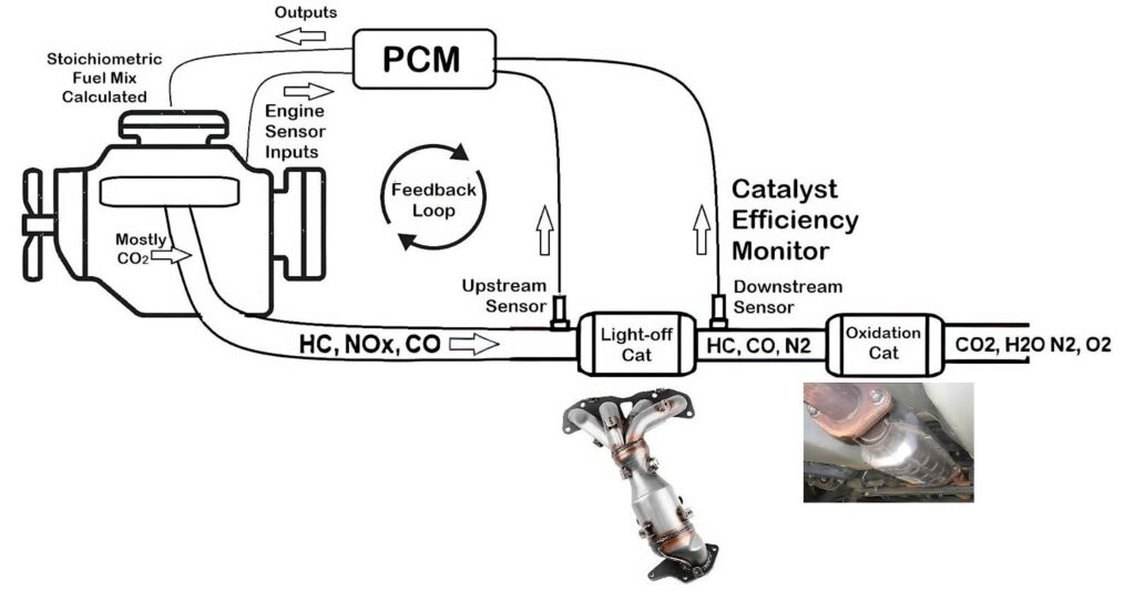
Illustration of the catalytic converter and oxygen sensors in an exhaust system.
Recognizing the Signs: Symptoms of a P0420 Code
Beyond the Illuminated Check Engine Light
While the most obvious indicator of a P0420 code is the illuminated check engine light, this issue can present with several other symptoms. Understanding these signs can help you gauge the severity of the problem and prioritize your diagnostic and repair efforts.
- Illuminated Check Engine Light: This is almost universally the first symptom you'll notice. The light signals that the PCM has detected an efficiency issue with the catalytic converter.
- Reduced Fuel Economy: An inefficient catalytic converter can cause your engine to work harder than necessary, leading to a noticeable decrease in fuel efficiency.
- Decreased Engine Performance: You might experience a subtle or even significant drop in power, sluggish acceleration, or difficulty maintaining speed, especially when driving uphill or under load.
- Distinct "Rotten Egg" Smell: A pungent sulfur smell emanating from your vehicle's exhaust is a strong indicator that the catalytic converter is failing to properly convert hydrogen sulfide in the exhaust gases.
- Failed Emissions Test: Because the P0420 code directly relates to your vehicle's emissions control system, your car will almost certainly fail an emissions inspection in states that require them.
- Rough Idling or Misfiring: While less common as a direct symptom of the P0420 code itself, underlying engine issues such as misfires that *cause* the P0420 can lead to rough idling or engine misfires.
It's important to note that many drivers experience no noticeable drivability problems when a P0420 code appears. However, ignoring the code can lead to more serious and costly issues down the line, including significant damage to the catalytic converter and other engine components. Addressing the code promptly, ideally within a few weeks, is always recommended.
Pinpointing the Root Cause: Why a P0420 Code Appears
Beyond Just a Faulty Catalytic Converter
Many people immediately assume a P0420 code means their catalytic converter needs to be replaced. While a failing converter is a common cause, it's far from the only one. A thorough and accurate diagnosis is crucial to avoid unnecessary and expensive repairs, as studies suggest that nearly 30% of P0420 codes are misdiagnosed.
Most Frequent Culprits
- Failing Catalytic Converter: Over time, catalytic converters can degrade due to age, high mileage, prolonged heat exposure, or contamination from engine fluids like oil or coolant. When its internal catalyst material can no longer efficiently convert harmful gases, the P0420 code is set.
- Faulty Oxygen (O2) Sensors: Both the upstream and downstream O2 sensors are critical for monitoring the converter's efficiency. If either sensor is faulty, damaged, or providing inaccurate readings, the PCM might incorrectly conclude that the catalytic converter is inefficient. The downstream sensor, which measures the exhaust post-converter, is particularly important in this diagnosis.
- Exhaust Leaks: Leaks in the exhaust system, especially those located before or near the O2 sensors, can allow unmetered outside air to enter the exhaust stream. This influx of extra oxygen can skew sensor readings, tricking the PCM into believing the catalytic converter is underperforming.
- Engine Misfires: Persistent engine misfires allow unburned fuel to pass into the exhaust system and reach the catalytic converter. This raw, unburnt fuel can severely overheat and permanently damage the catalyst material, drastically reducing its effectiveness and triggering a P0420 code. If you have misfire codes (P0300-P0308) alongside P0420, addressing the misfires is paramount.
Other Potential Contributors
- Fuel System Issues: Problems such as a leaking or clogged fuel injector, incorrect fuel pressure, or an improper air-fuel mixture (running too rich or too lean) can prevent the catalytic converter from operating efficiently.
- Ignition System Problems: Worn spark plugs, failing ignition coils, or bad spark plug wires can lead to incomplete combustion and misfires, which directly impact the catalytic converter's health.
- Vacuum Leaks: A significant vacuum leak can cause the engine to run lean, affecting combustion stability and potentially leading to catalytic converter damage over time due to overheating.
- Contaminated Fuel or Oil: Using low-quality fuel or oil, or any contaminants entering the combustion chamber, can prematurely damage the delicate catalyst material.
- Faulty Engine Control Module (ECM/PCM): In rare instances, the vehicle's onboard computer itself may be faulty, misinterpreting sensor data and generating a false P0420 code.
"Proper diagnosis is crucial before replacing expensive components," advises many automotive experts. Always ensure that any accompanying codes, particularly misfire or fuel trim related, are addressed first, as they often mask or cause the P0420.
Diagnosing P0420: Your Step-by-Step Approach
From DIY Checks to Professional Insights
Accurate diagnosis is the single most critical step in resolving a P0420 code and preventing unnecessary expenses. Many sources emphasize that a significant percentage of P0420 codes are misdiagnosed, leading to premature catalytic converter replacements. Here’s a structured approach to diagnosis, covering both DIY steps and when to seek professional help.
DIY Diagnostic Steps
- Scan for All Codes and Freeze Frame Data: Use an OBD-II scanner not just to confirm the P0420 code but also to check for any other stored or pending codes. Misfire codes (P030X), fuel trim codes, O2 sensor codes, or EVAP system codes appearing alongside P0420 provide crucial diagnostic direction. The freeze frame data captures engine conditions (RPM, engine temperature, load, etc.) at the moment the code was set, offering valuable clues.
- Conduct a Visual Inspection:
- Inspect the entire exhaust system for any obvious leaks, cracks, rust, or loose connections. Pay close attention to the manifold, flex pipe, and connections near the oxygen sensors.
- Check the wiring harnesses and connectors for both upstream and downstream O2 sensors for any signs of damage, fraying, corrosion, or loose connections.
- Look for any signs of physical damage to the catalytic converter itself, such as dents or bluish discoloration, which can indicate overheating.
- Monitor O2 Sensor Readings with Live Data: This is a pivotal step. With an advanced OBD-II scanner capable of displaying live data, warm up the engine to operating temperature. Then, observe the readings of the upstream (Sensor 1) and downstream (Sensor 2) O2 sensors for Bank 1.
- Normal Operation: The upstream sensor (Sensor 1) voltage should fluctuate rapidly and widely (typically between 0.1V and 0.9V) as the engine adjusts the air-fuel mixture. The downstream sensor (Sensor 2) voltage, however, should remain relatively stable and high (around 0.6V to 0.9V), indicating that the catalytic converter is effectively storing oxygen and cleaning the exhaust.
- P0420 Condition: If the downstream sensor (Sensor 2) voltage closely mirrors the upstream sensor (Sensor 1) and fluctuates similarly, it strongly suggests that the catalytic converter is no longer efficient.
- Check for Engine Misfires: Pay attention to any signs of engine misfires such as rough idling, vibrations, or a noticeable reduction in power. If your scanner has advanced features, check the misfire counters per cylinder. Address any misfire codes (P030X) immediately, as misfires can quickly destroy a catalytic converter.
- Perform a Backpressure Test (Advanced DIY/Professional): A clogged catalytic converter can create excessive backpressure, leading to performance issues and potentially triggering a P0420. This test usually requires a pressure gauge connected to the exhaust system.
- Consider a Temperature Test (Advanced DIY/Professional): Using an infrared thermometer, compare the temperature of the exhaust pipe just before and just after the catalytic converter after the engine has reached operating temperature. A properly functioning converter should show a significant temperature increase (at least 50-100 degrees Fahrenheit or 10-50 degrees Celsius) at its outlet compared to its inlet, due to the exothermic chemical reactions occurring inside. If the temperatures are similar, the converter is likely not functioning.
- Review Fuel Trims: If your scanner displays fuel trims, observe both short-term (STFT) and long-term (LTFT) fuel trims at idle and at a steady 2500 RPM. Significantly positive fuel trims might indicate a vacuum leak or an exhaust leak, while negative trims could point to a rich running condition, both of which can impact converter efficiency.
- Try a Catalytic Converter Cleaner: For converters suffering from mild carbon buildup, a high-quality fuel system cleaner specifically designed for catalytic converters might offer a temporary or even permanent solution if the core issue isn't severe damage. However, these are often temporary fixes if an underlying engine problem persists.
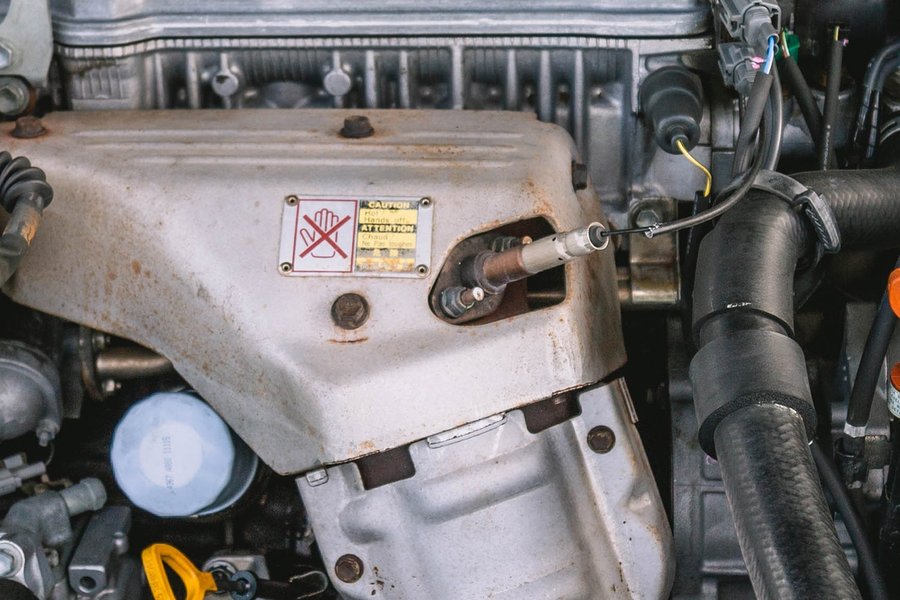
An oxygen sensor, a key component in diagnosing P0420 codes.
When to Consult a Professional Mechanic
If you're uncertain about any diagnostic steps, lack the necessary tools (like an advanced scanner for live data), or if your initial DIY efforts haven't resolved the issue, it's always best to consult an ASE-certified technician. They possess specialized equipment and expertise to perform more in-depth tests and accurately pinpoint the problem.
- You've performed basic diagnostics, but the code keeps returning.
- You don't have access to an advanced OBD-II scanner for live data analysis.
- The vehicle exhibits other severe symptoms like significant power loss or unusual noises.
- You've identified multiple complex codes alongside P0420.
- Your vehicle is under warranty, and professional repair ensures compliance.
Repair Options and Associated Costs (2026)
Making Informed Decisions for Your Vehicle
The cost to fix a P0420 code can vary widely, depending heavily on the underlying cause and whether you opt for DIY solutions or professional repairs. As of 2026, here's a detailed breakdown of typical repair options and their estimated costs:
| Repair Item | When it Makes Sense | DIY Difficulty | Estimated Parts Cost (USD) | Estimated Labor Cost (USD) | Total Estimated Cost (USD) |
|---|---|---|---|---|---|
| Professional Diagnosis | Always the first step if uncertain | N/A | N/A | $80 - $150 | $80 - $150 |
| Oxygen (O2) Sensor Replacement | If a faulty/lazy O2 sensor is confirmed through live data and other checks. | Easy to Moderate | $60 - $220 | $100 - $250 | $160 - $470 |
| Exhaust Leak Repair | Any leaks before the catalytic converter or near O2 sensors. | Moderate | $20 - $150 | $120 - $350 | $140 - $500 |
| Spark Plug/Ignition Coil Replacement | To address engine misfires (P030X codes) that cause converter damage. | Moderate | $40 - $300 | $150 - $400 | $190 - $700 |
| Fuel Injector Cleaning/Replacement | If fuel system issues (clogged/leaking injectors) are causing rich/lean conditions. | Moderate to Hard | $50 - $250 per injector (cleaning) or $100 - $500+ per injector (replacement) | $150 - $600+ | $200 - $1100+ |
| Vacuum Leak Repair | If diagnosed vacuum leaks are causing lean conditions. | Easy to Moderate | $10 - $100 | $80 - $200 | $90 - $300 |
| Catalytic Converter Replacement (Aftermarket) | Only if the converter is confirmed to be inefficient and all other causes are ruled out. | Hard | $400 - $1,200 | $200 - $500 | $600 - $1,700 |
| Catalytic Converter Replacement (OEM) | For longer-term reliability, compliance in CARB states, or specific vehicle requirements. | Hard | $900 - $2,500+ | $250 - $600 | $1,150 - $3,100+ |
| ECM/PCM Software Update/Reprogramming | In rare cases where a manufacturer service bulletin indicates a software-related issue. | Dealer only | N/A | $100 - $250 | $100 - $250 |
It's important to remember that prices can fluctuate based on your vehicle's make and model, your geographic location, and the specific shop you choose. Always get multiple quotes and ensure the diagnostic steps are clearly explained before approving any major repairs.
A note on catalytic converter "cleaners": While some fuel additives claim to restore catalytic converter efficiency, their effectiveness is often limited to cases of minor carbon buildup. They cannot repair a physically damaged, melted, or aged converter. If they do provide a temporary fix, the P0420 code will likely return unless the underlying cause (misfires, leaks, rich/lean conditions) is permanently resolved.
Driving with a P0420 Code: What You Need to Know
Is It Safe to Continue Driving?
In most instances, driving your vehicle with a P0420 code is generally safe for short periods, especially if there are no other noticeable drivability issues. The primary consequence will be increased emissions and a failed emissions test. However, you should not ignore the code indefinitely, as prolonged driving with an unresolved P0420 can lead to more significant problems:
- Increased Emissions: Your vehicle will be emitting higher levels of pollutants into the environment.
- Reduced Fuel Economy: The engine may operate less efficiently as the system tries to compensate for the catalytic converter's inefficiency.
- Potential for Further Damage: If the P0420 is caused by an underlying issue like consistent misfires or a rich fuel condition, continuing to drive without addressing these can lead to catastrophic damage to the catalytic converter, engine components, or even cause a fire in extreme cases.
- Failed Inspections: Your vehicle will not pass state emissions or safety inspections with an active P0420 code.
- Reduced Performance: While often subtle at first, persistent inefficiency can eventually lead to a noticeable drop in engine power and responsiveness.
If you experience symptoms like a strong sulfur smell, significant power loss, or a flashing check engine light (which indicates a severe misfire that could rapidly destroy the converter), you should pull over immediately and have the vehicle towed to a repair facility. A flashing check engine light is an urgent warning of engine damage occurring.
Preventative Measures for a Healthy Emissions System
Avoiding Future P0420 Headaches
Proactive maintenance is your best defense against the P0420 code and the potentially high costs of catalytic converter replacement. By taking simple steps, you can significantly extend the life of your emissions system components:
- Regular Engine Tune-ups: Ensure your spark plugs, ignition coils, and fuel injectors are in optimal working condition. A properly running engine minimizes misfires and ensures complete combustion, protecting the catalytic converter from raw fuel.
- Address All Check Engine Lights Promptly: Don't ignore other diagnostic trouble codes. Problems like misfires (P030X codes), rich/lean running conditions (fuel trim codes), or oil consumption issues should be resolved immediately, as they can all lead to P0420.
- Use High-Quality Fuel and Oil: Stick to the recommended octane rating for your vehicle and purchase fuel from reputable stations. Use the correct type and grade of engine oil specified in your owner's manual and adhere to regular oil change intervals. Contaminated or improper oil can foul the catalytic converter.
- Fix Exhaust Leaks Immediately: Any leaks in the exhaust system can compromise O2 sensor readings and overall emissions system performance. Periodically inspect exhaust hangers, pipes, and connections for any signs of damage or rust.
- Consider O2 Sensor Replacement at High Mileage: While not always the direct cause of P0420, oxygen sensors can become "lazy" over time, providing inaccurate data to the PCM. Replacing them at recommended intervals, especially on high-mileage vehicles, can help maintain optimal engine and emissions control.
- Avoid "Topping Off" Your Fuel Tank: Overfilling your gas tank can damage the Evaporative Emission Control (EVAP) system, which can sometimes indirectly contribute to emissions system issues.
Frequently Asked Questions
Conclusion
The P0420 code, indicating "Catalyst System Efficiency Below Threshold (Bank 1)," is a common alert for many car owners. While it often points to an issue within the catalytic converter system, it's crucial to remember that it's a symptom, not always the direct root cause. Faulty oxygen sensors, exhaust leaks, engine misfires, and fuel system problems can all trigger this code, making accurate diagnosis paramount.
A thorough and systematic diagnostic process, whether performed by you with the right tools or by an ASE-certified technician, is essential. Rushing to replace the catalytic converter without identifying and addressing the actual problem can lead to wasted money and the code reappearing shortly thereafter. By understanding the causes, recognizing the symptoms, and following a logical diagnostic process, you can confidently address the P0420 code, ensure your vehicle runs cleanly and efficiently, and protect your wallet from unnecessary expenses. Proactive maintenance and prompt attention to other engine codes are your best allies in keeping your emissions system healthy for years to come.
