

Unravel the mystery of a "System Too Lean (Bank 1)" error, understand its impact, and discover practical solutions to get your car running smoothly again.
The Silent Warning: What P0171 Truly Means for Your Vehicle
That glowing check engine light can be a source of immediate dread for any car owner. When an OBD-II scanner reveals the diagnostic trouble code (DTC) P0171, it's your car's way of telling you there's an imbalance in the delicate dance between air and fuel in a specific part of your engine. Specifically, P0171 indicates a "System Too Lean (Bank 1)" condition, meaning that Bank 1 of your engine is receiving either too much air or not enough fuel for optimal combustion.
Understanding this code is crucial not just for clearing the dashboard light, but for preserving your vehicle's health and performance. Ignoring a lean condition can lead to a cascade of problems, from diminished fuel economy and power loss to severe engine damage and costly catalytic converter failure. This article will demystify the P0171 code, guide you through its common causes, provide actionable diagnostic steps you can take at home, and offer realistic repair cost estimates to help you make informed decisions.
Highlights of Understanding and Addressing P0171
- Air-Fuel Balance is Key: A P0171 code signifies an imbalanced air-fuel mixture in Bank 1, where the engine runs "lean" (too much air, not enough fuel).
- Vacuum Leaks are the Top Suspect: The most frequent cause of P0171 is unmetered air entering the engine due to vacuum leaks.
- DIY Diagnostics Save Money: Many common causes can be diagnosed at home using an OBD-II scanner and visual inspection, potentially saving hundreds in diagnostic fees.
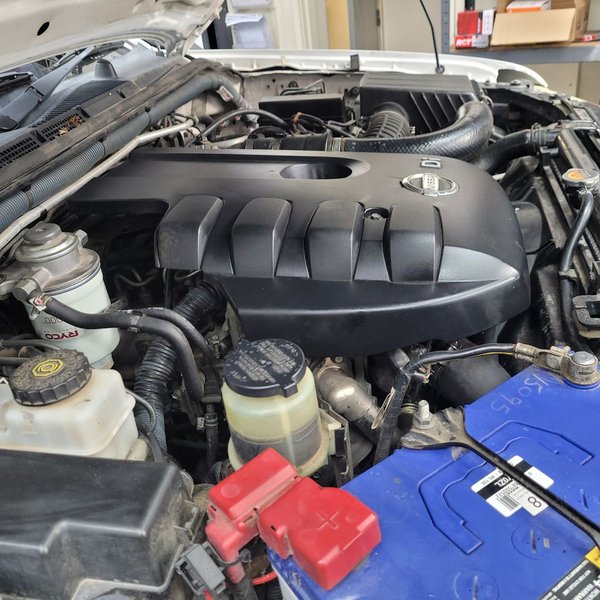
A healthy engine relies on a precise air-fuel mixture, disrupted by a P0171 lean condition.
Deconstructing the "System Too Lean (Bank 1)" Condition
At the heart of every internal combustion engine is the need for a precise air-fuel ratio. For gasoline engines, this ideal ratio, known as the stoichiometric ratio, is approximately 14.7 parts of air to 1 part of fuel. Your vehicle's Powertrain Control Module (PCM), or Engine Control Unit (ECU), constantly works to maintain this balance through an intricate network of sensors and actuators.
The Role of Fuel Trims
The PCM monitors the exhaust gases via oxygen (O2) sensors. If the O2 sensor on Bank 1 detects too much oxygen, it signals a lean condition. In response, the PCM attempts to correct this by increasing the amount of fuel injected into the engine. This adjustment is tracked by "fuel trims," specifically Short-Term Fuel Trim (STFT) and Long-Term Fuel Trim (LTFT).
- Short-Term Fuel Trim (STFT): These are immediate, dynamic adjustments made by the PCM in real-time to maintain the ideal air-fuel ratio.
- Long-Term Fuel Trim (LTFT): These are more gradual, adaptive corrections based on the average STFT over time. If the PCM consistently needs to add fuel to compensate for a lean condition, the LTFT value for that bank will steadily increase.
A P0171 code triggers when the PCM maxes out its ability to add fuel (typically when the LTFT for Bank 1 exceeds a certain threshold, often +10% to +25%, depending on the manufacturer) and the engine still runs lean. This signifies a persistent problem the system cannot compensate for.
What is "Bank 1"?
The term "Bank 1" refers to the side of the engine that contains cylinder #1. On inline 4-cylinder or 6-cylinder engines, there is only one bank, so it is always considered Bank 1. For V-configuration engines (V6, V8, etc.), Bank 1 is usually the side with the first cylinder in the firing order, and Bank 2 is the opposite bank. Your vehicle's owner's manual or a quick online search for your specific make and model can confirm which side is Bank 1.

Understanding engine banks helps localize issues like the P0171 code.
The Perils of a Lean Engine
While a lean condition might sound like it would save fuel, the opposite is often true. A lean mixture burns hotter and less efficiently, leading to several detrimental effects:
- Reduced Performance: Your engine will struggle to produce power, leading to sluggish acceleration and a noticeable lack of responsiveness.
- Poor Fuel Economy: The engine's inefficiency means it needs more fuel to achieve the same output, paradoxically reducing your miles per gallon.
- Engine Knocking/Pinging: The hotter combustion can cause premature ignition of the air-fuel mixture, resulting in a metallic knocking or pinging sound. This can lead to serious internal engine damage over time.
- Overheating: Excessive heat from a lean burn can damage critical engine components like spark plugs, valves, and piston rings.
- Catalytic Converter Damage: One of the most expensive potential consequences. A continuously lean condition can send excessively hot exhaust gases into the catalytic converter, causing it to overheat and fail prematurely.
- Increased Emissions: Despite common belief, a lean condition can increase harmful emissions, particularly nitrogen oxides (NOx).
Addressing the P0171 code promptly is not just about turning off a light; it is about protecting your investment and ensuring your vehicle runs safely and efficiently.
Common Symptoms Beyond the Check Engine Light
The illuminated check engine light is usually the first indicator of a P0171 code, but your car might exhibit other symptoms that point to a lean condition. Recognizing these can help you better understand the problem and potentially pinpoint its source:
- Rough Idling or Stalling: The engine may shake, stumble, or even die when at a stop, as the weak mixture struggles to sustain stable combustion at low RPMs.
- Lack of Power & Hesitation: You might experience a noticeable decrease in acceleration or a feeling of hesitation when you press the gas pedal.
- Poor Fuel Economy: Even though the engine is running lean, its inefficiency can lead to higher fuel consumption.
- Engine Pinging or Knocking: A distinctive metallic sound, especially during acceleration, indicates abnormal combustion due to the hot, lean mixture. This is a serious symptom requiring immediate attention.
- Difficulty Starting: In some cases, a severe lean condition can make the engine harder to start.
Important Note: If your check engine light is flashing, or if you hear persistent engine knocking, stop driving immediately. A flashing light usually indicates a severe misfire that can cause rapid and costly damage to your catalytic converter.
Pinpointing the Culprit: Top Causes of P0171
The P0171 code has several potential causes, ranging from minor to significant. Knowing the most common culprits will significantly aid in diagnosis. Here are the issues typically found, ordered by their frequency:
1. Vacuum Leaks: The Unmetered Air Intruder
This is overwhelmingly the most common cause of a P0171 code. Your engine relies on vacuum pressure for many functions, managed by a network of rubber hoses, gaskets, and plastic fittings. Over time, these components can dry out, crack, or disconnect, creating an opening for "unmetered" air.
Why it causes a lean condition: The Mass Air Flow (MAF) sensor measures all incoming air. If air enters the engine after the MAF sensor due to a leak, the PCM doesn't account for it when calculating fuel delivery. The PCM injects fuel based on the MAF's reading, but the engine receives additional, unmeasured air, leading to a lean mixture.
Common Leak Points:
- Cracked or loose vacuum hoses (e.g., for PCV valve, brake booster, or fuel pressure regulator).
- Leaking intake manifold gaskets.
- Damaged intake boot (the rubber hose connecting the MAF sensor to the throttle body).
- Faulty PCV (Positive Crankcase Ventilation) valve or its hoses.

Vacuum leaks are a primary suspect for P0171, introducing unmetered air into the engine.
2. Dirty or Faulty Mass Air Flow (MAF) Sensor
The MAF sensor is your engine's "lung capacity" monitor. It measures the volume and density of air entering the engine. If this sensor becomes dirty (often from contaminants bypassing a dirty air filter) or malfunctions, it sends incorrect data to the PCM.
Why it causes a lean condition: A dirty MAF sensor typically "under-reports" the actual amount of air flowing into the engine. The PCM, believing less air is present, injects less fuel, resulting in a lean mixture. A completely failed MAF sensor can also provide erratic or consistently low readings.

The MAF sensor is critical for accurate air intake measurement; a faulty one can cause P0171.
3. Fuel Delivery System Issues
Sometimes, the problem isn't about too much air, but simply an insufficient supply of fuel reaching the engine.
- Weak Fuel Pump: A failing fuel pump cannot maintain the required pressure to deliver enough fuel to the injectors, especially under load.
- Clogged Fuel Filter: A neglected fuel filter can restrict fuel flow, effectively starving the engine of the necessary gasoline.
- Dirty or Clogged Fuel Injectors: Over time, deposits can build up in fuel injectors, causing them to spray inefficiently, or even partially block them, leading to an inadequate fuel supply to cylinders in Bank 1.
- Faulty Fuel Pressure Regulator: This component maintains consistent fuel pressure. If it fails, fuel pressure can drop, leading to a lean condition.
4. Faulty Oxygen (O2) Sensor
While the O2 sensor is designed to detect the lean condition, it can also be the cause if it's faulty. An old, contaminated, or failed upstream O2 sensor on Bank 1 might send an inaccurate signal to the PCM, falsely indicating a lean mixture even when the air-fuel ratio is correct. This causes the PCM to overcompensate by adding fuel, eventually triggering the P0171 code.

A malfunctioning upstream oxygen sensor can incorrectly report a lean condition, triggering P0171.
5. Exhaust Leaks Before the O2 Sensor
A leak in the exhaust manifold or any part of the exhaust system before the upstream O2 sensor on Bank 1 can introduce atmospheric air into the exhaust stream. This "extra" oxygen tricks the O2 sensor into reporting a lean condition to the PCM, which then tries to add more fuel, eventually setting the P0171 code.
6. Outdated Engine Control Module (ECM) Software
In rare instances, the PCM's software or calibration might be outdated or contain a bug that causes it to incorrectly interpret sensor data, leading to a P0171 code. A software update or reflash by a dealership can sometimes resolve this, but only after all other mechanical causes have been thoroughly ruled out.
Your DIY Guide to Diagnosing P0171
You don't always need a mechanic to start diagnosing a P0171 code. With a few simple tools and a methodical approach, you can often narrow down the problem yourself, potentially saving on diagnostic fees.
Step 1: Arm Yourself with an OBD-II Scanner
This is your primary tool. An affordable OBD-II scanner plugs into the diagnostic port under your dashboard. Use it to confirm the P0171 code and check for any other related codes. More advanced scanners offer "live data" monitoring, which is indispensable for this diagnosis.
Step 2: Analyze Live Data – Focus on Fuel Trims
Using your OBD-II scanner's live data function, monitor the Long-Term Fuel Trim (LTFT) and Short-Term Fuel Trim (STFT) for Bank 1. This is the most crucial diagnostic step for lean codes.
- High Positive Fuel Trims: A consistently high positive LTFT value (e.g., +15% to +25% or higher) for Bank 1, especially when accompanied by positive STFT, strongly indicates the PCM is trying hard to add fuel to compensate for a lean condition.
- Varying RPM Readings: Pay attention to how fuel trims change with engine RPM. If fuel trims are high at idle but return closer to zero at higher RPMs (e.g., 2000-2500 RPM), this often points to a vacuum leak, as leaks have a greater impact at lower engine vacuum. If trims remain high across all RPMs, it suggests a fuel delivery issue or a MAF sensor problem.
- O2 Sensor Voltages: Monitor the upstream (pre-catalytic converter) O2 sensor voltage for Bank 1. If it consistently reads low (e.g., below 0.45V) and doesn't fluctuate much, it confirms a lean condition.
An OBD-II scanner's live data, especially fuel trims, is crucial for diagnosing P0171.
Step 3: Conduct a Thorough Visual Inspection for Vacuum Leaks
With the engine running, carefully listen for any distinct hissing, sucking, or whistling sounds around the engine bay. These are classic indicators of a vacuum leak. Visually inspect all accessible rubber vacuum hoses for cracks, brittleness, disconnections, or loose clamps. Pay close attention to the intake boot (between the MAF and throttle body), PCV valve hoses, and lines leading to the brake booster or fuel pressure regulator.
Advanced Tip: Smoke Test: For elusive vacuum leaks, a professional mechanic can perform a smoke test, injecting non-toxic smoke into the intake system. Smoke will visibly exit any leak point, making it easy to spot.
Step 4: Clean the MAF Sensor
This is a relatively easy and inexpensive first step. Purchase a specialized MAF sensor cleaner spray (never use carburetor cleaner or brake cleaner, as they can damage the sensor). Disconnect the battery, unplug the electrical connector from the MAF sensor, remove the sensor (usually held by two screws), and thoroughly spray the tiny wires or heating elements inside. Allow it to dry completely before reinstalling. Clear the P0171 code with your scanner and drive the vehicle to see if the code returns.
Step 5: Inspect the Fuel Delivery System
If air intake issues are ruled out, shift focus to the fuel side.
- Fuel Pressure Test: This requires a fuel pressure gauge that connects to a port on your fuel rail. Compare the measured pressure against your vehicle's manufacturer specifications. Low pressure points to a weak fuel pump, clogged fuel filter, or faulty fuel pressure regulator.
- Fuel Filter Check: If your vehicle has a serviceable fuel filter (many modern vehicles have non-serviceable in-tank filters), check its service history. A clogged filter can restrict fuel flow.
- Fuel Injector Test: While more complex, clogged injectors can be diagnosed by checking resistance or performing a balance test. This is typically best left to a professional.
Step 6: Evaluate Oxygen Sensors and Exhaust Leaks
Visually inspect the upstream O2 sensor on Bank 1 for any physical damage or unusual discoloration. While less common for the sensor itself to be the primary cause of P0171 (it's usually reporting a real problem), a faulty O2 sensor cannot be entirely ruled out. Also, check the exhaust manifold and the exhaust pipe leading up to the upstream O2 sensor for any cracks, rust, or loose connections that could cause a leak.
When to Consult a Professional: If your DIY efforts don't yield results, or if you're uncomfortable with any of the diagnostic steps, it's always wise to consult a qualified mechanic. They have specialized tools, advanced diagnostic equipment (like smoke machines), and the expertise to accurately pinpoint complex issues.
Understanding P0171 Repair Costs: What to Expect
The cost to fix a P0171 code varies widely because the root cause can range from a simple, inexpensive fix to a more complex, costly repair. The table below provides realistic estimates for common repairs, covering both DIY parts costs and professional repair costs (parts plus labor).
| Cause of P0171 | DIY Parts Cost (Estimated) | Professional Repair Cost (Parts & Labor, Estimated) | Notes |
|---|---|---|---|
| Vacuum Hose Leak (simple) | $5 - $30 | $50 - $180 | Often the cheapest and most common fix. |
| Clean MAF Sensor | $10 - $20 (cleaner spray) | $50 - $150 (if part of diagnostic) | Inexpensive; if cleaning fails, replacement is next. |
| Replace MAF Sensor | $80 - $350 | $180 - $500 | Cost varies greatly by vehicle make/model. |
| Replace PCV Valve/Hose | $20 - $70 | $100 - $280 | Common vacuum leak source; part is often inexpensive. |
| Replace Upstream Oxygen (O2) Sensor (Bank 1) | $60 - $250 | $150 - $450 | Part cost varies; labor can be tricky if seized. |
| Replace Fuel Filter (if serviceable) | $20 - $60 | $80 - $220 | A routine maintenance item, sometimes overlooked. |
| Replace Fuel Pressure Regulator | $40 - $180 | $120 - $400 | Ensures consistent fuel pressure delivery. |
| Replace Fuel Pump | $150 - $600 | $450 - $1000+ | Labor-intensive, often requiring fuel tank removal. |
| Replace Intake Manifold Gasket | $40 - $150 | $300 - $800 | Significant labor involved to access and replace. |
| Exhaust Leak Repair (before O2 sensor) | $20 - $100 (for clamps/patch) | $100 - $500 (welding/pipe replacement) | Depends on the nature and location of the leak. |
| Catalytic Converter Replacement (if damaged due to ignored P0171) | $400 - $2500+ | $800 - $3500+ | Worst-case scenario; highlights the importance of timely repair. |
| Professional Diagnostic Fee | N/A | $100 - $200 | Typically waived if you proceed with repairs at the same shop. |
These figures are general estimates. The actual cost will depend on your specific vehicle's make and model, the availability of OEM vs. aftermarket parts, regional labor rates, and the complexity of accessing the faulty component. Always obtain a detailed quote before authorizing any work.
Quote from a Mechanic: "Often, car owners are scared by a check engine light, but with P0171, it's frequently a simple fix like a vacuum hose. The key is proper diagnosis; don't just replace parts randomly. Start with the most common and easiest checks."
Proactive Steps to Prevent P0171
While some issues are unavoidable, diligent maintenance can significantly reduce your chances of encountering a P0171 code:
- Regular Visual Inspections: Periodically check under the hood for cracked, brittle, or disconnected vacuum hoses and intake components.
- Replace Air Filter Routinely: A clean air filter is your MAF sensor's best friend, preventing dirt and debris from contaminating it.
- Adhere to Fuel Filter Service Intervals: If your car has a serviceable fuel filter, follow the manufacturer's recommendations for replacement to ensure adequate fuel flow.
- Use Quality Fuel: Top-tier gasoline often contains detergents that help keep fuel injectors clean and prevent deposits.
- Timely Tune-Ups: Ensure spark plugs, PCV valves, and other engine components are inspected and replaced as part of your vehicle's scheduled maintenance.
Frequently Asked Questions (FAQ) About P0171
Conclusion: Empowering You to Tackle P0171
The P0171 "System Too Lean (Bank 1)" code, while initially daunting, is a common issue with well-understood causes. By grasping the fundamentals of air-fuel ratios, understanding the symptoms, and systematically approaching diagnosis, you can empower yourself to effectively address this problem. Whether you choose to perform the diagnostics and repairs yourself or seek professional help, having this knowledge ensures you can make informed decisions and avoid unnecessary expenses. Timely action will not only clear that nagging check engine light but also restore your vehicle's performance, fuel efficiency, and long-term reliability. Don't let a minor imbalance lead to major trouble; act quickly and confidently.
