

Navigate the complexities of non-OEM battery swaps, insurance policies, and consumer rights to safeguard your electric vehicle coverage.
- Crucial Disclosure: Always inform your insurer about an aftermarket battery replacement before installation to avoid claim denials or policy cancellation.
- Magnuson-Moss Act: This federal law protects your warranty against voiding solely due to aftermarket parts, but manufacturers can deny claims if the part causes damage.
- Coverage is Conditional: While a non-OEM battery doesn't automatically void insurance, coverage for damages depends on proper disclosure, policy terms, and whether the aftermarket part contributed to the loss.
For electric vehicle (EV) owners across the United States, the longevity and potential replacement of the high-voltage battery are significant considerations. As EVs like the Tesla Model 3, Nissan Leaf, Chevrolet Bolt, Ford Mustang Mach-E, and Hyundai Ioniq become more prevalent, so does the discussion around maintaining them, especially when considering cost-effective aftermarket solutions for battery replacements. A central question that often arises is: does aftermarket battery replacement void your Modified EV Insurance? The straightforward answer is no, it doesn't automatically void your entire insurance policy. However, using a non-OEM battery can certainly introduce complexities and risks to your coverage if not managed proactively and transparently with your insurance provider. Understanding the nuanced interplay between aftermarket parts, warranties, and insurance policies is critical for any EV owner in 2026.
This article will delve into the critical aspects of aftermarket battery replacements, explaining the risks involved, how US insurance companies assess these modifications, and the protections afforded by laws like the Magnuson-Moss Warranty Act. Our goal is to equip both budget-conscious and out-of-warranty EV drivers with the knowledge to make informed decisions and ensure their electric vehicles remain adequately insured.
Demystifying EV Battery Replacements: OEM vs. Aftermarket
Understanding the foundational differences in EV battery origins.
When your EV's battery reaches the end of its usable life, or is damaged, you'll generally face two primary choices for replacement: Original Equipment Manufacturer (OEM) batteries or aftermarket batteries. The distinction between these types is crucial for both performance expectations and insurance implications.
What Defines an OEM Battery?
OEM batteries are manufactured by, or specifically for, your vehicle's original maker—think Tesla, General Motors, Ford, Nissan, or Hyundai. These batteries are designed to precisely match the vehicle's original specifications, ensuring perfect compatibility with the EV's intricate systems, including its battery management system (BMS), thermal management, and software. When an OEM battery is installed at an authorized dealership or certified repair facility, it's typically a like-for-like replacement that maintains the vehicle's factory integrity and preserves any remaining manufacturer warranty.
The Emergence of Aftermarket Batteries
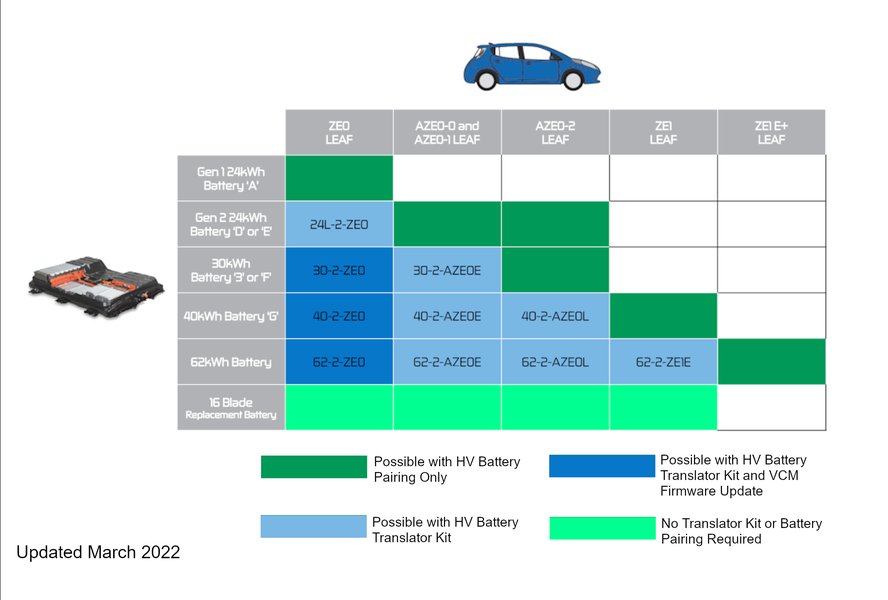
Aftermarket batteries, also referred to as non-OEM or third-party batteries, are produced by independent companies. These can include new units manufactured to be compatible with various EV models, or refurbished battery packs that extend the life of existing cells. The appeal of aftermarket options often lies in their cost-effectiveness; they can be significantly cheaper than OEM alternatives, which can run anywhere from $5,000 to over $20,000 for a full pack replacement when out of warranty. For owners of older EVs, such as early Nissan Leafs or Chevrolet Bolts, where original battery degradation might be a concern and warranty coverage has expired, aftermarket solutions offer a more affordable path to extending vehicle life. However, the quality and performance of aftermarket batteries can vary widely, and compatibility with the EV's complex electronic systems is not always guaranteed to the same degree as OEM parts.
The Insurance Perspective: How Carriers View Modified EVs
Navigating risk assessment and policy requirements for electric vehicle modifications.
Insurance companies, including major US providers like Geico, Progressive, State Farm, and Allstate, operate on risk assessment. When an electric vehicle is modified from its factory specifications, particularly with a significant component like the battery, its risk profile changes. This alteration is what leads to potential concerns regarding Modified EV Insurance.
Aftermarket Modifications and Risk Assessment
Insurers evaluate several factors when an EV undergoes an aftermarket modification:
- Safety Implications: A non-OEM battery might not have undergone the same rigorous safety testing as an OEM unit, potentially altering the vehicle's crashworthiness or fire risk.
- Performance Changes: Aftermarket batteries can sometimes offer different performance characteristics, such as increased range or altered power delivery, which could impact how the vehicle handles or responds.
- Repair Complexity and Cost: Non-standard parts can make repairs more complex and costly, requiring specialized knowledge or equipment that might not be available at every repair facility. This impacts the overall cost of a claim for the insurer.
- Value Fluctuations: While aftermarket parts can reduce initial repair costs, they can also affect the vehicle's resale value or the insurer's perception of its market worth.
Due to these factors, insurance providers typically require policyholders to disclose any significant modifications that affect the vehicle's value, performance, or safety. Failure to report these changes can be seen as misrepresentation, potentially leading to dire consequences during a claim.
The Consequences of Undisclosed Modifications
Failing to inform your insurer about an aftermarket battery replacement can lead to severe issues if you need to file a claim. If an incident occurs and the insurance company discovers an undisclosed aftermarket battery, they may:
- Deny the Claim: The most serious consequence, leaving you responsible for all repair or replacement costs.
- Cancel Your Policy: Your policy could be voided from its inception for material misrepresentation.
- Limit Reimbursement: Even if a claim isn't fully denied, reimbursement may be limited to the value of an OEM part, leaving you to cover the difference for the aftermarket component.
This highlights why transparency with your insurance provider is paramount for anyone considering third-party battery replacement insurance or modifying their EV in any significant way.
The Magnuson-Moss Warranty Act: Your Consumer Shield
Understanding federal protections for aftermarket parts and EV warranties.
A common misconception is that using any aftermarket part automatically voids your entire vehicle warranty. In the United States, the Magnuson-Moss Warranty Act, a federal law enacted in 1975, provides crucial protection for consumers in this regard.
What the Act Stipulates for Aftermarket Parts
The Magnuson-Moss Warranty Act prohibits manufacturers from making warranty coverage conditional on the use of brand-specific parts or services. Specifically, it states that a manufacturer cannot void your warranty solely because you used an aftermarket part, unless they can prove that the aftermarket part caused the defect or damage to your vehicle. This is particularly relevant for EV owners considering non-OEM battery replacements. For instance, if you install an aftermarket battery in your Chevrolet Bolt and later experience a failure in an unrelated component, like the infotainment system, the manufacturer cannot deny the warranty claim for the infotainment system simply because you have a non-OEM battery.
Distinguishing Warranty from Insurance
It's important to remember that the Magnuson-Moss Act primarily governs warranties, which protect against manufacturing defects and specific performance guarantees (like battery capacity retention). Insurance, on the other hand, covers damages from sudden, unforeseen perils such as accidents, theft, fire, or natural disasters. While the Act prevents blanket warranty voidance, an insurer still has the right to assess the EV aftermarket parts insurance risk and deny an insurance claim if the aftermarket part was the direct cause of the incident, or if the modification was not disclosed as required by the policy.
OEM vs. Aftermarket Battery: Cost, Performance, and Insurance Implications
A comprehensive comparison for informed decision-making.
To help EV owners weigh their options, here's a detailed comparison between OEM and aftermarket battery replacements, focusing on their direct and indirect impacts on finances and coverage.
| Aspect | OEM Battery Replacement | Aftermarket/Third-Party Battery Replacement |
|---|---|---|
| Typical Cost (Out of Warranty) | Higher (e.g., $10,000 - $20,000+ for many US models like Tesla or Ford Mach-E) | Potentially Lower (varies greatly, but can be $5,000 - $15,000) |
| Manufacturer Warranty Impact | Preserves remaining vehicle warranty when installed by authorized dealers. New battery may have its own warranty. | Does not automatically void warranty (Magnuson-Moss Act), but manufacturer can deny claims if the aftermarket part causes the issue. Installer often provides a separate warranty. |
| Insurance Coverage & Valuation | Generally straightforward. Vehicle value aligns with standard market appraisals. | Requires disclosure to insurer. May necessitate "custom parts and equipment" (CPE) coverage. Valuation may require documentation and appraisal of the new battery. Potential for higher premiums due to increased perceived risk. |
| Performance & Compatibility | Guaranteed to match original vehicle specifications, including seamless integration with BMS and thermal systems. | Varies significantly. Quality, capacity, and compatibility can differ. Crucial to research reputable suppliers and installers to avoid issues like reduced range or software conflicts. |
| Repair Network & Expertise | Extensive network of authorized dealerships and certified technicians familiar with the specific OEM system. | Limited to independent shops specializing in EV repairs and aftermarket parts. Expertise can vary; seek out highly qualified mechanics. |
| Resale Value Impact | Generally maintains or can even enhance resale value, especially if documented properly. | Can raise questions for future buyers. Documentation of quality, installer credentials, and battery health reports are vital to mitigate potential depreciation. |
Proactive Communication: Notifying Your Insurer About Modifications
Safeguarding your coverage through transparency and proper documentation.
The single most important step to protect your Modified EV Insurance when installing an aftermarket battery is to notify your insurance provider. This should ideally happen before the installation takes place.
Why Disclosure is Non-Negotiable
Insurance companies like Geico, Progressive, State Farm, and Allstate need accurate information about the vehicles they insure to properly assess risk and calculate premiums. An aftermarket battery, even if it performs well, is a change to the vehicle's factory configuration. Insurers need to be aware of this modification for several reasons:
- Accurate Valuation: The aftermarket battery may change the vehicle's overall value, which impacts the payout in case of a total loss.
- Risk Assessment: Any change to core components can alter the perceived risk of accidents or failures.
- Policy Adjustments: Your insurer may need to adjust your premium or recommend specific endorsements, such as "custom parts and equipment coverage," to ensure the aftermarket battery is adequately covered.
By disclosing the modification, you allow your insurer to make these necessary adjustments, preventing potential disputes or claim denials later on. Get confirmation of your disclosure in writing.
What Happens Without Notification?
If you proceed with an aftermarket battery replacement without informing your insurance company, you run a significant risk. In the event of an accident or battery-related issue, your insurer could argue that you failed to uphold your end of the insurance contract by not disclosing a material change to the vehicle. This could lead to a refusal to pay for damages, leaving you solely responsible for potentially thousands of dollars in repair costs, particularly for expensive EV battery components.
An illustration highlighting the complex considerations surrounding EV battery replacements.
Filing a Claim with an Aftermarket EV Battery
Navigating the claims process with non-OEM components.
If your EV, equipped with an aftermarket battery, is involved in a covered incident, the claims process might differ slightly from a vehicle with all OEM parts. Understanding these potential differences can help you prepare.
The Claims Investigation Process
Upon filing a claim, your insurance company will typically initiate an investigation to assess the damage and determine the cause. If an aftermarket battery is present, the adjuster will specifically look into:
- Whether the modification was disclosed and approved.
- If the aftermarket battery contributed to the incident (e.g., if a fire originated from the non-OEM battery).
- The quality of the installation and whether it met industry standards.
- The overall impact of the aftermarket part on the vehicle's repairability and safety.
Even if the aftermarket battery was not the cause of the accident, an undisclosed modification can still be grounds for claim denial or reduced payout. This is why thorough documentation and prior notification are so critical.
How Claims Are Settled for Aftermarket Parts
If your claim is approved and the aftermarket battery is damaged:
- Reimbursement Limits: Without specific "custom parts and equipment" coverage, insurers might only reimburse you for the actual cash value of the standard OEM equivalent part, not the potentially higher value or unique features of your aftermarket battery.
- Proof of Value: You may need to provide detailed receipts, invoices, and even appraisals to prove the value of your aftermarket battery to ensure adequate reimbursement.
- Repair vs. Replace: Insurers will determine if the battery can be repaired or if a full replacement is necessary. The availability of replacement parts for aftermarket batteries can sometimes be an issue.
Having proper non OEM battery insurance coverage, either through standard comprehensive/collision with full disclosure or through specialized endorsements, will significantly streamline this process.
Maintaining Valid Insurance with Non-OEM EV Parts
Best practices for EV owners in the US.
For EV owners in the US looking to utilize aftermarket battery solutions without compromising their insurance, adopting certain best practices is essential.
Tips for Securing Your Coverage
- Early Communication with Your Insurer: Before any work begins, contact your insurance agent (e.g., at Geico, Progressive, State Farm, Allstate). Provide them with all details of the planned aftermarket battery replacement, including the brand, specifications, and the repair facility you intend to use. Get their approval and any policy adjustments in writing.
- Opt for Quality and Certified Installation: Choose reputable aftermarket battery suppliers and ensure installation is performed by certified high-voltage EV technicians. Unqualified installations not only pose safety risks but can also be used by insurers as grounds for claim denial, particularly for an aftermarket EV battery insurance claim.
- Document Everything: Keep meticulous records. This includes purchase receipts for the aftermarket battery, detailed invoices for the installation (showing labor, parts, and any diagnostics), certifications of the installer, and any pre- and post-installation battery health reports or diagnostic readouts.
- Consider Specialized Endorsements: Ask your insurer about "custom parts and equipment" (CPE) coverage. This add-on provides specific financial protection for non-factory installed parts, up to a certain limit (e.g., $5,000 or more), ensuring that the added value of your aftermarket battery is accounted for. Some companies may also offer "agreed value" policies for highly modified vehicles.
- Review Your Policy Annually: Insurance needs can change. Regularly review your policy with your agent to ensure your coverage remains adequate for your modified electric car insurance 2026 needs, especially as EV technology and aftermarket options evolve.

A Chevrolet Bolt EV undergoing a battery replacement, a common scenario for many EV owners.
Specific Considerations for Popular US EV Brands
- Tesla: With Tesla's integrated software and unique thermal management, ensure any aftermarket battery solution is fully compatible with its ecosystem. Documenting software versions and any specific calibration details is crucial.
- Nissan Leaf: Older Leaf models are common candidates for aftermarket upgrades. Keep detailed State of Health (SoH) reports before and after replacement to document improvements and prove battery condition.
- Chevrolet Bolt: Given past battery recalls, specific documentation regarding battery sourcing and installation by certified shops can be vital for future claims.
- Ford Mustang Mach-E & Hyundai Ioniq: For these newer, more advanced EVs, ensuring the aftermarket battery integrates seamlessly with vehicle diagnostics and safety systems is paramount.
FAQ: Aftermarket EV Battery Replacement and Insurance
Conclusion: Driving Forward with Confidence
Replacing your EV's battery with an aftermarket alternative can be a sensible and cost-effective decision, especially for older models or those out of warranty. However, it's a decision that demands careful consideration of its impact on your insurance and warranty. While a non-OEM battery does not automatically void your Modified EV Insurance, proactive communication with your insurance provider, diligent documentation, and selecting certified installers are paramount to ensuring your vehicle remains protected. By understanding your rights under the Magnuson-Moss Warranty Act and the specific requirements of your insurance policy, you can navigate the world of aftermarket EV parts with confidence, ensuring peace of mind on the road.
