

Discover how data-driven policies can slash costs for electric car owners, navigating the pros, cons, and privacy concerns in 2026.
For many U.S. electric vehicle (EV) drivers—especially those with low annual mileage or consistently safe driving habits—Usage-Based Insurance (UBI) for EVs can indeed be cheaper than traditional policies. These innovative programs leverage telematics technology to personalize premiums, potentially offsetting the higher base insurance costs often associated with EVs due to their repair complexity and specialized parts. However, the exact savings depend heavily on individual driving patterns, with frequent hard braking or high annual mileage potentially reducing or even eliminating discounts.
Key Insights into Usage-Based Insurance for EVs
- Significant Savings Potential: Low-mileage and safe EV drivers can see insurance premium reductions of 15-40% compared to traditional policies, a crucial benefit given typically higher EV insurance costs.
- Personalized Rates: UBI models offer fairer pricing by assessing actual driving behavior and usage patterns rather than generalized risk factors, leveraging the inherent data-rich nature of electric vehicles.
- Privacy vs. Savings: While UBI requires sharing driving data, the benefits of personalized pricing can be substantial, especially for EV owners whose vehicles already collect extensive telemetry.
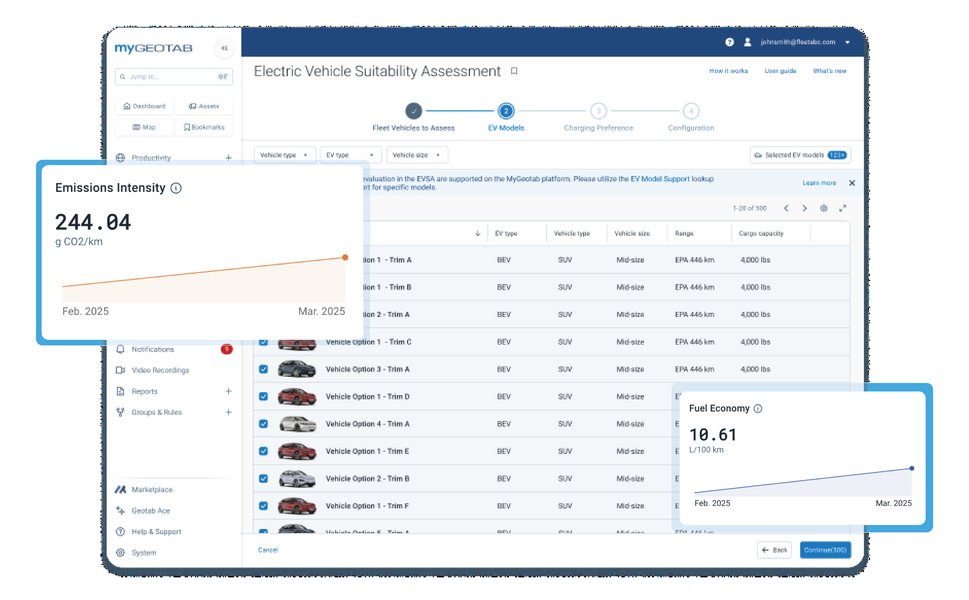
Modern EVs are inherently compatible with telematics systems, making UBI integration seamless.
What is Usage-Based Insurance and How Does it Work for EV Owners?
Usage-Based Insurance (UBI) represents a modern paradigm in auto insurance, moving away from generalized risk assessments towards premiums based on real-world driving data. This data is collected through advanced telematics technology, which can manifest as a small plug-in device for your vehicle's OBD-II port, a smartphone application, or, increasingly for electric vehicles, integrated directly into the car's existing onboard systems. For EV owners, this integration is particularly seamless, as electric cars are essentially computers on wheels, constantly generating vast amounts of data related to performance, battery usage, and driving dynamics.
Instead of merely considering factors like your age, location, and credit score, UBI programs monitor specific driving behaviors and vehicle usage. This allows insurance providers to create a highly personalized risk profile, rewarding drivers who demonstrate safe habits and lower mileage. The transition to UBI is especially relevant for the growing number of EV owners, as it offers a potential pathway to mitigate the often higher insurance costs associated with electric vehicles due to their advanced technology and specialized repair requirements.
Exploring the Two Main Types of UBI Programs for Electric Cars
Usage-Based Insurance broadly categorizes into two primary models, each offering distinct advantages depending on an EV owner's driving habits:
Pay-Per-Mile Insurance for EVs (PAYD)
This type of UBI focuses predominantly on the distance an electric vehicle travels. Drivers pay a low base rate, which covers the vehicle when it's not being driven, plus a small per-mile fee for the actual distance covered. For instance, an EV owner might pay a $30 monthly base rate and an additional 5 cents for every mile driven. This model is exceptionally beneficial for low-mileage drivers, such as remote workers, urban commuters with short daily trips, or households where the EV is a secondary vehicle. Companies like Nationwide (SmartMiles), Allstate (Milewise), and Metromile (a Lemonade company) are prominent providers of low mileage insurance options, often resulting in significant savings—sometimes 30-40%—compared to traditional policies for those driving fewer than 10,000 miles annually. The data for mileage tracking is typically collected via a plug-in device or, more commonly for EVs, through the vehicle's embedded telematics system, eliminating the need for additional hardware.
Behavior-Based Telematics Programs (PHYD)
Beyond just mileage, behavior-based programs delve into the nuances of a driver's style. These programs utilize telematics devices or smartphone apps to monitor various aspects of driving, including speed, acceleration and braking patterns, cornering, and even the time of day a vehicle is operated. The goal is to identify and reward safe driving habits. For EV owners, factors like smooth acceleration (despite instant torque) and effective use of regenerative braking contribute positively to their driving score. Insurers like Progressive (Snapshot), State Farm (Drive Safe & Save), GEICO (DriveEasy), and Liberty Mutual (RightTrack) are leading the charge in this space. Safe and consistent drivers can earn substantial discounts, making these programs attractive for EV owners who prioritize careful driving and want their insurance premiums to reflect their actual, responsible behavior.
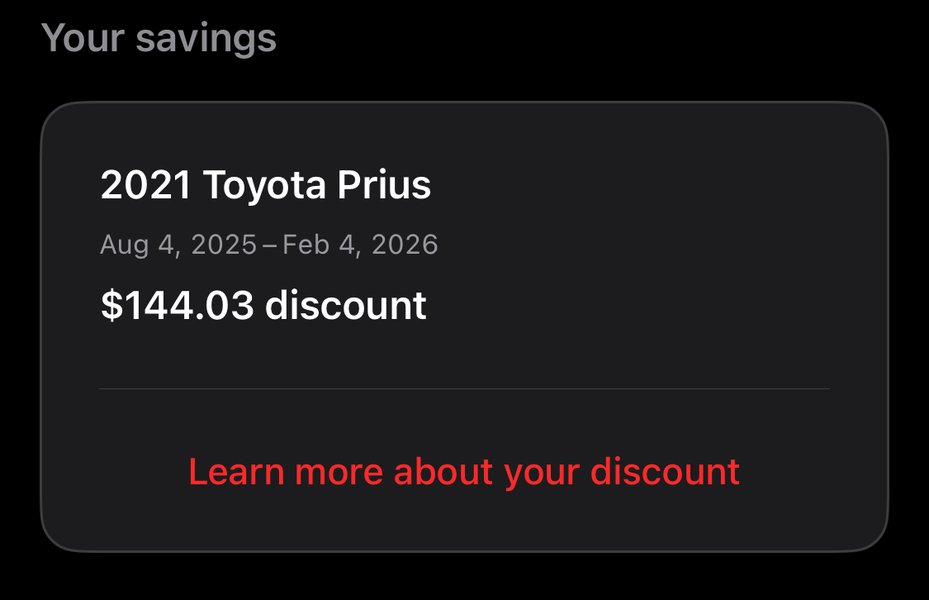
Programs like State Farm's Drive Safe & Save reward safe driving habits with potential discounts.
The Pros and Cons of Usage-Based Insurance (UBI) for EVs
While UBI offers compelling benefits, especially for EV drivers, it's essential to understand both its advantages and potential drawbacks. The following table provides a balanced perspective:
| Pros of UBI for EVs | Cons of UBI for EVs |
|---|---|
| Potential for Significant Premium Reduction: Low-mileage and safe EV drivers can see 15-40% savings, directly addressing the higher base cost of EV insurance. | Privacy Concerns: Sharing detailed driving data (GPS, speed, braking) with insurers can raise privacy questions for some individuals. |
| Fairer, Personalized Pricing: Premiums are based on actual driving behavior and usage, rather than broad demographic averages, utilizing EV-specific data. | Potential for Higher Rates: Aggressive driving, frequent hard braking (not regenerative), or driving during high-risk hours can lead to increased premiums. |
| Encourages Safer Driving Habits: Awareness of being monitored often leads to improved driving, potentially reducing accident rates and promoting smoother EV operation. | Misinterpretation of EV-Specific Behaviors: Older UBI systems might misinterpret regenerative braking as harsh, though newer algorithms are evolving. |
| Seamless Integration with EV Telematics: Modern EVs are inherently data-rich, simplifying data collection for UBI programs without needing extra hardware. | Limited Availability and Variations: Not all UBI programs are available in all US states, and rules can vary significantly, sometimes not fully accounting for EV nuances. |
| Ideal for Specific Driver Profiles: Highly beneficial for low-mileage drivers, remote workers, or those using an EV as a second car. | Hardware Requirements: Some programs still require a plug-in device (black box), which might be inconvenient for some EV owners. |
| Environmental Benefits: By encouraging less driving or more efficient driving, UBI indirectly supports reduced emissions, aligning with EV ownership goals. | Urban Stop-and-Go Challenges: Frequent stop-and-go traffic in urban areas can negatively impact behavior-based scores, even for careful drivers. |
Important Note for EV Owners:
EV insurance costs are generally 18-49% higher than comparable gas cars due to factors like higher purchase prices, more expensive specialized parts (like batteries), and a more limited repair network. UBI programs aim to mitigate these elevated costs by offering discounts based on personalized risk assessment. Always check your state's regulations, as some, like California, have specific rules regarding telematics data usage.
Which EV Owners Benefit Most from Usage-Based Insurance?
Usage-Based Insurance is not a universal solution, but certain EV owner profiles are particularly well-suited to reap its benefits and achieve significant insurance premium reductions:
Low-Mileage Drivers
If you typically drive fewer than the U.S. average of 12,000-13,500 miles annually, a pay-per-mile insurance EV program can lead to substantial savings. This category includes remote workers, retirees, multi-car households where the EV is used less frequently, or individuals with very short daily commutes. For these drivers, paying only for the miles they actually cover can dramatically lower their annual insurance outlay.
Safe, Consistent Drivers
EV owners who prioritize smooth acceleration, gentle braking, and adherence to speed limits will find behavior-based telematics programs highly rewarding. These programs directly reward careful driving, offering discounts of up to 30% or more. Utilizing an EV's regenerative braking effectively, for example, is often viewed positively by these systems.
Urban and Suburban Dwellers
City dwellers often engage in shorter trips, making pay-per-mile attractive. While urban stop-and-go traffic could theoretically impact behavior-based scores, many modern UBI algorithms are adapting. Suburban drivers, who generally face less congestion than their urban counterparts, often maintain better driving scores due to fewer abrupt stops and accelerations.
EV Owners with Multiple Vehicles
Households that own both an EV and a traditional internal combustion engine (ICE) vehicle can strategically place their low-use EV on a UBI program while maintaining traditional coverage for the higher-mileage ICE car, optimizing overall insurance costs.

Low-mileage EV owners can significantly benefit from pay-per-mile insurance.
Comparison of Top US Usage-Based Insurance Programs for EVs (2026)
Many major U.S. insurance companies offer UBI programs that cater to EV owners, each with its unique tracking methods and potential for savings. When considering the best usage based insurance companies EVs, it's crucial to compare their offerings against your specific driving profile:
| Insurance Company & Program | Type of UBI | Tracking Method | Typical Savings Potential | EV Compatibility Notes |
|---|---|---|---|---|
| Progressive Snapshot | Behavior-based (PHYD) | App or Plug-in device | Up to 30% for safe drivers; average $145 | Works with most EVs; rewards smooth driving. |
| State Farm Drive Safe & Save | Behavior-based (PHYD) | App, OnStar, or Uconnect | Up to 30% discount for good habits. | Integrates well with many EV systems, including Tesla. |
| Allstate Milewise | Pay-per-mile (PAYD) | Plug-in device or app | Significant for sub-average mileage; cash back. | Excellent for short-trip EV owners; ignores charging time. |
| Nationwide SmartMiles | Pay-per-mile (PAYD) | Plug-in device or vehicle connectivity | Up to 40% for low mileage (under 8-10k miles/year). | Compatible with connected cars (2018+); transparent billing. |
| Metromile (Lemonade Company) | Pay-per-mile (PAYD) | OBD-II device or app (odometer-based) | Often 30-40% for very low mileage. | Specifically designed for urban, infrequent driving; strong for EVs. |
| GEICO DriveEasy | Behavior-based (PHYD) | Smartphone app | Varies by state, focuses on phone distraction and smoothness. | Rewards smooth driving, good for newer EVs. |
| Liberty Mutual RightTrack | Behavior-based (PHYD) | App or tag | Commonly 5-30% after trial period. | Short evaluation; fixed discount for good scores. |
Privacy and Telematics Data Collection: A Balancing Act for EV Owners
One of the most frequently discussed aspects of telematics insurance electric car programs is the collection and use of personal driving data. UBI programs gather a range of information, which can include GPS location, routes traveled, speed, acceleration and braking patterns, time of day driven, and even phone usage while driving. While this data is the engine behind personalized discounts, it naturally raises concerns about privacy.
However, it's important to recognize that modern EVs are inherently rich in data. Their advanced onboard systems, including GNSS (Global Navigation Satellite System) and telematics control units (TCU), continuously collect data for various functionalities like navigation, diagnostics, and over-the-air (OTA) updates. This means that for many EV owners, the vehicle itself is already generating a vast stream of information. UBI programs often leverage this existing data infrastructure, requiring minimal additional hardware. Insurers generally emphasize that the data is used solely for underwriting and pricing, employing encryption and anonymization techniques to protect customer information. Nevertheless, EV owners should meticulously review the privacy policies of any UBI program to understand what data is collected, how it's used, how long it's stored, and whether it's shared with third parties.
"Data privacy is paramount in the evolving UBI landscape. Always read the fine print to know how your information is used and protected by your insurer," advises industry experts.
How UBI Programs Handle EV-Specific Situations
Electric vehicles possess unique characteristics that UBI programs must adapt to for fair and accurate scoring. Thankfully, as telematics technology evolves, algorithms are becoming more sophisticated in interpreting EV-specific driving patterns:
Regenerative Braking vs. Harsh Braking
Early telematics systems sometimes misinterpreted the strong deceleration caused by regenerative braking as "harsh braking," which could negatively impact a driver's score. However, progressive insurers have updated their algorithms to differentiate between aggressive friction braking and the efficient energy recovery of regenerative braking. Smooth, anticipatory deceleration using one-pedal driving techniques is generally scored favorably, rewarding the efficient nature of EV operation.
Instant Torque and Acceleration
EVs are known for their instant torque, which can lead to rapid acceleration. If not managed smoothly, this could be flagged as aggressive driving in some UBI systems. Drivers who utilize their EV's "Eco" modes or practice gentle throttle input to avoid sudden bursts of speed can maintain better scores. Insurers are increasingly refining their models to understand that EV acceleration, when smooth, doesn't necessarily indicate aggressive behavior.
Charging Stops and Trip Segmentation
Unlike gas cars, EVs require charging stops, which could complicate mileage tracking if not handled correctly. Fortunately, most UBI programs are designed to exclude stationary charging time from mileage calculations. This ensures that EV owners are not penalized for normal charging routines, and trips are accurately segmented, preserving the integrity of pay-per-mile or behavior-based assessments.
Tips for Maximizing Savings with a UBI Program as an EV Owner
If you're an EV owner looking to capitalize on the potential savings offered by UBI, here are practical tips to ensure you get the most out of your policy:
- Understand Your Driving Habits: Before enrolling, honestly assess how you drive. Are you truly a low-mileage driver? Do you consistently drive smoothly? This will help you choose between pay-per-mile and behavior-based programs.
- Choose the Right UBI Type: If your primary goal is to save on EV insurance costs due to low mileage, opt for a pay-per-mile plan. If you drive a moderate amount but exhibit exemplary driving behavior, a behavior-based program is likely a better fit.
- Practice Smooth Driving: Leverage your EV's regenerative braking effectively and practice gentle acceleration. Avoid rapid starts and harsh stops. Many UBI apps provide real-time feedback, allowing you to refine your driving style.
- Mind the Evaluation Period: Many behavior-based programs have an initial evaluation period (e.g., 30-90 days) during which your driving is assessed to determine your discount. Drive your best during this time!
- Plan Routes Strategically: Combine errands to reduce overall mileage. If possible, avoid driving during high-risk hours (late nights) or heavily congested routes that might lead to aggressive braking or acceleration.
- Mount Your Phone: Prevent phone distraction flags by using hands-free solutions and avoiding phone handling while driving.
- Bundle Policies: Inquire about discounts for bundling your auto insurance with other policies, such as homeowners or renters insurance.
- Review Your Data Regularly: Many UBI programs offer an app or online portal to review your driving scores and mileage. Monitor these regularly to identify areas for improvement and track your savings.
- Shop Around Annually: Your driving habits or the available programs may change. Re-evaluate your insurance needs and compare quotes from different providers every 6-12 months.
UBI for New EV Buyers vs. Existing Owners
The decision to opt for UBI can be approached differently depending on whether you're a new EV buyer or an existing owner:
New EV Buyers
For individuals purchasing a new electric vehicle, considering UBI from the outset can be highly advantageous. Many dealers have partnerships with insurance providers, potentially allowing for immediate enrollment in UBI programs. This proactive approach can lock in savings from day one, helping to offset the often higher initial insurance premiums associated with new EVs. It also provides an opportunity to choose an EV model known for its seamless telematics integration, which can simplify the UBI experience.
Existing EV Owners
Existing EV owners are not left out. You can switch to a UBI program at any time, often outside of your renewal period. It involves comparing quotes from various providers (like State Farm, Allstate, or Metromile) to see how much you could save based on your current driving patterns. Many find that transitioning to a UBI policy significantly reduces their insurance burden without needing to change their vehicle.
For those looking for a comprehensive understanding of how telematics impacts vehicle insurance, exploring a broader telematics car insurance guide can provide deeper insights into the technology and its implications.
FAQ: Usage-Based Insurance for Electric Cars
Conclusion
Usage-Based Insurance presents a compelling opportunity for many electric vehicle owners in the U.S. to significantly reduce their insurance premiums. By aligning costs with actual usage and driving behavior, UBI offers a more personalized and potentially fairer pricing model than traditional policies. While the inherent connectivity of EVs makes them ideal candidates for telematics, potential savings hinge on individual driving habits—favoring low-mileage and safe drivers. The privacy implications of data collection remain a key consideration, but for those comfortable with sharing their driving data, the financial benefits can be substantial.
As the EV market continues to expand and telematics technology advances, UBI programs will likely become even more sophisticated and commonplace. For both new EV buyers and existing owners, carefully evaluating the various UBI options from leading insurers is a strategic move towards unlocking considerable savings and ensuring your electric vehicle is insured in a way that truly reflects how you drive.
