

Discover why your car isn't reaching optimal temperature and how to fix it efficiently.
The P0128 code signifies that your vehicle's engine coolant temperature is below the thermostat's regulating temperature, preventing the engine from reaching its optimal operating heat. In most cases, a thermostat stuck open allows coolant to flow through the radiator too soon, resulting in an engine that runs consistently cold. Addressing this issue promptly is crucial for maintaining fuel efficiency, prolonging engine life, and ensuring proper vehicle performance.
What Does the P0128 Code Mean for Your Engine?
When your car's Engine Control Module (ECM) or Powertrain Control Module (PCM) detects that the engine coolant temperature (ECT) isn't reaching the expected operating temperature within a specified timeframe after startup, or if it consistently runs too cool, it triggers the P0128 diagnostic trouble code (DTC). This means your engine is operating outside its ideal thermal range, often due to a problem within the cooling system.
Modern engines are meticulously designed to perform optimally within a narrow temperature window, typically between 195°F and 220°F (90°C and 104°C). This "sweet spot" ensures efficient fuel combustion, minimizes harmful emissions, and reduces engine wear. The P0128 code disrupts this balance, forcing the engine to remain in an inefficient "warm-up" mode for longer than necessary.
The Thermostat: Your Engine's Temperature Gatekeeper
Understanding the P0128 code requires a glance at the humble thermostat. This small, crucial component acts as a temperature-activated valve, strategically placed between the engine and the radiator. When your engine is cold, the thermostat remains closed, restricting the flow of coolant to the radiator. This allows the coolant to circulate primarily within the engine block, helping it warm up rapidly.
As the coolant reaches a predetermined temperature (e.g., 195°F for many US-market vehicles), the thermostat's wax pellet expands, causing the valve to open. This opening allows hot coolant to flow into the radiator to be cooled, after which it recirculates back to the engine. This continuous cycle effectively maintains a stable operating temperature. A faulty thermostat, particularly one that is stuck open, bypasses this vital warm-up phase, leading to a chronically cold engine and the activation of the P0128 code.
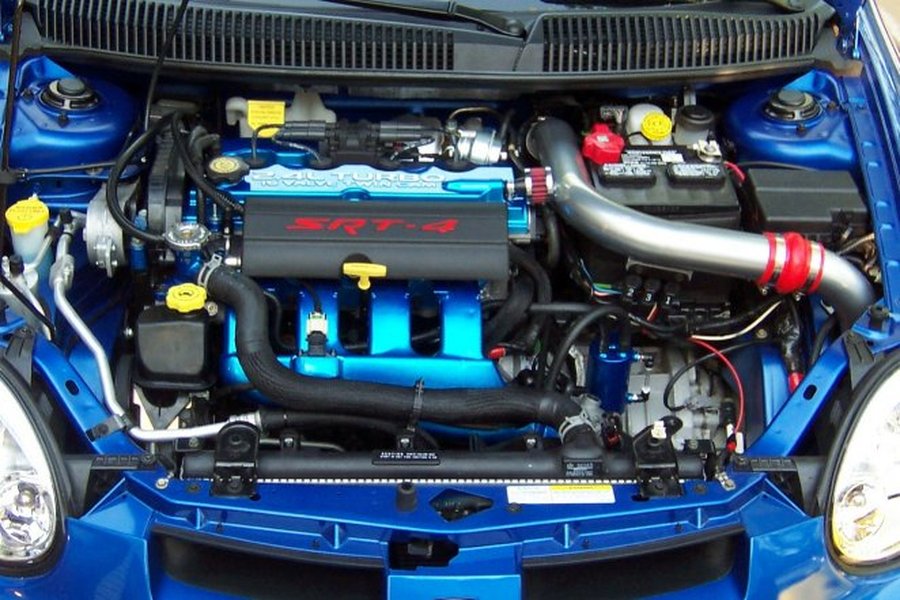
An example of a thermostat housing, where the thermostat regulates coolant flow.
P0128 Symptoms and Causes: Why Your Engine Runs Cold
Recognizing the symptoms of a P0128 code is the first step toward effective diagnosis and repair. Understanding the common causes will help pinpoint the exact issue.
What You Might Experience: Common P0128 Symptoms
You might notice these signs before or after your check engine light illuminates:
- Temperature Gauge Stays Low: The needle on your dashboard's temperature gauge will consistently remain in the blue or low end, even after driving for extended periods. It may take an unusually long time to reach its normal operating range, or it might never get there.
- Poor Heater Performance: Your car's cabin heater might blow lukewarm or cold air, especially in colder climates. This happens because the engine coolant isn't hot enough to effectively warm the heater core.
- Decreased Fuel Economy: The ECM, detecting a cold engine, will enrich the fuel mixture (known as running in "open loop" mode for longer). This burns more fuel than necessary, leading to noticeably worse gas mileage. You'll find yourself visiting the gas pump more often.
- Check Engine Light: The most direct and undeniable symptom is the illumination of the Malfunction Indicator Lamp (MIL) on your dashboard.
- Increased Emissions: An engine running too cold does not burn fuel as cleanly, leading to higher emissions. This could cause your vehicle to fail a state emissions test, especially in states with strict regulations.
- Rough Idling or Sluggish Performance: While less common, a consistently cold engine can sometimes lead to suboptimal engine performance, particularly during colder starts or sustained driving.
Primary Causes of P0128 Code (Most to Least Likely)
Diagnosing the root cause is critical for an effective repair. Here are the most common culprits, ordered by likelihood:
-
Stuck Open Thermostat
This is overwhelmingly the most frequent cause of the P0128 code. If the thermostat fails mechanically in the open position, coolant circulates continuously through the radiator. This constant cooling prevents the engine from warming up to and maintaining its optimal operating temperature.
-
Faulty Engine Coolant Temperature (ECT) Sensor
A malfunctioning ECT sensor can send inaccurate, low-temperature data to the ECM. This tricks the computer into believing the engine is colder than it actually is, triggering the P0128 code even if the engine's physical temperature is normal. The ECM relies heavily on this sensor for closed loop fuel control.
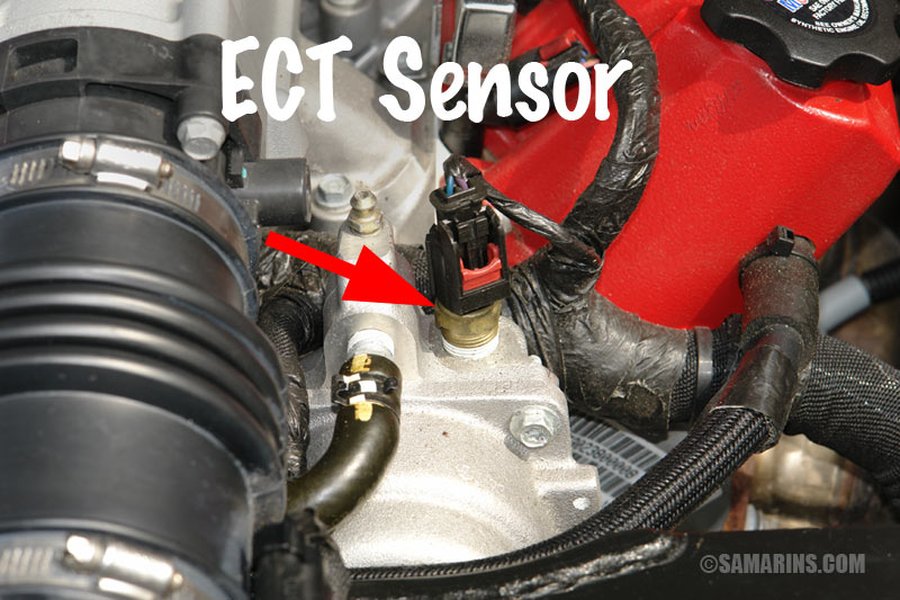
An Engine Coolant Temperature (ECT) sensor, which can cause P0128 if faulty.
-
Low Coolant Level
Insufficient coolant in the system can prevent the temperature sensor from being fully submerged or lead to air pockets, causing erratic or inaccurately low temperature readings. This can mimic a cold engine condition and trigger the P0128 code.
-
Incorrect Thermostat Rating
If someone previously installed a thermostat with a lower opening temperature rating than specified by the manufacturer (e.g., a 160°F instead of a 195°F thermostat), it can prevent the engine from reaching the temperature range the ECU expects, thus setting the P0128 code.
-
Cooling Fan Operation Issues
A faulty fan clutch or a stuck-on electric cooling fan relay can cause the cooling fan to run continuously, even when the engine is cold. This overcools the engine, preventing it from reaching its normal operating temperature.
-
Faulty Powertrain Control Module (PCM) / Engine Control Module (ECM)
In rare instances, a malfunction within the vehicle's computer itself could lead to misinterpretation of sensor data or incorrect thermal management, though this is an uncommon cause.
"Running a car's engine too cold can be just as detrimental as exceeding the recommended temperatures... an engine that’s unable to get hot enough to require temperature regulation by the thermostat and cooling system tends to consume fuel less efficiently."
Engine Not Reaching Operating Temperature Fix: Step-by-Step Diagnosis
Before replacing any parts, thoroughly diagnose the P0128 code to ensure an accurate and cost-effective repair. Always ensure the engine is completely cool before working on the cooling system.
Essential Tools for P0128 Diagnosis
- OBD-II scanner (many US auto parts stores like AutoZone offer free diagnostic scans)
- Infrared thermometer
- Basic hand tools (sockets, wrenches, screwdrivers)
- Coolant (correct type for your vehicle)
- Drain pan
- Gloves and safety glasses
P0128 Diagnosis Guide
-
Scan for Other Codes
Use your OBD-II scanner to confirm the P0128 code. Also, check for any related codes, such as P0115, P0116 (ECT sensor circuit issues), or P0125 (Insufficient Coolant Temperature for Closed Loop Fuel Control). These can provide crucial context.
-
Inspect Coolant Level
With the engine cold, visually inspect the coolant level in both the overflow reservoir and the radiator (if accessible). Top it off with the correct type of coolant if it's low. A low coolant level can lead to inaccurate temperature readings.
-
Perform a Warm-Up Test and Hose Check
Start the engine from cold. Carefully feel the upper radiator hose (the one connecting the thermostat housing to the top of the radiator). It should remain cool for the first 5-10 minutes of operation. If the hose gets warm almost immediately after starting, it's a strong indication that coolant is flowing too soon—a classic sign of a stuck open thermostat.
-
Verify Temperature with an Infrared Thermometer and Live Data
After the engine has run for 10-15 minutes, use an infrared thermometer to measure the temperature at the thermostat housing. Simultaneously, use your OBD-II scanner to view live data from the ECT sensor. If both readings are consistently low (e.g., below 160°F), the thermostat is likely faulty. If the IR thermometer shows a hot engine (around 190°F or more) but the scanner reads cold, the ECT sensor is likely sending incorrect data.
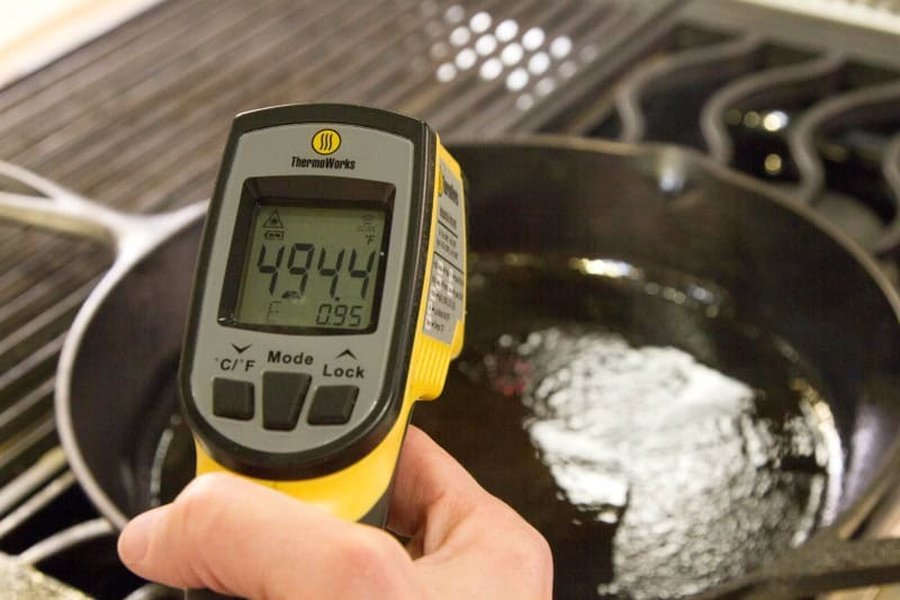
An infrared thermometer can help accurately diagnose engine temperatures.
-
Check Cooling Fan Operation
Observe the electric cooling fan. It should not be running constantly from a cold start. If it is, inspect the fan relays, fuses, and associated sensors. A perpetually running fan can overcool the engine.
-
Consider a Bench Test for the Thermostat (if removed)
If you remove the thermostat for inspection, you can test it by submerging it in a pot of water with a thermometer. Gradually heat the water. The thermostat should begin to open at its rated temperature (which is often stamped on the thermostat itself) and fully open about 15-20°F above that. If it opens too early or not at all, it's defective.
P0128 Thermostat Replacement Guide (DIY Considerations)
Once you've confidently diagnosed the cause of your P0128 code, the most common fix is replacing the thermostat. This can be a manageable DIY task for many car owners, potentially saving on labor costs.
Tools and Materials Needed:
- New thermostat (always opt for OEM or high-quality aftermarket for reliability) and new gasket or O-ring
- Appropriate amount of fresh engine coolant (check your owner's manual for the specific type and capacity)
- Drain pan for coolant
- Socket/wrench set
- Pliers (for hose clamps)
- Clean rags
- Safety glasses and gloves
- Torque wrench (recommended for proper installation)
Step-by-Step Thermostat Replacement Process (General):
-
Safety First and Cool Down
Ensure the engine is completely cool. Never open the cooling system on a hot engine. Disconnect the negative terminal of your car's battery for safety.
-
Drain Coolant
Place a drain pan beneath the radiator drain plug or the lowest accessible point of your cooling system. Drain enough coolant until its level is below the thermostat housing. Collect and dispose of used coolant responsibly, as it is toxic.
-
Locate and Access the Thermostat Housing
The thermostat housing is typically where the upper radiator hose connects to the engine block or intake manifold. On some vehicles, like certain Toyota Camry models, it might be where the lower radiator hose connects. You may need to remove air intake ducting or other accessories to gain clear access.
-
Remove Hoses and Housing
Use pliers to loosen the hose clamp and carefully detach any hoses connected to the thermostat housing. Then, unbolt the housing. Be prepared for some residual coolant to spill.
-
Remove Old Thermostat and Clean Surfaces
Carefully remove the old thermostat and its gasket or O-ring. Note its orientation—the new one must be installed in the same way (spring side usually faces the engine). Thoroughly clean the mating surfaces on the engine and housing to ensure a good seal for the new gasket.
-
Install New Thermostat
Install the new thermostat in the correct orientation, along with a new gasket or O-ring. Reattach the housing and tighten the bolts to the manufacturer's specified torque settings. Overtightening can crack the housing, while undertightening can cause leaks.
-
Reassemble and Refill Coolant
Reconnect all hoses and tighten their clamps. Close the radiator drain plug. Slowly refill the cooling system with fresh, correct-type coolant, using a funnel to prevent spills. Reconnect the battery.
-
Bleed the Cooling System
This is a critical step. With the radiator cap off (or using a specialized coolant funnel that seals to the radiator neck), start the engine. Turn your cabin heater to full hot (though the fan can be off). As the engine warms, air bubbles will escape. Squeeze the upper radiator hose periodically to help purge air. Top off the coolant as necessary. Some vehicles have dedicated bleed valves; consult your service manual. Continue until the thermostat opens and the system is bubble-free.
-
Test Drive and Verify
Take the car for a short test drive, closely monitoring the temperature gauge. It should now reach and hold the normal operating temperature. Use your OBD-II scanner to clear the P0128 code. After the drive, check for any leaks and re-check the coolant level once the engine cools down.
P0128 Repair Cost: DIY vs. Mechanic vs. Dealership
The cost to fix a P0128 code varies significantly based on your vehicle, your approach to the repair, and your location in the US. The primary repair is typically a thermostat replacement, but sometimes an ECT sensor replacement is also necessary.
Which US Vehicles Are Most Affected by P0128?
The P0128 code can appear in any vehicle, but it's frequently reported across various popular US market brands as thermostats age. While the underlying cause is often a stuck open thermostat, certain models may have thermostat designs or locations that influence labor time.
- Toyota: Models like the Corolla and Camry are common candidates for P0128, often due to a faulty thermostat.
- Ford: The F-Series trucks, Focus, and Escape frequently encounter this code.
- Chevrolet: Cruze and Silverado owners often report P0128.
- Honda: While known for reliability, Accord and Civic drivers can also experience this issue.
- Nissan: Altima and Rogue models are susceptible.
- Dodge: Grand Caravans and Chargers have been noted to trigger P0128.
- Jeep: Wrangler and Cherokee models also see this code, with numerous online discussions detailing thermostat issues.
Can I Drive with a P0128 Code? The Risks of a Cold Engine
While your car will likely still operate with a P0128 code, it is not advisable to ignore it for an extended period. Although it's generally not an immediate breakdown risk, driving with an engine that consistently runs cold carries several risks that can lead to more expensive problems down the line.
- Reduced Fuel Economy: A chronically cold engine operates less efficiently. The ECM will continue to enrich the fuel mixture to help the engine warm up, leading to significantly increased fuel consumption. You could see your gas mileage drop by 10-20% or more.
- Increased Engine Wear and Contamination: Engines are designed for optimal operation at specific temperatures. Running too cold prevents the engine oil from reaching its optimal operating temperature, which can lead to condensation and fuel dilution contaminating the engine oil. This reduces the oil's lubricating properties, accelerating wear on critical internal components like piston rings and bearings.
- Emissions Failure: An engine that isn't hot enough cannot efficiently burn fuel. This results in higher levels of unburnt hydrocarbons and other pollutants, which will almost certainly cause your vehicle to fail a state emissions test in regions like California, Texas, or Illinois.
- Subpar Performance: You might notice a slight decrease in engine power, responsiveness, or even rough idling because the engine is operating outside its optimal thermal range.
- Lack of Cabin Heat: As previously mentioned, a cold engine means the coolant isn't hot enough to provide adequate heat to the passenger cabin, making drives uncomfortable, especially in northern US states during winter.
Related OBD-II Codes to Check Alongside P0128
When diagnosing a P0128 code, it's wise to also check for these related OBD-II codes. They often point to similar or interconnected issues within the cooling system:
- P0115: Engine Coolant Temperature Circuit Malfunction
- P0116: Engine Coolant Temperature Sensor Circuit Range/Performance Problem
- P0117: Engine Coolant Temperature Circuit Low Input
- P0118: Engine Coolant Temperature Circuit High Input (Learn more about P0118)
- P0125: Insufficient Coolant Temperature for Closed Loop Fuel Control (Understand P0125)
These codes all indicate potential problems with the ECT sensor or the cooling system's ability to reach optimal temperatures, often complementing the P0128 diagnosis.
Conclusion: Ensuring Optimal Engine Temperature for Longevity
The P0128 code, indicating that your engine is not reaching its optimal operating temperature, is a common issue primarily caused by a stuck-open thermostat. While not typically an immediate emergency, ignoring it can lead to significant long-term consequences, including decreased fuel economy, accelerated engine wear, increased emissions, and reduced cabin comfort. By understanding the symptoms, accurately diagnosing the problem through simple tests like the hose check and infrared thermometer, and performing a timely repair—whether a DIY thermostat replacement or a professional service—you can ensure your engine runs efficiently and prolong its overall lifespan. Prioritizing proper engine temperature regulation is fundamental for your vehicle's health and your wallet.
