

Diagnose and Conquer That Annoying Turbo Underboost Code, Restoring Your Vehicle's Power and Efficiency.
The P0299 trouble code signals that your vehicle's turbocharger or supercharger isn't producing sufficient boost pressure, leading to a noticeable reduction in engine power and overall performance. This underboost condition triggers your check engine light and, if left unaddressed, can lead to more serious engine damage. Effectively diagnosing and fixing P0299 involves systematically checking for boost leaks, wastegate malfunctions, or failing turbo components across popular US vehicles like Ford EcoBoost, Chevrolet Cruze, and various Volkswagen models.
Decoding P0299: What Does the Code Really Mean?
The P0299 diagnostic trouble code (DTC) indicates a "Turbocharger/Supercharger 'A' Underboost Condition" in your vehicle's engine management system. This means that your engine control module (ECM) or powertrain control module (PCM) has detected that the forced induction system is not delivering the expected amount of pressurized air into the engine's combustion chambers. When the actual boost pressure falls significantly below the specified or desired parameters for a given engine load and operating condition, the PCM stores this code and typically illuminates the check engine light.
This protection mechanism is crucial to prevent potential engine damage that could arise from the engine operating outside its designed parameters, compensating for insufficient boost. The "A" in P0299 usually refers to a single turbocharger setup or, in vehicles with multiple turbos, often points to the primary turbo or the bank of cylinders associated with it.
Tell-Tale Signs: Recognizing P0299 Symptoms
When your vehicle triggers a P0299 code, you'll likely experience a range of noticeable symptoms that can significantly impact drivability. Recognizing these signs early can help you address the problem promptly and prevent further escalation.
Common Symptoms You Might Encounter:
- Illuminated Check Engine Light: This is almost always the first and most direct indicator that the PCM has detected an issue and stored the P0299 code.
- Reduced Engine Power: The most prominent symptom. You'll feel a significant decrease in your vehicle's ability to accelerate, especially when trying to merge onto highways, overtake, or climb hills. This is often described as a general lack of responsiveness or a feeling that the engine is "struggling."
- Turbo Lag: A noticeable delay between pressing the accelerator pedal and feeling the engine respond with increased power. This lag becomes more pronounced than usual.
- Engine Entering 'Limp Mode': To protect the engine from potential damage, the PCM may put the vehicle into a reduced power or "limp home" mode. This severely limits engine RPM and vehicle speed, making driving difficult and sometimes hazardous, especially on US interstates.
- Unusual Noises: You might hear whistling, hissing, or whooshing sounds coming from the engine bay, which are classic indicators of a boost leak. A whining or rattling noise could suggest a failing turbocharger or wastegate component.
- Increased Fuel Consumption: The engine control unit might attempt to compensate for the lack of boost by enriching the fuel mixture or working harder to maintain desired speeds, leading to poorer gas mileage.
- Excessive Smoke from Exhaust: In some severe cases, especially if the turbocharger's seals are failing, you might notice blue or black smoke from the exhaust, indicating oil burning or an overly rich mixture.
Root Causes of P0299: Why Your Turbo Isn't Delivering
Diagnosing the P0299 code effectively requires a thorough understanding of its common causes. These issues typically range from relatively simple air leaks to more complex mechanical failures within the turbo system. Here's a breakdown, generally ordered from the most frequent to the less common culprits:
1. Boost Leaks: The Most Frequent Offender
Boost leaks are by far the leading cause of P0299. These occur when pressurized air escapes from the turbocharger system after it has been compressed but before it reaches the engine's combustion chambers. Even a small leak can significantly reduce the amount of air entering the engine, leading to an underboost condition.
Common Boost Leak Locations:
- Cracked or Loose Hoses/Pipes: Charge air hoses, intercooler pipes, and vacuum lines can degrade, crack, become disconnected, or have loose clamps over time due to heat cycling, vibrations, and age. This is particularly common in the plastic components found in many modern US vehicles.
- Damaged Intercooler: The intercooler, designed to cool compressed air, can develop cracks or punctures, often from road debris.
- Faulty Diverter Valve or Blow-Off Valve (BOV): These valves are meant to release excess boost pressure during throttle lift-off but can leak boost if they fail to seal properly. This is a well-known issue in certain Volkswagen and Audi models.
- PCV System Issues: A malfunctioning Positive Crankcase Ventilation (PCV) system can create internal vacuum leaks or allow boost pressure to escape, especially prevalent in engines like the GM 1.4L Turbo (Chevrolet Cruze) and some Ford EcoBoost models. A disintegrated PCV valve nipple on the intake manifold is a classic sign.
- EGR System Leaks: Leaks in the Exhaust Gas Recirculation (EGR) system can also contribute to underboost conditions.
2. Wastegate Actuator Issues: Regulation Gone Awry
The wastegate is a crucial component that controls how much exhaust gas bypasses the turbine wheel, thereby regulating the turbocharger's boost pressure. Problems with the wastegate or its actuator can prevent the turbo from building adequate boost.

The wastegate actuator is vital for regulating boost pressure.
Typical Wastegate Problems:
- Stuck Open Wastegate: If the wastegate is stuck open, too much exhaust gas bypasses the turbine, preventing it from spinning fast enough to generate sufficient boost.
- Faulty Wastegate Actuator: The actuator, which can be vacuum, pressure, or electronically controlled, is responsible for opening and closing the wastegate. A broken, weak, or improperly adjusted actuator will fail to control boost correctly. This is a common point of failure for Ford EcoBoost engines.
- Worn Wastegate Bushings or Linkage: Play or wear in the mechanical linkage of the wastegate can prevent it from sealing properly or operating smoothly.
- Wastegate Solenoid Malfunction: This solenoid controls the vacuum or pressure sent to the wastegate actuator. A faulty solenoid leads to incorrect wastegate operation.
3. Failing Turbocharger Components: Internal Meltdown
While often a dreaded diagnosis, a complete turbocharger failure is less common than boost leaks or wastegate issues but can certainly cause a P0299 code. These issues involve internal wear or damage to the turbo unit itself.

Internal turbocharger components can wear down over time.
Signs of a Failing Turbocharger:
- Worn Bearings: The turbine shaft spins at extremely high RPMs. Worn journal or ball bearings can cause excessive shaft play, leading to contact between the compressor/turbine wheels and their housings, significantly reducing efficiency and potentially causing catastrophic failure.
- Damaged Compressor or Turbine Wheels: Foreign object damage (FOD) or excessive bearing play can chip, bend, or break the fins on the compressor or turbine wheels, severely impairing boost production.
- Clogged Oil Passages: Lack of proper lubrication due to clogged oil lines or low oil pressure can lead to premature wear and failure of the turbocharger bearings.
- Variable Geometry Turbo (VGT) Vane Issues: Common in diesel engines, VGTs can suffer from sticking vanes due to carbon buildup, preventing proper boost generation.
4. Sensor Malfunctions: Misleading the ECM
The PCM relies on various sensors to accurately monitor and control boost pressure. A faulty sensor can provide incorrect readings, leading the PCM to misinterpret the actual boost level, triggering P0299 even if the mechanical components are fine.
Key Sensors to Check:
- Manifold Absolute Pressure (MAP) Sensor: This sensor measures the boost pressure within the intake manifold. A dirty, faulty, or incorrectly reading MAP sensor can cause the PCM to believe there's an underboost condition.
- Boost Pressure Sensor: Similar to the MAP sensor, a dedicated boost pressure sensor can also fail.
- Mass Air Flow (MAF) Sensor: An incorrect MAF reading can skew the PCM's calculation of desired boost, leading to P0299.
5. Exhaust System Restrictions: Choking the Turbo
Any obstruction that restricts exhaust gas flow can prevent the turbocharger's turbine from spinning efficiently, thereby reducing boost production.
Common Exhaust Restrictions:
- Clogged Catalytic Converter: A partially or fully clogged catalytic converter creates excessive backpressure, impeding exhaust flow to the turbo.
- Clogged Diesel Particulate Filter (DPF): Especially in diesel vehicles common in the US, a clogged DPF can significantly restrict exhaust, causing underboost.
- Exhaust Leaks: Leaks in the exhaust system before the turbo (e.g., manifold gaskets) can divert exhaust gases away from the turbine, reducing its efficiency.
A Step-by-Step Guide to Diagnosing P0299
Accurately diagnosing the P0299 code is crucial to avoid replacing good parts unnecessarily. Follow this logical progression from simple visual checks to more advanced testing. Always prioritize safety and ensure the engine is cool before touching hot components.
1. Initial Scan and Freeze Frame Data Analysis
Begin by connecting an OBD-II scanner to your vehicle's diagnostic port. Record the P0299 code and pay close attention to any related codes, such as P0234 (overboost), P0236 (MAP sensor circuit), P0243-P0250 (wastegate solenoid), or P2262 (turbo not boosting). Analyze the freeze frame data, which captures engine conditions (RPM, engine load, throttle position, boost pressure) at the exact moment the P0299 code was set. This data can provide invaluable clues about the operating conditions that caused the fault.
2. Thorough Visual Inspection for Boost Leaks
This is often the easiest and most cost-effective first step. Visually inspect all components of the pressurized intake system for any signs of damage or disconnection.
What to Look For:
- Inspect all intake piping from the air filter box, through the turbocharger outlet, intercooler, and up to the throttle body.
- Look for cracks, tears, bulges, or disconnections in hoses (charge pipes), especially at connection points and bends.
- Check the intercooler itself for damage, oil seepage, or bent fins.
- Examine all clamps for tightness and proper seating. Loose clamps are a common cause of leaks.
- Inspect all small vacuum lines and their connections to the wastegate actuator, boost control solenoid, and any other vacuum-controlled components.
- On specific models (like the Chevrolet Cruze 1.4L), pay close attention to the PCV system and the intake manifold for signs of disintegration or leaks.
- Listen for hissing or whistling sounds while the engine is running or during a boost test.
3. Boost Leak Testing (Smoke Test is Key)
The most effective diagnostic method for pinpointing elusive boost leaks. A professional smoke machine introduces a non-toxic vapor into the intake system, making even tiny leaks visible.
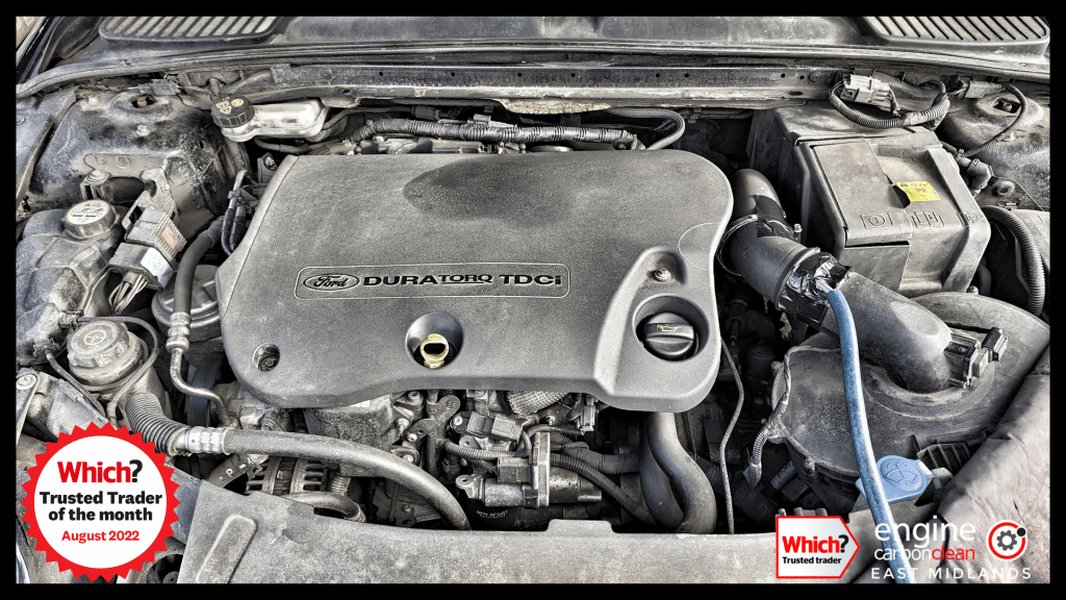
A smoke test is highly effective for identifying even small boost leaks.
How to Perform:
- Block off the intake system (usually after the MAF sensor but before the turbo).
- Introduce smoke into the system at low pressure (typically 5-15 PSI).
- Carefully observe all intake components, intercooler, and connections for escaping smoke.
- Use soapy water solution on suspected areas to confirm leaks by observing bubbles.
4. Wastegate Actuator and Control System Testing
The wastegate is critical for regulating boost. Its proper function is paramount.
Testing Procedures:
- Manual Inspection: With the engine off and cold, visually inspect the wastegate actuator and linkage. Check for free movement, binding, or excessive play.
- Vacuum/Pressure Test: Use a hand vacuum pump (for vacuum-actuated wastegates) or pressure pump (for pressure-actuated) to apply force to the actuator. Observe if the actuator rod moves smoothly through its full range of motion and holds vacuum/pressure.
- Solenoid Test: If electronically controlled, use a scan tool capable of bi-directional control to command the wastegate solenoid to open and close. Listen for clicks and observe the wastegate rod movement.
- Log Live Data: Monitor wastegate duty cycle and actual vs. commanded boost pressure during a road test using a scan tool.
5. Turbocharger Mechanical Inspection
If all other checks prove inconclusive, the turbocharger itself may be at fault.
What to Check:
- Shaft Play: Remove the intake hose from the turbocharger's compressor inlet. Grasp the compressor wheel and check for excessive side-to-side (radial) and in-and-out (axial) play. A slight amount of radial play is normal, but axial play (pushing/pulling along the shaft) should be minimal to non-existent.
- Wheel Damage: Inspect the compressor and turbine wheels for bent, chipped, or missing fins. Damage can be caused by foreign objects or contact with the housing due to worn bearings.
- Oil Leaks: Look for oil accumulation around the turbocharger seals, which could indicate internal leakage and potentially contribute to smoke from the exhaust.
- Free Spin: The compressor wheel should spin freely without any grinding or scraping noises.
6. Sensor and Electrical System Validation
Faulty sensor readings can mislead the PCM. Verify sensor operation.
How to Validate:
- Live Data Comparison: During a road test, monitor MAP/boost sensor readings using your scan tool. Compare the "desired boost" (commanded by the PCM) with the "actual boost" (measured by the sensor). If the actual boost is consistently lower than desired, it confirms an underboost condition.
- Electrical Checks: Test the MAP/boost sensor's wiring for proper 5-volt reference, ground, and signal integrity using a multimeter.
- MAF Sensor: If equipped, ensure the MAF sensor is clean and providing plausible readings, as inaccurate MAF data can affect boost calculations.
7. Exhaust System Inspection for Restrictions
Check for excessive backpressure that could hinder turbo performance.
Potential Issues:
- Perform a backpressure test to check for a clogged catalytic converter or DPF.
- Inspect the exhaust manifold and turbocharger inlet for any leaks.
Understanding P0299 Repair Costs: DIY vs. Professional
The cost to fix a P0299 code can vary significantly based on the root cause, whether you perform the repair yourself (DIY), and the specific make and model of your vehicle. Repairs can range from inexpensive hose replacements to costly turbocharger overhauls.
Here's a breakdown of estimated costs, reflecting typical US market prices including parts and labor where applicable:
| Repair Type | DIY Cost (Parts Only) | Professional Cost (Parts + Labor) | Typical Time Required |
|---|---|---|---|
| Boost Leak Fix (Hose/Clamp) | $20 - $100 | $150 - $400 | 1 - 3 hours |
| Wastegate Actuator Replacement | $100 - $300 | $300 - $600 | 1 - 2 hours |
| Boost Pressure Sensor Replacement | $50 - $150 | $200 - $350 | 0.5 - 1 hour |
| Diverter Valve / BOV Replacement | $50 - $300 | $150 - $500 | 1 - 2 hours |
| Intercooler Replacement | $200 - $800 | $400 - $1,200+ | 2 - 4 hours |
| Turbocharger Rebuild (Off-Car) | $400 - $800 | $900 - $1,800 | 3 - 6 hours (total R&R) |
| Complete Turbocharger Replacement | $800 - $2,500 | $1,500 - $3,500+ | 4 - 8 hours |
P0299 in Popular US Vehicles: Brand-Specific Insights
While P0299 is a generic code, certain vehicle models popular in the US market tend to exhibit specific underlying causes for this underboost condition due to design or common failure points.
Ford EcoBoost Engines (F-150, Explorer, Focus ST)
Ford's ubiquitous EcoBoost engines, found in everything from the F-150 to the Focus ST, frequently experience P0299 due to issues with the wastegate actuator or charge pipe leaks. Owners of 2013 F-150 EcoBoost models, for example, have commonly reported this code. The wastegate actuator rod can corrode, affecting its ability to regulate boost properly. Intercooler upgrades are also common on higher-powered EcoBoost engines to maintain sustained boost performance.

The intercooler is a frequent source of boost leaks in turbocharged vehicles.
Chevrolet Cruze (1.4L Turbo)
The Chevrolet Cruze 1.4L Turbo is notorious for P0299 due to failures in its PCV (Positive Crankcase Ventilation) system. A disintegrated check valve nipple on the intake manifold is a particularly common culprit, creating a significant internal boost leak. An updated PCV valve kit is often the recommended solution for this specific issue.
Volkswagen/Audi (2.0T, 1.8T)
Volkswagen and Audi models, especially those with 2.0T and 1.8T engines, are known for P0299 issues related to diverter valve failures, wastegate rattles (often due to worn components), or faulty N75 valves (boost pressure control solenoids). Plastic charge pipes in these vehicles can also become brittle and crack over time.
Subaru WRX/STI
Subaru WRX and STI vehicles can experience P0299 from boost leaks, often at intercooler couplings, or issues with boost control solenoids, particularly in modified or aggressively driven vehicles. Pre-turbo exhaust leaks (e.g., at the manifold or up-pipe) can also reduce turbine drive energy and cause underboost.
Can I Safely Drive with a P0299 Code?
Driving with an active P0299 code should be approached with extreme caution. While you might be able to operate the vehicle for short distances, it is generally NOT recommended, especially for prolonged periods, at high speeds, or under heavy load. The P0299 code indicates that your engine is not receiving the correct amount of boost, meaning it's not running as intended and is likely operating under stress.
Risks of Driving with P0299:
- Reduced Power and Safety: The loss of engine power can be dangerous when attempting to accelerate quickly, merge into traffic, or climb steep inclines.
- Increased Wear and Potential Damage: Driving with an underboost condition can place added strain on other engine components as they try to compensate. If the underlying cause is a failing turbocharger, continued driving could lead to catastrophic turbo failure, potentially sending metal fragments into the engine and causing severe, extremely costly damage.
- Limp Mode: Your vehicle may enter 'limp mode' to protect the engine, severely restricting speed and power, which can be inconvenient and hazardous.
It's always best to have the vehicle inspected by a qualified mechanic as soon as possible. If you absolutely must drive, do so gently, avoid high speeds, minimize acceleration, and stay in the right lane. Never ignore a P0299 code.
Related Trouble Codes to Investigate
When diagnosing a P0299 code, it's highly beneficial to check for any other related Diagnostic Trouble Codes (DTCs) that might be present. These additional codes can provide valuable clues about whether the issue is related to control systems, sensors, or mechanical components, helping to narrow down the diagnosis.
- P0234 – Turbocharger/Supercharger Overboost Condition: While P0299 is for underboost, sometimes a faulty wastegate or boost control solenoid can cause both underboost and overboost conditions intermittently, or the system might be confused in its readings.
- P0236 – Turbocharger Boost Sensor 'A' Circuit Range/Performance: This code directly points to an issue with the boost pressure sensor, suggesting a potential electrical problem, a faulty sensor, or a circuit issue rather than a mechanical underboost.
- P0243 - P0250 – Turbocharger Wastegate Solenoid 'A' Malfunction (and similar codes): These codes indicate specific problems with the wastegate solenoid or its control circuit, which directly impacts boost regulation.
- P2262 – Turbocharger/Supercharger Boost Pressure Not Detected - Mechanical: This code often accompanies P0299 and specifically points towards a mechanical issue preventing boost generation, such as severe leaks or a failing turbo.
- P00AF – Turbocharger/Supercharger 'A' Boost Control Solenoid Circuit/Open: Another code indicating an electrical issue with the boost control solenoid.
- Codes related to MAF or MAP sensors: Any codes indicating issues with the Mass Air Flow (MAF) or Manifold Absolute Pressure (MAP) sensors can directly affect the PCM's calculation of desired boost and its ability to accurately read actual boost, thus contributing to a P0299.
Always address any related codes first, as fixing them might resolve the P0299 or simplify its diagnosis.
