

Unraveling the mystery of the unsung hero that keeps your electric vehicle moving.
Key Takeaways on Your EV's 12V Battery
- Critical Startup Role: Even if your main high-voltage battery is fully charged, a dead or weak EV 12V auxiliary battery will prevent your electric car from starting by blocking the essential startup sequence.
- Distinct Functions: EVs utilize two separate battery systems: a massive high-voltage battery for propulsion and a smaller 12V battery to power all low-voltage electronics and initiate the high-voltage system.
- DIY or Pro Fixes: Diagnosing a 12V battery issue can often be done with simple tools like a multimeter, and jump-starting or replacing it can be a DIY task, though professional service is also widely available.
It’s a bewildering moment for any electric vehicle owner: you glance at your dashboard, see a healthy charge percentage on your main battery, yet your EV remains stubbornly unresponsive. No lights, no sounds, no sign of life. This perplexing scenario often points to an overlooked but absolutely critical component: the EV 12V auxiliary battery. This small battery holds the key to your electric car's entire startup process, and when it fails, your advanced EV turns into an expensive paperweight.
For a US audience, this issue is a common concern across popular EV models, from Tesla and Chevrolet Bolt to Nissan Leaf and Ford Mustang Mach-E. Understanding the dual-battery system and the specific role of the 12V battery is essential for both new EV owners and experienced drivers.
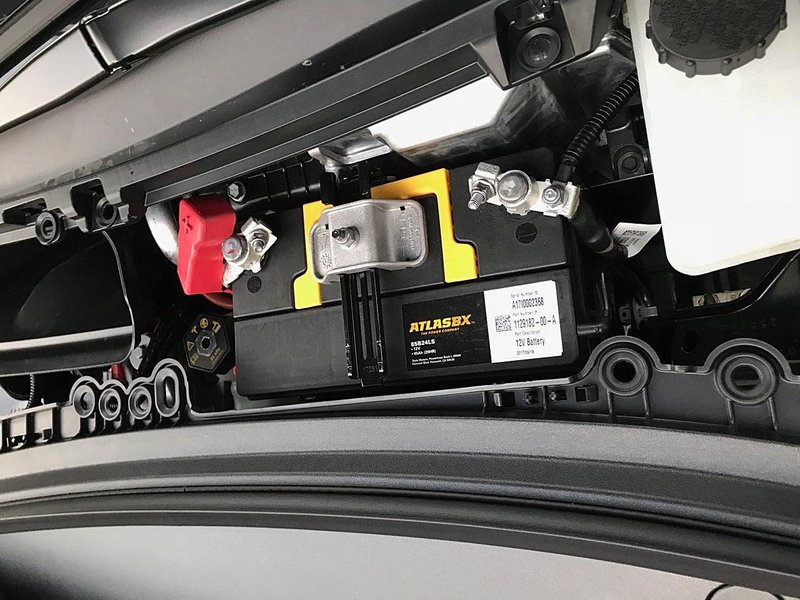
An illustration highlighting the importance of the 12V auxiliary battery in an electric vehicle.
Why Do Electric Vehicles Need a 12V Battery?
The Unsung Hero: Powering Your EV's Brains and Basics
The presence of a small 12V battery in an otherwise high-tech electric vehicle might seem counterintuitive. After all, EVs boast massive high-voltage traction batteries designed to power thousands of miles of driving. However, the 12V battery serves a fundamental and non-negotiable role in every modern EV:
The High-Voltage Traction Battery: The Muscle
This is the large, powerful battery pack, typically ranging from 400 to 800 volts in popular US models like the Tesla Model 3 or Kia EV6. Its primary function is to:
- Provide power to the electric motors for propulsion.
- Store the energy that dictates your vehicle's driving range.
- Handle rapid acceleration and regenerative braking.
These sophisticated lithium-ion packs are built for deep discharge cycles and longevity, often lasting 8-15 years, and are expensive to replace.
The 12V Auxiliary Battery: The Brains and Control System
Despite the high-voltage powerhouse, your EV relies on a conventional 12-volt battery—much like those found in gasoline cars—to operate all its low-voltage electronic systems. Its crucial responsibilities include:
- Powering onboard computers, Electronic Control Units (ECUs), and control modules that manage vehicle functions.
- Operating essential safety systems such as airbags, stability control, and anti-lock brakes.
- Running accessories like infotainment systems, interior and exterior lighting, power windows, and climate control.
- Crucially, activating the contactors (high-voltage relays) that connect and disconnect the main high-voltage battery to the rest of the vehicle's propulsion system.
This separation ensures safety and relies on widely available, cost-effective 12V components for non-propulsion systems. A Hyundai engineer once noted that the 12V system powers all ECUs and critical relays that safely connect and disconnect the high-voltage system from the rest of the car, particularly during a crash or when the vehicle is off.
High Voltage Battery vs. 12V Battery EV: What's the Real Difference?
A Tale of Two Power Sources
To fully grasp why a small 12V battery can halt a giant EV, it's vital to understand the distinctions between the two battery types. While both are integral to the vehicle's operation, their roles, characteristics, and failure symptoms are markedly different.
| Feature | 12V Auxiliary Battery | High-Voltage Traction Battery |
|---|---|---|
| Primary Function | Powers all low-voltage electronics, safety systems, and initiates EV startup. | Propels the vehicle, stores primary energy for driving range, powers motors. |
| Voltage | Typically 12 volts (lead-acid or lithium-ion). | Ranges from 300-800 volts (lithium-ion). |
| Charging Source | Charged by the high-voltage battery via a DC-DC converter (no alternator). | Charged via AC (Level 1/2) or DC (fast charging), and regenerative braking. |
| Typical Lifespan | 3-5 years (lead-acid), 5-8+ years (lithium-ion). | 8-15 years or 100,000-200,000+ miles, typically with long warranties. |
| Failure Symptoms | EV won't start, dark screens, no power to accessories, charge port won't open. | Reduced range, power limitations, specific error messages about the traction system. |
| Cost to Replace (US) | $150-$500 (DIY to dealership). | $5,000-$20,000+ (usually covered by warranty for many years/miles). |
Why My Electric Car Won't Start: The Critical Startup Sequence
The Gatekeeper to Your EV's Powerhouse
The most crucial aspect of the 12V battery's role is its involvement in the EV's startup sequence. Without a healthy 12V battery, your electric car is effectively paralyzed, regardless of how much charge remains in the high-voltage traction battery. Here's how it works:
- When you press the "start" button, the 12V battery is the first component to activate. It powers up the vehicle's myriad computers and Electronic Control Units (ECUs).
- These ECUs perform essential system checks and safety validations to ensure all systems are operating correctly.
- If all checks pass, the 12V battery then sends a signal to activate the contactors. These are high-voltage relays that act as safety switches, connecting the massive high-voltage battery to the rest of the propulsion system.
- Only after the contactors are closed can the high-voltage battery begin to supply power for driving, and your EV becomes "on" and ready.
If the 12V battery is dead or too weak, these initial steps cannot occur. The computers won't boot, the contactors won't close, and the high-voltage battery remains isolated for safety reasons. This explains why a small EV 12V battery problem can lead to a complete standstill, making it feel like a major high-voltage failure.
"The 12-volt battery acts as the gatekeeper to the high-voltage system. If it fails, your EV can't wake up its main power source—it's like having a dead key to a fully charged car."
Can a Dead 12V Auxiliary Battery "Kill" My EV?
Immobilization, Not Destruction
While a dead EV 12V auxiliary battery can completely immobilize your vehicle, rendering it unable to start or move, it will not physically damage the high-voltage traction battery. The high-voltage system is designed with numerous safety protocols that prevent it from activating if the low-voltage control system isn't functioning correctly. So, while it's frustrating, a 12V battery failure won't lead to costly repairs for your main battery pack.
However, prolonged deep discharge can shorten the 12V battery's overall lifespan, and in some models, the vehicle may stop attempting to charge a failing 12V battery to prevent draining the main pack, leading to an EV 12V auxiliary battery dead scenario.
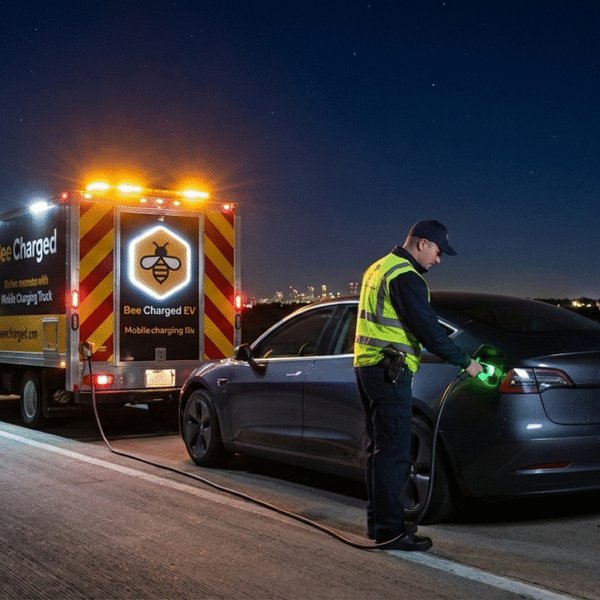
Roadside assistance for an EV, often due to a dead 12V battery, showcasing the need for mobile services.
Common Signs of an EV 12V Auxiliary Battery Problem
Spotting the Symptoms Early
Recognizing the warning signs of a failing 12V battery can save you from being stranded. Many symptoms can be mistaken for more serious issues with the main traction battery. Here’s what to look for:
Early Warning Signs
- Intermittent electrical glitches: flickering lights, screen resets, or unexpected error messages.
- Unusual warning lights appearing on the dashboard that clear and reappear.
- Reduced functionality or slowness of the infotainment system.
- Problems with keyless entry, remote unlocking, or smartphone app connectivity to the vehicle.
Advanced Symptoms and Complete Failure
- The vehicle fails to "wake up" from sleep mode or won't turn on at all.
- Dashboard displays a "12V Battery Low" or similar warning (some EVs, like certain Teslas, provide direct alerts).
- The charge port won't open or release the charging cable.
- Complete lack of response when attempting to start, with no dashboard lights or power to accessories.
- The gear selector (e.g., shifter) is locked in Park.
These issues are often misinterpreted as major high-voltage battery failures, leading to unnecessary worry. Always check the 12V first.
Electric Car Not Starting Fix: Step-by-Step Diagnosis
DIY Troubleshooting and Professional Insights
If your electric car not starting, a systematic approach can help identify and resolve the issue. Most 12V battery problems are diagnosable and fixable.
1) Safety First
Safety Warning: Always consult your EV's owner's manual for specific procedures. Never attempt to work on high-voltage components (typically marked with orange cables) without specialized training. Wear insulated gloves and eye protection. Avoid short circuits that could damage sensitive electronics.
- Stay clear of orange high-voltage cables and components; do not attempt to open high-voltage covers.
- Use insulated tools; remove jewelry; work in a ventilated, dry area.
2) Check 12V Health with a Multimeter
This is a fundamental step. With the car off, use a digital multimeter to measure the voltage across the 12V battery terminals (or designated jump points):
- 12.6V - 12.8V: Healthy and fully charged.
- 12.2V - 12.4V: Low, needs charging.
- < 12.0V: Discharged, likely the cause of a no-start.
- < 11.5V: Severely discharged, likely damaged or sulfated, requiring replacement.
If you manage to get the car to "ready" mode, measure the voltage again; it should read between 13.2V and 14.6V, indicating the DC-DC converter is correctly charging the 12V battery from the high-voltage pack.
3) Attempt a Jump Start
Yes, you can jump-start an electric car's 12V system! This is often the quickest way to confirm a 12V battery issue. Use a portable jump starter or another vehicle (with its engine off) as the power source.
- Locate the 12V Terminals: Refer to your owner's manual. These are typically under the hood (Nissan Leaf, Chevrolet Bolt), in the frunk (some Teslas, Ford Mustang Mach-E), or in the trunk.
- Connect Cables: Attach the positive (+) jumper cable to the positive terminal of the dead 12V battery, then the other end to the positive terminal of the good battery/jump pack. Connect the negative (-) cable to the negative terminal of the good battery/jump pack, then the other end to a good chassis ground point on your EV (a bare metal part of the frame, away from the battery).
- Start the EV: Attempt to power on your EV. If it starts, leave it in "ready" mode for at least 15-30 minutes. This allows the DC-DC converter to recharge the 12V battery from the high-voltage pack.
If a jump start revives your EV, it strongly indicates a failing 12V battery that requires further attention or replacement.
4) Utilize EV-Specific Wake/Reset Features
Some EV manufacturers have integrated features to address 12V issues:
- Tesla: Newer models may provide on-screen alerts and specific steps to follow for 12V issues. Some older models have dedicated 12V "jump" posts for service.
- Hyundai Ioniq 5/6, Kia EV6/EV9: These models often feature a "12V Battery Reset" button, sometimes found on the dashboard, to allow the high-voltage pack to send a burst of energy to the 12V battery, effectively self-jump-starting it.
- Ford Mustang Mach-E, Nissan Leaf, Chevrolet Bolt: These generally use standard 12V jump points as detailed in their respective owner's manuals.
5) Scan for Diagnostic Trouble Codes (DTCs)
An OBD2 scanner paired with an EV-aware app (e.g., Car Scanner, Torque Pro, or brand-specific apps like Leaf Spy for Nissan Leaf) can read error codes related to the low-voltage system. These can indicate a failing 12V battery or issues with the DC-DC converter. Clear any transient undervoltage codes after resolving the 12V issue.
EV Auxiliary Battery Replacement: DIY vs. Dealership
Options for Getting Back on the Road
The typical lifespan of a lead-acid 12V auxiliary battery in an EV is 3 to 5 years. Due to the constant demands of electronic systems, some EVs may cycle these batteries more frequently than gasoline cars, potentially shortening their lifespan. When replacement is needed, you have several options:
DIY Replacement: Cost-Effective for the Mechanically Inclined
For many EV models, replacing the 12V battery is a task achievable for those with basic automotive knowledge and tools. However, adherence to specific manufacturer procedures is critical to avoid damaging other low-voltage components or triggering error codes.
- Benefits: Significant cost savings, immediate resolution if you have the battery on hand.
- Considerations: Requires careful adherence to manufacturer instructions. Improper reconnection can damage low-voltage fuses or control circuits. Some vehicles may require battery registration or programming after installation to clear Diagnostic Trouble Codes (DTCs).
12V Lithium Upgrade: Enhanced Performance and Longevity
Many EV owners are opting for a 12V lithium upgrade (e.g., LiFePO4 batteries). This alternative offers several advantages:
- Longer lifespan (often 5-8+ years compared to 3-5 years for lead-acid).
- Lighter weight.
- Better performance in extreme temperatures (crucial for US climates from hot Arizona to cold Minnesota).
- More consistent voltage output.
Companies like Ohmmu offer direct replacement kits for various EVs, and newer Tesla models (e.g., Model S and X) have even transitioned to lithium 12V batteries from the factory. Always confirm compatibility with your specific EV model before upgrading.
Dealership or Certified Mechanic: Expertise and Warranty Assurance
If you're uncomfortable with DIY, prefer professional service, or your EV requires specific programming after battery replacement, a dealership or certified EV mechanic is the best option. They use OEM procedures and have specialized diagnostic tools.
- Benefits: Expert installation, warranty coverage on parts and labor, proper disposal of the old battery, and integration with any necessary software updates.
- Considerations: Higher cost compared to DIY, potential wait times for service appointments.
| Method | Battery Cost (USD) | Labor Cost (USD) | Total Estimated Cost (USD) | Pros | Cons |
|---|---|---|---|---|---|
| DIY (Lead-Acid AGM) | $100 - $250 | $0 | $100 - $250 | Lowest cost, immediate fix (if battery available). | Risk of errors, no labor warranty, requires specific knowledge. |
| DIY (12V Lithium Upgrade) | $400 - $800+ | $0 | $400 - $800+ | Improved performance, longer life, lighter. | Higher upfront cost, compatibility research needed, potential warranty impact. |
| Independent EV Shop | $100 - $300 | $150 - $250 | $250 - $550 | Professional service, potentially quicker than dealership. | Varies by shop reputation, may not handle complex programming. |
| American Dealership | $100 - $350 (OEM part) | $175 - $300 | $275 - $650 | Expert installation, warranty, proper programming/updates. | Highest cost, potential wait times. |
Note: These are estimated costs and can vary significantly based on vehicle make, model, specific battery type, and geographical location within the US. Luxury EVs or those with harder-to-access 12V batteries may incur higher costs.
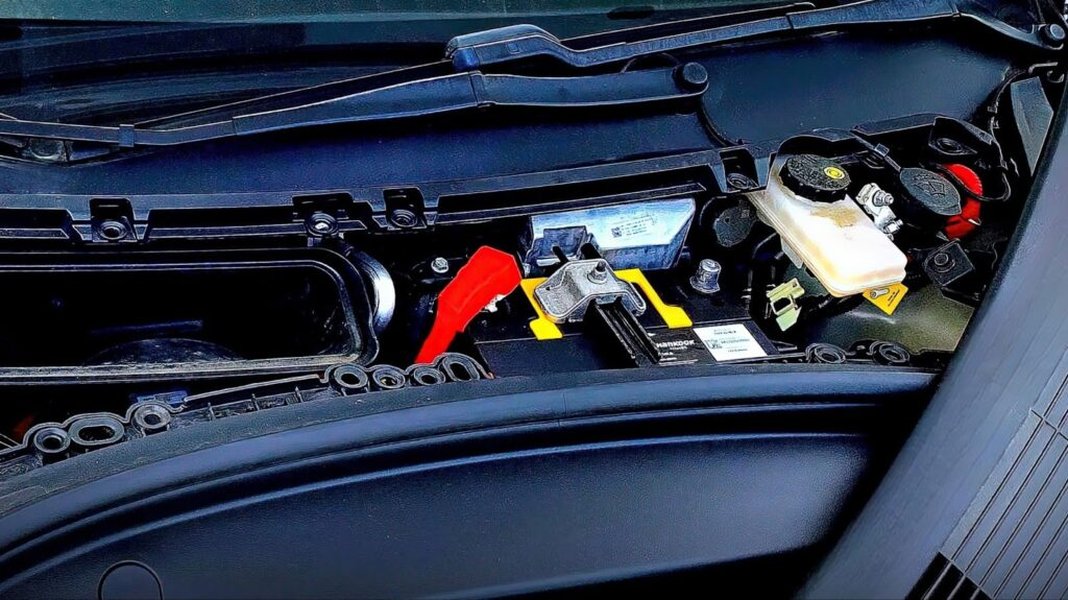
A technician replacing a 12V battery in a Tesla frunk.
Real-World Examples: Specific EV 12V Battery Problems and Fixes
Insights from Popular US EV Models
Tesla 12V Battery Problem Fix
Tesla owners, particularly those with older Model S, 3, X, and Y vehicles using AGM 12V batteries, have frequently reported issues. Symptoms include "12V Battery Requires Service" alerts, inability to start, or repetitive reboots. Tesla has addressed this by transitioning to lithium-ion 12V batteries in newer models, which offer longer life and better warning before failure. The Tesla 12V battery problem fix often involves a mobile service appointment for replacement, with costs typically ranging from $150 to $300 for the battery and labor at a Tesla service center in the US.
Chevrolet Bolt EV Auxiliary Battery Issues
Chevrolet Bolt owners have experienced 12V drain issues, sometimes linked to software bugs that prevent proper charging from the main battery. A weak 12V battery can trigger a "Propulsion Power Reduced" message or prevent charging. GM has issued technical service bulletins to address these charging system problems. Testing the conductance of the battery, not just voltage, is often recommended to determine its true health. After replacement, ensure the low-voltage system is fully checked.
Nissan Leaf 12V Battery Failures
The Nissan Leaf, especially older models, is particularly susceptible to 12V issues. The small battery can struggle with the constant power demands of the Leaf's electronics. Infrequent driving or short trips, common in urban US environments, can leave the 12V undercharged. A smart charger or ensuring the car remains in "ready" mode for a few minutes after home charging can help. If the 12V consistently rests below 12.2V, replacement with an AGM battery of the same group size is recommended.
Hyundai Ioniq 5/6 and Kia EV6/EV9 Concerns
These popular US-market EVs have faced widely reported 12V battery drain issues. In some cases, this has been linked to software or the Integrated Charging Control Unit (ICCU). Hyundai and Kia models feature a convenient "12V Battery Reset" button, allowing the car to self-jump-start using power from the main high-voltage battery. If these resets become frequent, it signals a deeper issue, and replacement of the 12V battery, along with a dealer check for low-voltage or DC-DC converter software updates, is advised.
Preventing Future EV 12V Battery Problems
Proactive Maintenance for Peace of Mind
While the 12V battery is designed to be charged by the high-voltage system via a DC-DC converter, certain factors can lead to premature failure or drain. Proactive maintenance is key to avoiding unexpected breakdowns:
Regular Driving and Charging Habits
- Regular Driving: Ensure your EV is driven regularly. This allows the DC-DC converter to keep the 12V battery properly charged. EVs that sit for extended periods, especially new vehicles on dealership lots, are prone to drained 12V batteries.
- "Always Be Charging" (ABC): If your car frequently sits for days, keeping it plugged into a charger allows the main battery to manage the 12V charge, reducing drain.
- Limit Parked Accessory Loads: Even when "off," EVs maintain various systems (telematics, security, battery management, pre-conditioning). Features like aftermarket dashcams with sentry mode can contribute to parasitic drain. Ensure any hardwired accessories have low-voltage cutoffs.
Monitoring and Climate Considerations
- Monitor Voltage: Use a multimeter or a Bluetooth battery monitor (e.g., BM2) to periodically check your 12V battery's resting voltage. This helps identify degradation before complete failure.
- Climate Impact: Extreme weather significantly affects 12V batteries. In cold climates (like the US Midwest or Northeast winters), batteries lose capacity and efficiency. In hot climates (like the US Southwest summers), heat accelerates battery degradation and shortens lifespan. Consider garage parking or insulation in extreme temperatures.
- Software Updates: Stay informed about any recalls or software updates for your specific EV model, especially those related to 12V battery management. Software glitches can sometimes prevent the DC-DC converter from adequately charging the 12V battery.
When to Seek Professional Help for Your EV's 12V Battery
Knowing When to Call in the Experts
While many 12V issues can be resolved with DIY efforts, certain situations warrant professional diagnosis and service:
- Repeated Failures: If your 12V battery dies repeatedly even after charging or replacement, it may indicate a problem with the DC-DC converter, excessive parasitic drain, or other electrical system malfunctions.
- Persistent Error Codes: If diagnostic trouble codes (DTCs) related to the low-voltage system persist after addressing the 12V battery, it suggests a deeper issue that requires specialized EV diagnostic tools.
- Warranty Coverage: Vehicles still under warranty should typically be serviced at authorized dealerships to maintain coverage.
- Complex Access: Some EVs hide their 12V battery in hard-to-reach locations, making DIY replacement difficult or risky.
American roadside assistance programs like AAA are increasingly equipped with EV-trained technicians who can handle 12V issues on the spot, often providing mobile jump-starts or replacement services across the US.
Frequently Asked Questions About EV 12V Battery Problems
Conclusion
The humble 12V auxiliary battery plays an indispensable role in the complex ecosystem of an electric vehicle. Far from being an outdated component, it is the critical link that initiates the entire EV startup sequence, controlling all low-voltage electronics and acting as the gatekeeper to the high-voltage traction battery. Understanding this dynamic is key to avoiding unexpected breakdowns and ensuring the reliable operation of your EV.
Whether you're a new EV owner or a seasoned driver, recognizing the signs of a failing 12V battery, knowing how to diagnose it, and understanding your options for repair or replacement are essential. Regular monitoring, proactive maintenance, and being aware of climate effects can significantly extend the life of this vital component, keeping your electric car on the road and preventing that frustrating moment when your fully charged EV simply won't start.
