

Decode the P0113 engine code and master the art of diagnosing and fixing your vehicle's IAT sensor issues.
- P0113 isn't about hot air; it's an electrical signal issue. The "High Input" means your engine's computer receives an uncharacteristically high voltage from the Intake Air Temperature (IAT) sensor, often indicating an open circuit rather than actual extreme heat.
- Common culprits range from simple to complex. Most P0113 codes are resolved by addressing faulty IAT sensors, damaged wiring, or corroded connectors, making it a frequently DIY-friendly repair.
- Early diagnosis saves you money and engine wear. Ignoring P0113 can lead to poor fuel economy, reduced performance, and even damage to critical components like the catalytic converter.
Encountering a P0113 trouble code can be perplexing for any car owner. The illuminated check engine light often triggers a sense of urgency, yet understanding the underlying issue can empower you to tackle it confidently. The P0113 code specifically points to a problem with your vehicle's Intake Air Temperature (IAT) sensor circuit, indicating a "high input." This guide will demystify this common diagnostic trouble code, walking you through its meaning, symptoms, causes, and providing a clear, step-by-step approach to diagnosis and repair.
Whether you're a seasoned DIY enthusiast or prefer to leave complex issues to the professionals, this article equips you with the knowledge to make informed decisions about your vehicle's health. We'll break down the technical jargon into simple, actionable insights, helping you get your car running smoothly and efficiently once again.
What Exactly Does P0113 Mean for Your Vehicle?
The P0113 diagnostic trouble code (DTC) translates to "Intake Air Temperature (IAT) Sensor 1 Circuit High Input." To truly understand this, let's unpack its components. Your IAT sensor is a vital component of your engine's control system, responsible for measuring the temperature of the air entering the engine. This information is crucial for the Powertrain Control Module (PCM), also known as the Engine Control Module (ECM), to calculate the optimal air-fuel mixture for combustion. An accurate air-fuel ratio is essential for efficient engine operation, good fuel economy, and controlled emissions.
The IAT sensor functions as a thermistor, a type of resistor whose resistance changes significantly with temperature. Specifically, it's typically a Negative Temperature Coefficient (NTC) thermistor, meaning its electrical resistance decreases as the air temperature increases, and conversely, its resistance increases as the air temperature drops. The PCM supplies a reference voltage, usually 5 volts, to the sensor. The sensor then returns a varying voltage signal to the PCM, proportional to the air temperature it measures.
When the PCM detects a "high input" signal, it means it's receiving a voltage from the IAT sensor that is at or very close to the maximum reference voltage, often around 5 volts. This high voltage signal is interpreted by the PCM as an extremely low air temperature, typically around -40°F (-40°C), which is often an impossible or implausible reading under normal operating conditions. Therefore, the P0113 code indicates an electrical issue within the IAT sensor circuit, rather than the actual air being excessively hot.
This discrepancy triggers the check engine light because the PCM recognizes that the IAT sensor's reading is outside its expected operational range. When the PCM receives an unrealistic temperature reading, it often resorts to a "default" or "limp-home" mode, using a pre-programmed value to estimate the intake air temperature. While this allows the engine to run, it compromises performance and efficiency.
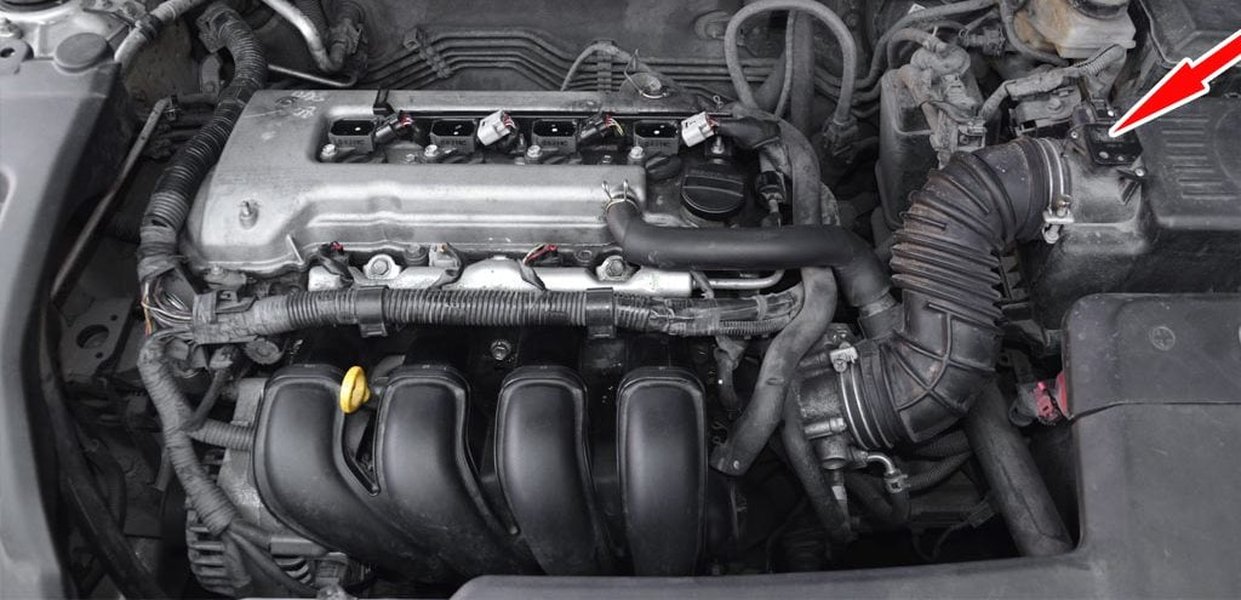
An example of an Intake Air Temperature (IAT) sensor, often found in the intake system.
Decoding the Symptoms: What Drivers Experience with P0113
While the P0113 code is fundamentally an electrical system alert, the inaccurate information it conveys to your engine's computer can manifest in a variety of noticeable symptoms. These symptoms arise because the PCM, operating with incorrect intake air temperature data, cannot properly adjust critical engine parameters like fuel delivery and ignition timing.
- Illuminated Check Engine Light (CEL): This is almost always the first and most direct indication of a P0113 code. Your vehicle's onboard diagnostic system will light up the CEL to alert you to an issue that requires attention.
- Poor Fuel Economy: If the PCM incorrectly believes the incoming air is extremely cold (due to the high voltage signal), it will command a richer air-fuel mixture, injecting more fuel than necessary. This leads to increased fuel consumption and reduced miles per gallon.
- Rough Idling or Engine Misfires: An overly rich or incorrect air-fuel mixture can result in incomplete combustion, causing the engine to run roughly, stumble, or even misfire, especially at idle.
- Difficulty Starting the Engine: Particularly in colder weather, the engine may crank for longer or be hesitant to start. The PCM relies on accurate IAT data for proper cold-start fuel enrichment. If it's receiving a false "super cold" reading, it might over-fuel, making starting difficult.
- Reduced Engine Performance: You might notice a decrease in overall engine power, sluggish acceleration, or a general hesitation when you press the gas pedal. The compromised air-fuel ratio means the engine isn't operating at its peak efficiency.
- Elevated Emissions: An unbalanced air-fuel mixture can lead to higher levels of unburnt hydrocarbons and other pollutants in the exhaust, potentially causing your vehicle to fail emissions tests.
- Cooling Fan Running Continuously or at High Speed: In some vehicles, an IAT sensor reporting extremely low temperatures can cause the engine control unit to mistakenly believe the engine is running too cold or requires excessive cooling, leading to the radiator fan running constantly or at higher speeds than normal.
It's important to remember that some newer vehicles, with more sophisticated engine management systems, might mask some of these drivability symptoms, presenting only the check engine light. However, even without obvious performance issues, the underlying problem still needs to be addressed.
Pinpointing the Problem: Common Causes of P0113
The P0113 code often stems from straightforward issues, though more complex problems can sometimes be at play. Understanding the hierarchy of common causes can guide your diagnostic efforts, allowing you to start with the most probable and easiest fixes. The "high input" signal almost always points to an open circuit condition where the PCM is seeing maximum voltage because the circuit is broken or disconnected.
Most Common Causes (Start Here!)
- Faulty IAT Sensor: The sensor itself can fail internally due to age, wear, exposure to extreme temperatures, or contamination (such as oil or debris). An internal break in the thermistor element will lead to an open circuit and thus a high voltage signal to the PCM. This is the most frequent cause.
- Wiring Issues: Problems with the wiring harness connected to the IAT sensor are very common. These can include:
- Open Circuit: A break in the wire (e.g., a cut, fray, or corroded wire) prevents the signal from reaching the PCM correctly, resulting in a high voltage reading.
- Short to Voltage: The IAT sensor wire accidentally contacting a higher voltage source, sending an erroneously high signal to the PCM.
- Damaged Wires: Wires can become frayed, burnt from engine heat, or damaged by rodent activity.
- Connector Problems: Loose, dirty, or corroded electrical connectors at the IAT sensor or within the wiring harness can disrupt the signal. Poor contact creates high resistance, which the PCM interprets as an open circuit or high voltage. Bent pins within the connector are also a frequent culprit.
Less Common, But Still Possible Causes
- Mass Air Flow (MAF) Sensor Issues (if IAT is Integrated): In many vehicles, the IAT sensor is built into the MAF sensor. If the MAF sensor itself malfunctions or its internal IAT component fails, it can trigger P0113. Contamination of the MAF element can also affect IAT readings.
- Air Leaks in the Intake System: While less directly a cause of "high input" electrical fault, significant leaks downstream of the IAT sensor can introduce unmetered, warmer air, which might confuse the sensor or PCM, though this more commonly triggers lean mixture codes (e.g., P0171/P0174).
- Dirty or Clogged Air Filter: A severely clogged air filter restricts airflow and can sometimes affect the ambient temperature around the sensor, though it's rarely the direct cause of an electrical "high input" fault. It's more of a contributing factor to overall air intake issues.
- Aftermarket Intake or Extension Harness: Poorly installed aftermarket cold air intakes or extended wiring harnesses can introduce bad splices, excessive tension, or improper connections, leading to wiring faults.
- Faulty Powertrain Control Module (PCM/ECM): A problem with the vehicle's main computer is a very rare cause for a P0113 code alone. If the PCM is faulty, you would typically observe multiple, unrelated error codes and widespread electrical issues. This should only be considered after all other possibilities have been thoroughly exhausted.
Understanding these potential causes allows for a systematic approach to diagnosis, ensuring you address the most likely culprits first.
DIY Troubleshooting: A Step-by-Step Diagnostic Guide for P0113
Diagnosing the P0113 code systematically can save you time and money. While some steps require basic tools, many can be done with a keen eye and a bit of patience. Always ensure your vehicle is safely parked, the engine is off and cool, and the ignition is off unless otherwise specified.
Essential Tools for Diagnosis
- OBD-II Scan Tool: Crucial for reading codes and monitoring live data. Basic models are affordable, while advanced ones offer more detailed information.
- Digital Multimeter (DMM): Essential for testing voltage, resistance, and continuity in electrical circuits.
- Electrical Contact Cleaner: For cleaning corroded connections.
- Basic Hand Tools: Screwdrivers, wrenches, and pliers for accessing the sensor.
- Service Manual or Wiring Diagram: Extremely helpful for locating the IAT sensor, understanding its wiring, and knowing expected resistance values.
Step 1: Scan and Record Codes, Check Live Data
- Connect Your OBD-II Scanner: Plug the scanner into your vehicle's diagnostic port (usually located under the dashboard on the driver's side).
- Read and Record Codes: Note down the P0113 code and any other accompanying codes. Other codes, such as P0112 (IAT Circuit Low Input), P0111 (IAT Circuit Range/Performance), or MAF-related codes (P0100-P0104), can provide additional context.
- Review Freeze Frame Data: Your scanner can often show "freeze frame" data, which captures the engine's operating conditions (engine speed, load, coolant temperature, etc.) at the moment the P0113 code was set. This can offer valuable clues.
- Monitor Live IAT Data: With the ignition ON (engine OFF), navigate your scan tool to display live data for the IAT sensor. Observe the reading.
- Key Insight: If the IAT reading displays an extremely low, static temperature like -40°F (-40°C) when the ambient temperature is much warmer, this is a very strong indicator of an open circuit (or a disconnected/faulty sensor) triggering the "high input" signal.
- Compare IAT to ECT (Engine Coolant Temperature): If your engine is cold, the IAT and ECT readings should be very similar (within a few degrees of ambient temperature). As the engine warms up, ECT will rise significantly, while IAT should generally track ambient air temperature or slightly above due to engine heat. A major discrepancy on a cold engine reinforces a sensor or circuit issue.
- Clear Codes and Test Drive: After recording all information, clear the codes from the PCM. Take the vehicle for a short drive to see if the P0113 code reappears. This helps confirm if the issue is intermittent or persistent.
Step 2: Thorough Visual Inspection
- Locate the IAT Sensor: The IAT sensor can be found in various locations:
- Often in the air intake tube, between the air filter box and the throttle body.
- Sometimes threaded directly into the intake manifold.
- Frequently integrated into the Mass Air Flow (MAF) sensor, especially on many Ford, GM, and some Asian and European models. Consult your vehicle's service manual if you're unsure.
- Inspect the Connector: Unplug the IAT sensor's electrical connector. Look for:
- Corrosion: Green, white, or blue powdery residue on the pins, indicating moisture or chemical exposure.
- Bent or Damaged Pins: Pins inside the connector that are bent, pushed out, or broken.
- Looseness: Ensure the connector seats firmly and clicks into place.
- Contamination: Oil, dirt, or debris inside the connector.
- Examine the Wiring Harness: Follow the wiring from the IAT sensor back towards the main engine harness and eventually the PCM. Look for:
- Frayed, Cut, or Exposed Wires: Any signs of physical damage to the insulation.
- Burn Marks or Melted Insulation: Indicating contact with hot engine components or an electrical short.
- Rub Marks: Where wiring might have chafed against engine components or brackets.
- Aftermarket Modifications: If an aftermarket cold air intake is installed, check any extension harnesses or splices for poor connections.
- Inspect the Sensor Itself: If the sensor is accessible and removable, take it out. Look for:
- Physical Damage: Cracks in the plastic housing or the thermistor bulb itself.
- Heavy Contamination: Excessive oil (often from the PCV system), dirt, or debris coating the thermistor element.
- Check Air Filter: While not a direct cause of P0113, a severely clogged or dirty air filter can impact overall air measurement and sometimes contribute to sensor contamination. Ensure it's clean and replace if necessary.
Step 3: Electrical Tests with a Multimeter
These tests are crucial for confirming the electrical integrity of the circuit and the sensor. Always consult your vehicle's specific wiring diagrams for correct pin assignments and expected values.
- Test for Reference Voltage (at the Connector):
- With the IAT sensor disconnected and the ignition ON (engine OFF), set your multimeter to measure DC Volts.
- Carefully probe the terminals inside the IAT sensor connector. One terminal should show approximately 5 volts (this is the reference voltage from the PCM). The other will be the ground or signal return.
- If you don't detect 5 volts, there's an open circuit or short in the reference voltage wire leading from the PCM, or a rare PCM internal fault.
- Test for Ground Circuit Integrity (at the Connector):
- With the ignition ON (engine OFF) and the IAT sensor disconnected, set your multimeter to measure resistance (Ohms).
- Connect one lead of the multimeter to a known good chassis ground (a clean, unpainted metal part of the vehicle frame or engine block).
- Connect the other lead to the ground terminal in the IAT sensor connector. You should read very low resistance (close to 0 Ohms).
- A high resistance reading or an "OL" (open loop) indicates a problem with the ground wire.
- Test IAT Sensor Resistance (Bench Test):
- With the ignition OFF, carefully remove the IAT sensor (if it's a standalone unit).
- Set your multimeter to measure resistance (Ohms).
- Connect the multimeter leads to the two terminals of the IAT sensor.
- Record the resistance reading at ambient room temperature.
- Now, gently heat the sensor (e.g., using a hair dryer, holding it carefully at a safe distance). Observe the multimeter. The resistance should gradually decrease as the temperature rises. If the resistance remains constant, is "OL," or fluctuates erratically, the sensor is likely faulty.
- Pro Tip: While heating, you can also briefly place the sensor in a freezer for a minute or two. The resistance should increase significantly when cold.
- Compare your readings to the manufacturer's specifications. A common range might be 2,000-6,000 Ohms at 25°C (77°F) and decrease to 300-500 Ohms at 80°C (176°F).
- Test for Shorts or Opens in Wiring Harness (Continuity Check):
- This test is more advanced and requires a wiring diagram. Disconnect both the IAT sensor and the PCM connectors.
- Using your multimeter set to continuity (or Ohms), test the resistance between the corresponding pins at the IAT connector and the PCM connector. You should see very low resistance (near 0 Ohms).
- An "OL" reading indicates an open circuit (broken wire).
- Also, check for shorts to ground (between each wire and chassis ground) and shorts to power (between each wire and a constant 12V source if applicable).
By systematically performing these checks, you can accurately identify whether the P0113 code is caused by a faulty sensor, damaged wiring, or a poor connection.
The Path to Resolution: Fixing the P0113 Code
Once you've diligently diagnosed the root cause of the P0113 code, implementing the fix is often straightforward. The repair strategy will depend entirely on what your diagnostic tests revealed.
1. Replacing a Faulty IAT Sensor
If your multimeter tests confirm that the IAT sensor itself is internally faulty (e.g., it reads "OL" or its resistance doesn't change with temperature), replacing it is the most common solution. IAT sensors are generally inexpensive and relatively easy to replace. Simply disconnect the electrical connector, unthread or unclip the old sensor, and install the new one. Ensure you purchase an OEM-quality replacement part suitable for your vehicle's make and model. If your IAT sensor is integrated into the Mass Air Flow (MAF) sensor, you will need to replace the entire MAF unit.
2. Repairing Wiring or Connectors
If your visual inspection or electrical tests reveal damaged wiring or corroded connectors, the repair involves:
- Cleaning Corrosion: Use electrical contact cleaner to thoroughly clean any corroded pins or terminals. Allow them to dry completely before reconnecting.
- Repairing Damaged Wires: For frayed, cut, or broken wires, perform a high-quality repair. This often involves cutting out the damaged section, stripping the insulation, and using heat-shrink butt connectors or soldering the wires together, then sealing with heat shrink tubing for a durable, weather-resistant connection. Avoid using electrical tape alone, as it's a temporary and unreliable fix.
- Securing Loose Connections: Ensure all connectors are firmly seated and clicked into place. If a connector is physically damaged, it may need to be replaced (a "pigtail" connector with new wires can be spliced in).
3. Cleaning the IAT Sensor or MAF Assembly
If the IAT sensor (or the integrated MAF/IAT unit) is merely dirty or contaminated (e.g., with oil residue from the PCV system or excessive dust), a thorough but gentle cleaning might resolve the issue. Use a specialized MAF/IAT sensor cleaner, as other cleaners can damage the delicate sensor elements. Spray directly onto the sensor elements and allow it to air dry completely. Be extremely careful not to touch the sensor element, as it is very fragile.
4. Replacing a Dirty Air Filter
If a heavily clogged air filter was identified as a contributing factor (though rarely the sole cause of P0113), replacing it is a simple and beneficial maintenance step. A clean air filter ensures proper airflow and can improve overall engine efficiency.
5. Addressing Intake Air Leaks
If intake air leaks are suspected (more common with related codes like P0171/P0174 but still worth considering), diagnosing and sealing them is necessary. This might involve replacing cracked vacuum hoses, intake manifold gaskets, or repairing cracks in the air intake tubing.
6. PCM/ECM Replacement (Very Rare)
Only consider PCM replacement as an absolute last resort, after all other diagnostic possibilities have been exhaustively ruled out by a qualified technician. This is an expensive repair and often requires specialized programming or "flashing" to integrate with your vehicle.
After any repair, always clear the trouble codes using your OBD-II scanner. Then, perform a test drive to ensure the issue is resolved and the code does not reappear. Monitoring live data during the test drive can help confirm that the IAT sensor is now reporting accurate and consistent temperatures.
Show Me the Money: Repair Cost Estimates for P0113
The cost to fix a P0113 code can vary significantly based on the root cause, whether you perform the repair yourself (DIY), your vehicle's make and model, and local labor rates for professional mechanics. Here's a general overview of estimated costs, designed to give you a realistic expectation.
| Repair Item | DIY Cost (Parts Only, USD) | Mechanic Cost (Parts + Labor, USD) | Typical Time |
|---|---|---|---|
| Clean and Reseat Connector | $0 - $15 (for contact cleaner) | $80 - $150 | 0.3 - 0.6 hours |
| Replace Standalone IAT Sensor | $20 - $80 | $100 - $250 | 0.3 - 0.8 hours |
| Repair Minor Wiring (1-2 wires) | $5 - $30 (for wires, connectors, heat shrink) | $120 - $300 | 0.5 - 1.5 hours |
| Replace IAT/MAF Assembly (if integrated) | $50 - $350+ | $180 - $600+ | 0.4 - 1.5 hours |
| Replace Air Filter | $15 - $40 | $40 - $80 | 0.1 - 0.3 hours |
| Intake Air Leak Repair (minor) | $10 - $50 (for hoses, clamps, sealant) | $100 - $400+ | 0.5 - 2.0+ hours |
| PCM/ECM Testing/Reprogramming (rare) | N/A (requires specialized tools) | $150 - $350 (diagnostic/program only) | 1.0 - 2.0 hours |
| PCM/ECM Replacement (rare) | $200 - $800+ (part only) | $800 - $1800+ (parts + labor + programming) | 2.0 - 4.0 hours |
These estimates are general guidelines. Prices for parts can vary significantly between economy and luxury vehicles, and labor rates differ geographically. Performing diagnostics yourself can eliminate diagnostic fees charged by shops (typically $75-$150 just to find the problem). However, if you lack the tools or confidence, a professional diagnosis is a worthwhile investment.
Vehicles Most Affected by the P0113 Code
While the P0113 code can appear in any vehicle equipped with an IAT sensor, some models and manufacturers seem to experience this issue more frequently due to design characteristics, sensor placement, or common failure points. Understanding these patterns can sometimes offer quicker diagnostic insights.
- Ford F-Series Trucks and SUVs (e.g., F-150, Explorer): Many Ford vehicles, particularly older models, integrate the IAT sensor into the Mass Air Flow (MAF) sensor. Failures in this combined unit can trigger P0113. Their exposed intake systems can also be prone to contamination.
- Dodge Ram Trucks: Often, P0113 in these vehicles can be linked to oil contamination from the PCV (Positive Crankcase Ventilation) system, which can foul the IAT sensor (especially if integrated with the MAF sensor).
- Various GM Vehicles (e.g., Chevrolet Silverado, Malibu, Equinox): Similar to Ford, many GM models also integrate the IAT into the MAF sensor. Wiring harness vulnerabilities to corrosion in certain climates have also been noted.
- European Brands (e.g., Volkswagen, BMW, Mercedes): While less common to be "most affected," these vehicles can experience P0113, sometimes due to intricate wiring harnesses or sensors placed in areas prone to heat soak or environmental exposure.
- Vehicles with Aftermarket Cold Air Intakes: Any vehicle with a non-OEM cold air intake system can be more susceptible to P0113 if the extended wiring harness or sensor relocation introduces poor connections, chafed wires, or places the sensor in an area where it doesn't get accurate airflow.
It's crucial to note that this doesn't mean other vehicles are immune. Any car with an IAT sensor can develop this issue, but these examples highlight common tendencies.
When to Call in the Experts: Seeking Professional Help for P0113
While many P0113 issues are highly amenable to DIY diagnosis and repair, there are specific situations where consulting a professional mechanic is the smartest and safest course of action. Knowing your limits can save you from further complications or costly mistakes.
- Lack of Tools or Experience: If you don't possess the necessary diagnostic tools (like a multimeter or an advanced scan tool with live data capabilities) or feel uncomfortable performing electrical tests, a professional can accurately diagnose the issue without risking damage to other components.
- Persistent Problem After Basic Fixes: If you've diligently followed the diagnostic steps, replaced the sensor, or repaired suspected wiring, but the P0113 code continually returns, it's a sign of a deeper, more complex issue that warrants expert attention.
- Multiple or Unrelated Trouble Codes: If P0113 is accompanied by several other seemingly unrelated codes, it might indicate a more widespread electrical issue, a complex wiring problem, or potentially a rare PCM fault. Diagnosing these scenarios requires specialized knowledge and equipment.
- Suspected PCM Issue: If all sensor and wiring tests pass conclusively, and you've exhausted all other possibilities, the PCM might be faulty. Diagnosing and replacing a PCM requires specialized diagnostic equipment, programming tools, and expertise that most DIYers don't possess.
- Extensive or Complex Wiring Damage: If the wiring damage is extensive, involves multiple circuits, or is difficult to access, a professional will have the expertise to repair it correctly and durably. Rodent damage, for example, can be intricate to fix.
- Luxury or Highly Complex Vehicles: Some high-end or technologically advanced vehicles have integrated systems that can make even seemingly simple repairs more complicated, often requiring manufacturer-specific diagnostic tools.
- Safety Concerns: If your vehicle exhibits severe drivability issues alongside the P0113 code, such as severe misfires, stalling, or a no-start condition, it's best to have it towed to a professional to prevent potential damage or unsafe driving conditions.
A professional mechanic has access to advanced diagnostic equipment, up-to-date technical service bulletins (TSBs), and years of experience, enabling them to pinpoint and resolve challenging automotive problems efficiently.
Beyond P0113: Related Codes to Keep an Eye On
The P0113 code doesn't always appear in isolation. Many IAT sensor-related codes exist, and sometimes other codes can accompany or be triggered by the same underlying issue. Checking for these related codes can provide a more comprehensive picture of your vehicle's health and help pinpoint the exact problem.
- P0110: Intake Air Temperature Sensor 1 Circuit: A general fault in the IAT sensor circuit, less specific than P0113 but indicates an overall problem.
- P0111: Intake Air Temperature Sensor 1 Circuit Range/Performance: This code signifies that the IAT sensor's readings are inconsistent, erratic, or outside the expected performance range, even if not a complete "high input" or "low input."
- P0112: Intake Air Temperature Sensor 1 Circuit Low Input: The inverse of P0113, this code means the PCM is receiving an unusually low voltage signal from the IAT sensor, which it interprets as an extremely high air temperature.
- P0114: Intake Air Temperature Sensor 1 Circuit Intermittent/Erratic: This code indicates that the IAT sensor's readings are sporadic, inconsistent, or frequently fluctuating outside normal parameters, suggesting an intermittent connection or failing sensor.
- P0100 - P0104 Series (Mass Air Flow Sensor Codes): If your IAT sensor is integrated into the MAF sensor, any MAF-related codes appearing alongside P0113 strongly suggest that the MAF assembly itself is the problem.
- P0171 / P0174: System Too Lean (Bank 1 / Bank 2): These codes indicate that the engine is running with too much air and not enough fuel. An IAT sensor falsely reporting very cold air might cause the PCM to over-fuel, which paradoxically could mask a lean condition or contribute to it if other factors are at play. However, if the PCM incorrectly thinks air is hot (P0112), it might under-fuel, leading to a lean condition.
- P0172 / P0175: System Too Rich (Bank 1 / Bank 2): These codes indicate the engine is running with too much fuel and not enough air. As mentioned, an IAT sensor falsely reporting very cold air (P0113 scenario) causes the PCM to add excessive fuel, directly leading to a rich condition.
When multiple codes appear, they act as pieces of a puzzle. Analyzing them together can lead to a quicker and more accurate diagnosis of the underlying issue, helping you address all related problems at once.
Frequently Asked Questions (FAQ) About P0113
Conclusion: Empowering Your Automotive Journey
The P0113 "Intake Air Temperature Sensor 1 Circuit High Input" code, while initially intimidating, is often one of the more manageable check engine light issues to diagnose and resolve. By understanding that it primarily signals an electrical fault—most commonly an open circuit or faulty sensor—rather than excessively hot air, you're already halfway to a solution.
The systematic approach outlined in this guide, starting with visual inspections, moving to live data analysis, and culminating in multimeter tests, empowers you to confidently pinpoint the underlying cause. Whether the fix involves a simple cleaning, a straightforward sensor replacement, or a more involved wiring repair, addressing P0113 promptly is crucial. Ignoring it can lead to noticeable issues like poor fuel economy and reduced performance, and potentially costly damage to other engine components.
Remember that preventative maintenance, such as regular air filter changes and inspecting electrical connections, plays a vital role in preventing future occurrences. Even if you ultimately decide to seek professional help, being knowledgeable about the P0113 code puts you in a much stronger position to understand the repair process and ensure your vehicle receives the correct attention. Armed with this information, you can keep your car running optimally, ensuring reliability and efficiency for miles to come.
