

Unlocking hidden performance and troubleshooting common issues without a mechanic.
- Clear Minor Glitches: Learn simple, effective methods to resolve common electronic issues and restore your car's optimal performance.
- Multiple Reset Methods: Discover step-by-step guides for battery disconnect, fuse pull, and OBD-II scanner resets, tailored for various skill levels and vehicle types.
- Relearning Process & Safety: Understand the crucial post-reset relearning phase and essential safety precautions to ensure a smooth, risk-free experience.
Is your car acting a little out of sorts? Perhaps that stubborn "check engine" light won't go away, or your engine feels sluggish, and fuel efficiency isn't what it once was. Before you resign yourself to a costly mechanic visit, consider a powerful, yet often overlooked, DIY solution: resetting your car's Engine Control Unit (ECU).
Think of your car's ECU as its central nervous system, constantly monitoring and adjusting vital functions. Over time, this sophisticated computer can store minor electronic glitches or build up "learned" data that might unintentionally hinder performance. A simple reset can often clear these temporary issues, allowing your car to return to its factory-optimized state, much like rebooting a computer to fix a software bug.
This comprehensive guide will walk you through everything you need to know about performing an ECU reset safely and effectively at home. We'll explore various methods, discuss when and why a reset is beneficial, and provide practical advice to help both casual drivers and seasoned enthusiasts get their vehicles running smoothly again.
Understanding Your Car's Brain: What is the ECU?
The Engine Control Unit (ECU) is a vital electronic control unit that governs a series of actuators on an internal combustion engine to ensure optimal engine performance. It's often referred to as the "brain" of your car because it manages and controls critical functions such as fuel injection, ignition timing, idle speed, and emissions control. In some vehicles, you might encounter similar terms like Engine Control Module (ECM) or Powertrain Control Module (PCM), which essentially serve the same purpose.
The ECU constantly receives data from an array of sensors throughout the vehicle – monitoring everything from oxygen levels in the exhaust to throttle position and engine temperature. Based on this information, it makes real-time adjustments to optimize power, fuel economy, and minimize emissions. This process involves "adaptive learning," where the ECU learns your driving style and adjusts its parameters over time to suit various conditions and driving habits.

A visual representation of an Engine Control Unit (ECU).
Why an ECU Reset Can Be a Game-Changer
While adaptive learning is generally beneficial, sometimes these learned settings can become corrupted or outdated. This can happen due to various factors, such as:
- Faulty Sensors: A temporary glitch from a sensor can lead to incorrect data being stored.
- Component Replacements: Installing new parts (e.g., a new battery, oxygen sensor, or throttle body) can confuse the ECU, which is still trying to adapt to the old component's behavior.
- Minor Electrical Issues: A low battery charge or a temporary electrical surge can sometimes cause the ECU to store erroneous data.
- Performance Modifications: Aftermarket upgrades might require the ECU to "relearn" optimal settings for the new components.
Resetting the ECU clears this adaptive memory and any stored temporary error codes (not to be confused with permanent diagnostic trouble codes, or DTCs, which indicate a persistent fault). This forces the ECU to start fresh, re-calibrating itself and often resolving minor performance hiccups, erratic behavior, or persistent warning lights that don't indicate a mechanical problem.
When to Consider Performing an ECU Reset
An ECU reset is not a universal fix for all car problems. It's a troubleshooting step best suited for electronic glitches rather than mechanical failures. Here are common scenarios where a reset might be helpful:
- Persistent "Check Engine" Light: If the light comes on without any noticeable mechanical issues, especially after minor work like a gas cap replacement.
- Erratic Engine Behavior: This includes rough idling, unexpected stalling, poor acceleration, or unusual engine sounds that aren't linked to a specific component failure.
- Deteriorating Fuel Efficiency: A sudden and unexplained drop in your car's miles per gallon.
- After Component Replacement: Especially after changing the battery, oxygen sensor, or throttle body, a reset helps the ECU adapt to the new part.
- Minor Performance Issues: General sluggishness or a feeling that the car isn't performing as optimally as it should.
Essential Safety Precautions Before You Begin
Working with your car's electrical system requires caution. Always prioritize safety to prevent injury or damage to your vehicle. Here are crucial safety guidelines:
General Safety Tips:
- Park Safely: Ensure your vehicle is on a level surface, the parking brake is engaged, and the ignition is completely off with the key removed.
- Cool Down: Allow the engine and any hot components to cool down before working under the hood.
- Wear Protective Gear: Always wear safety gloves and eye protection when working with the battery.
- Ventilation: Work in a well-ventilated area, especially if dealing with the battery, as it can release hydrogen gas.
Electrical System Warnings:
- Battery Disconnect Order: When disconnecting the battery, always remove the negative (black, "-") terminal first. When reconnecting, attach the positive (red, "+") terminal first, then the negative. This minimizes the risk of accidental short circuits.
- Never Short Circuits: Do not allow tools or battery cables to touch both battery terminals simultaneously.
- Radio Codes: Many older vehicles, particularly European models, require an anti-theft security code to reactivate the radio or navigation system after power is disconnected. Ensure you have this code before proceeding, or you might end up with a locked system.
- Modern Vehicle Complexity: While simple resets are generally safe, some highly integrated modern vehicles (especially hybrids or electric cars) may have specific power-down procedures or sensitive electronic systems. Always consult your owner's manual for model-specific instructions.
Step-by-Step Car ECU Reset Methods at Home
There are several common methods to reset your car's ECU, ranging from simple to slightly more technical. Choose the method that best suits your comfort level and your vehicle's specific needs.
Method 1: The Battery Disconnect Reset (Most Common and Universal)
This is the most straightforward and widely applicable method. By completely cutting power to the ECU, its volatile memory and adaptive settings are cleared. The goal is to drain any residual electrical charge in the system.
Disconnecting the negative battery terminal, a common method for ECU reset.
Tools Needed:
- Wrench or socket set (typically 10mm or 13mm for battery terminals)
- Safety gloves and eye protection (recommended)
Step-by-Step Instructions:
- Prepare the Vehicle: Ensure your car is parked safely, the parking brake is engaged, the ignition is off, and all electrical accessories (lights, radio, AC) are turned off. Remove the key from the ignition.
- Locate the Battery: Open your car's hood and find the battery.
- Identify the Negative Terminal: The negative terminal is usually marked with a minus sign (-) and has a black cable connected to it.
- Disconnect the Negative Terminal: Using your wrench, loosen the nut on the negative terminal clamp. Carefully remove the negative cable from the battery post. Tuck the cable away from the battery to prevent accidental contact.
- Drain Residual Power (Optional but Recommended): To ensure a complete discharge of any stored power in the ECU's capacitors, you can gently press and hold the brake pedal for 20-30 seconds. This helps drain any remaining charge through the brake lights.
- Wait Patiently: Leave the negative battery terminal disconnected for at least 15-30 minutes. This allows the ECU's capacitors to fully discharge, clearing its adaptive memory and stored fault codes.
- Reconnect the Terminal: After the waiting period, carefully reattach the negative battery cable to the battery post. Tighten the nut securely.
- Perform Initial Start-Up:
- Get into your car. Do not start the engine immediately.
- Turn the ignition key to the "ON" position (without cranking the engine). You should see dashboard lights come on. Leave it in this position for about 10 seconds to allow the ECU to initialize.
- Turn the ignition off for a few seconds.
- Now, start the engine. Let it idle for about 5-10 minutes without touching the accelerator. This allows the ECU to recalibrate idle speed and other basic functions.
- Test Drive & Relearn: Take your car for a varied test drive (10-15 minutes), including different speeds and driving conditions (city and highway). The ECU will begin to relearn your driving style and optimize settings. The car might feel a little different during this relearning phase, but it should smooth out.
Method 2: The ECU Fuse Pull Method (Targeted Reset)
This method offers a more targeted approach, as it only cuts power to the ECU, potentially preserving other electronic settings like radio presets or clock memory. It's often quicker than disconnecting the battery.
Tools Needed:
- Fuse puller (often found in your car's fuse box or an automotive tool kit) or small needle-nose pliers.
- Your car's owner's manual (essential for locating the correct fuse).
Step-by-Step Instructions:
- Turn Off Vehicle: Ensure your car is completely off and the key is removed from the ignition.
- Locate the Fuse Box: Your car typically has one or more fuse boxes, usually located under the hood (engine compartment) or inside the cabin (under the dashboard, near the driver's footwell, or in the glove compartment).
- Identify the ECU Fuse: Consult your vehicle's owner's manual or the diagram on the fuse box cover to find the specific fuse that powers the ECU or ECM (Engine Control Module). Look for labels like "ECU," "ECM," "ENGINE," "PCM," or "IGN."
- Remove the Fuse: Using a fuse puller or pliers, carefully extract the identified ECU fuse.
- Wait: Leave the fuse out for at least 5-15 minutes to allow the ECU to fully discharge and reset.
- Reinsert the Fuse: Carefully place the fuse back into its slot, ensuring it's seated securely.
- Start & Relearn: Turn on the ignition and start your car. The ECU should now be reset. Proceed with the idle relearn and test drive as described in Method 1.
Method 3: Using an OBD-II Scanner (For More Control and Diagnostics)
If you own an OBD-II scanner with advanced functions, this is often the most precise and efficient way to reset your ECU. Basic OBD-II scanners can read and clear diagnostic trouble codes (DTCs), but more advanced tools offer a dedicated "ECU Reset" function.
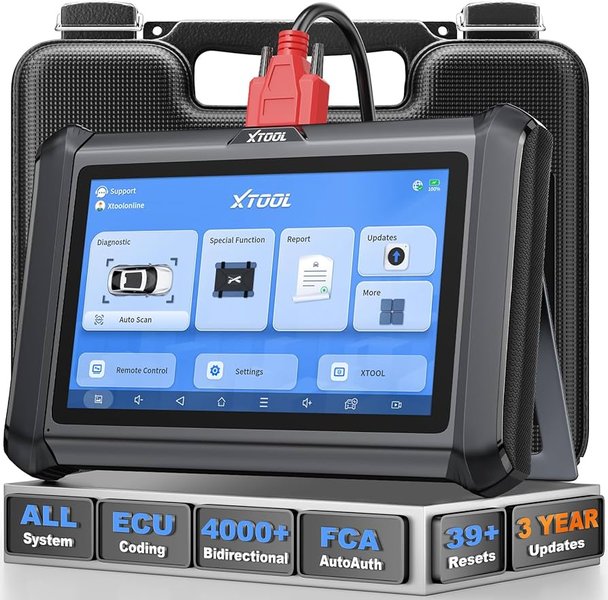
An example of an OBD-II diagnostic scanner, useful for clearing codes and resetting the ECU.
Tools Needed:
- An OBD-II scanner that supports ECU reset functions (e.g., Foxwell, ANCEL, Launch, or compatible smartphone apps with Bluetooth/Wi-Fi adapters).
Step-by-Step Instructions:
- Locate the OBD-II Port: This port is usually found under the dashboard, near the steering column, or in the driver's footwell.
- Connect the Scanner: Plug the OBD-II scanner's cable securely into your car's OBD-II port.
- Turn Ignition to "ON": Turn your car's ignition key to the "ON" position (dashboard lights on, but engine not running). This powers the ECU and allows the scanner to communicate.
- Read & Save Codes (Optional but Recommended): Before clearing, read and save any existing diagnostic trouble codes. This is useful for future diagnosis if the problem returns.
- Navigate to Reset Function: On the scanner's menu, look for options like "ECU Reset," "Clear Codes," "Clear All Data," or similar. The specific wording may vary by scanner model.
- Follow Prompts: The scanner will guide you through the reset process, often requiring confirmation.
- Wait for Completion: The scanner will indicate when the ECU reset is complete. This usually takes just a few moments.
- Turn Off Ignition & Restart: Turn off the ignition, unplug the scanner, and then restart your engine.
- Drive & Relearn: Perform the idle relearn and test drive as described in Method 1.
Method 4: The Pedal Dance Method (Vehicle-Specific)
Some vehicle manufacturers incorporate specific ignition key and accelerator pedal sequences that can initiate an ECU reset or trigger a relearn procedure. This method is highly vehicle-specific and may not work for all makes and models. Always verify if this is applicable to your car by checking your owner's manual or reputable online forums for your specific model and year.
General Steps (Example - always verify for your specific model):
- Ensure the car is completely off and parked safely.
- Turn the ignition key to the "ON" position (dash lights on, engine off).
- Fully depress the gas pedal for a specific duration (e.g., 10 seconds).
- While still holding the gas pedal, turn the ignition off completely.
- Release the gas pedal and wait for a few seconds (e.g., 2 minutes).
- Start the car and let it idle.
Comparing ECU Reset Methods: A Quick Overview
Here's a table summarizing the pros, cons, and ideal use cases for each ECU reset method:
| Method | Tools Needed | Pros | Cons / Risks | Best For |
|---|---|---|---|---|
| Battery Disconnect | Wrench (10mm/13mm) | Universal, clears most learned trims, no special tools | Resets radio presets/clock, requires waiting time (15-30 min), may require relearning other systems | General minor glitches, rough idle after maintenance, older vehicles |
| ECU Fuse Pull | Fuse puller/pliers, owner's manual | Targets ECU only (preserves cabin settings), can be quicker | Requires identifying correct fuse, not applicable to all vehicles, waiting time (5-15 min) | Focused reset without losing cabin settings, often effective for specific models |
| OBD-II Scanner | OBD-II scan tool | Precise and controlled reset, clears specific codes quickly, offers diagnostic insights | Requires purchasing a scanner (cost varies), basic tools may only clear codes, not all adaptations | Tech-savvy users, those wanting data and a clean reset, newer vehicles |
| Pedal Dance | None | No tools required, very quick if applicable | Highly vehicle-specific, not widely documented/supported, effectiveness can be inconsistent | Only for owners with documented routine for their specific car model/year |
The Relearning Process: What to Expect After an ECU Reset
After any ECU reset, your car's computer enters a "relearning" phase. During this time, it re-establishes its optimal parameters for various driving conditions. This is a crucial part of the process, and understanding it can prevent frustration.
Idle Relearn:
Immediately after starting the car post-reset, allow it to idle in Park (or Neutral for manuals) for 5-10 minutes without touching the accelerator. This allows the ECU to recalibrate its base idle speed and other fundamental settings. Some experts suggest running the AC for a few minutes during this phase to help the ECU learn idle behavior under load.
Driving Cycle:
Following the idle relearn, take your car for a varied test drive lasting at least 10-15 minutes, or up to 50-100 miles for a full relearn. This driving cycle should include:
- Driving at different speeds (city and highway).
- Gentle acceleration and deceleration.
- Periods of steady cruising.
The car might feel slightly different, or even a bit hesitant, during this relearning period. This is normal. The ECU is actively re-establishing fuel trims, shift points (for automatics), and other adaptive parameters based on real-world driving data. Continue driving as usual, and the ECU will eventually adapt to your driving style and the car's current condition.
Compatibility Notes: ECU Resets Across Car Models and Years
The effectiveness and specific requirements of an ECU reset can vary significantly based on your vehicle's age, make, and model. Modern vehicles, with their increasingly complex electronic systems, often have different considerations than older cars.
General Age-Based Recommendations:
- Pre-1996 Vehicles: These cars predate the OBD-II standard. Battery disconnects usually clear most learned trims and temporary codes. Fuse-pull methods also work well if you can identify the ECU fuse.
- 1996-2005 (Early OBD-II Era): Battery disconnect or basic OBD-II scanner methods are generally effective. Some early OBD-II systems may have limited capabilities with basic scanners.
- 2006-2015 (Mid-Modern Era): More complex systems often benefit from OBD-II scanner resets for precise control. Battery/fuse methods still work for many models, but some functions (like throttle or transmission) may need specific relearn steps.
- 2016-Present (Advanced Systems): Modern cars are highly integrated. While battery disconnects can still clear some data, they may trigger additional calibrations (e.g., windows, steering angle, TPMS) or require professional tools for a complete reset of all modules. A scan-tool approach is often cleaner.
Brand-Specific Considerations (Examples):
- Toyota/Lexus (1996+): Battery disconnect works reliably for many models.
- Ford (2000+): OBD-II scanners are very effective. Be cautious with fuse pulls on some newer models, as they might cause unexpected glitches.
- BMW/Audi (2005+): These complex European vehicles often benefit most from advanced OBD-II scanners, as manual methods might not fully clear all adaptations, and dealer tools offer superior capabilities.
- GM/Chevy (1996+): All methods can be compatible, but always allow for a thorough relearn drive.
Troubleshooting Common Issues After an ECU Reset
Even with careful execution, sometimes things don't go exactly as planned. Here are some common problems you might encounter after an ECU reset and how to troubleshoot them:
Issue 1: The "Check Engine" Light Returns Immediately
- Likely Cause: This is the most common indicator that the problem is not a temporary glitch but an underlying mechanical or persistent sensor fault.
- Solution: Do not keep resetting. Scan for diagnostic trouble codes (DTCs) using an OBD-II scanner. These codes will point to the specific system or component that needs attention (e.g., a faulty oxygen sensor, catalytic converter issue, vacuum leak). This requires professional diagnosis and repair.
Issue 2: Car Won't Start or Cranks but Doesn't Catch
- Likely Cause: Incorrect battery reconnection, a drained battery, or (rarely) an activated immobilizer system.
- Solution: Double-check that your battery terminals are clean and securely tightened. Ensure the battery itself has sufficient charge. If your car has an immobilizer, consult your owner's manual for its specific reset or re-sync procedure (often involves a specific key fob sequence).
Issue 3: Rough Idling, Hesitation, or Poor Performance Continues/Worsens
- Likely Cause: The ECU is still in its relearning phase, or there's an underlying issue that the reset couldn't fix.
- Solution: Ensure you've completed the full idle relearn and a varied test drive (up to 50-100 miles). If symptoms persist, consider checking for vacuum leaks, a dirty throttle body, or other common culprits for rough running. If the issue is severe, seek professional diagnosis.
Issue 4: Radio/Navigation System Requires a Code, Clock is Reset, or Windows/Sunroof Behave Oddly
- Likely Cause: This is expected behavior with the battery disconnect method, as power was fully removed from these modules.
- Solution: For the radio, input your anti-theft code (check your owner's manual or contact the dealership if you don't have it). For clocks, manually reset the time. Many modern cars require "reinitialization" for power windows/sunroofs (e.g., holding the window switch in the "up" position for several seconds after it's fully closed). Consult your owner's manual for these specific procedures.
Issue 5: No Change in Symptoms After Reset
- Likely Cause: The problem might not be ECU-related, or the initial issue was too significant for a simple reset to resolve.
- Solution: This indicates a deeper issue. It's time for a more thorough diagnostic process, potentially involving checking other systems like the alternator, fuel system, ignition components, or advanced sensor diagnostics.
When to Seek Professional Help
While DIY ECU resets can be incredibly effective for minor electronic glitches, there are clear instances where professional assistance is not just recommended, but essential:
- Persistent Warning Lights: If the "check engine" light or any other critical warning light (ABS, Airbag, EPC, etc.) returns immediately after a reset, it signifies a deeper, often mechanical, problem that requires specialized tools and expertise to diagnose and repair.
- Severe Drivability Issues: If your car exhibits serious problems like severe misfiring, extreme power loss, loud unusual noises, smoke, or a complete refusal to start, do not rely on an ECU reset. These symptoms often indicate critical mechanical failures.
- Under Warranty: For vehicles still under warranty, consult your dealership first. While basic battery disconnects are generally acceptable, more advanced procedures or frequent DIY resets might raise questions or potentially complicate warranty claims for related issues.
- Complex Vehicle Systems: Newer luxury vehicles, performance cars, and particularly hybrids/EVs have highly integrated and sensitive electronic control units that may require dealership-level diagnostic tools and procedures. Attempting DIY solutions on these can sometimes lead to more complex problems.
- Uncomfortable with the Process: If you feel uncomfortable or uncertain about any step of the ECU reset process, it's always best to err on the side of caution and consult a qualified mechanic. Safety should be your top priority.
- Aftermarket Tuning/Reprogramming: If your car has been custom-tuned or reprogrammed, consult with your tuner before performing any resets, as it might clear specialized settings.
Helpful Tools, Apps, and Hardware for ECU Management
While some ECU reset methods require minimal tools, a few smart investments can make the process easier, safer, and provide deeper insights into your car's health.
Essential No-Tool Items (Beyond a Wrench):
- Owner's Manual: Invaluable for locating fuse boxes, understanding specific vehicle warnings, and finding radio codes.
- Safety Gloves & Eye Protection: Always a must when working with a car battery.
Recommended (Nice-to-Have) Tools:
- Basic OBD-II Scanner: For under $50, these handheld devices or Bluetooth/Wi-Fi adapters that pair with smartphone apps (e.g., Torque Pro, Car Scanner ELM OBD2) can read and clear basic trouble codes, making them excellent for quick diagnostics and resets.
- Fuse Puller: A cheap, small plastic tool that makes removing fuses much easier and safer than pliers. Often included in your car's fuse box.
- Digital Multimeter: Useful for checking battery voltage before and after resets, ensuring your battery is healthy.
For the Tech-Savvy Enthusiast:
- Advanced OBD-II Diagnostic Tool: Scanners from brands like Foxwell, ANCEL, or Launch offer more in-depth diagnostics, live data streaming, and specialized reset functions (e.g., throttle body relearn, battery registration) that basic scanners don't.
- Battery Memory Saver: If your car constantly loses radio codes or window settings, a memory saver (a device that plugs into the OBD-II port or cigarette lighter and provides a temporary 12V supply) can maintain power to essential modules during a battery disconnect. Always verify compatibility with your vehicle.
This video provides a general overview of how to reset all ECUs and control modules in your car, emphasizing the impact on adaptive learning for improved performance.
This video from the media sources highlights how resetting ECUs and control modules can help your car "learn all new values from scratch." It's relevant because it directly addresses the core benefit of an ECU reset: clearing old, potentially problematic, adaptive data to allow the system to optimize itself based on current conditions. The video explains that this process can improve idle, shifting adaptation, and overall vehicle performance, reinforcing the goal of this article to help users clear minor electronic glitches and improve their car's operation.
ECU Reset vs. Code Clear vs. Reprogramming: Understanding the Differences
It's important to differentiate between these terms, as they refer to distinct operations:
- ECU Reset: This process (typically via battery disconnect, fuse pull, or specific scanner function) clears the ECU's volatile memory, adaptive learning data (like fuel trims and idle parameters), and temporary fault states. It's like a soft reboot.
- Code Clear: Performed with an OBD-II scanner, this action simply erases stored Diagnostic Trouble Codes (DTCs) from the ECU's memory. It doesn't necessarily clear all adaptive learning or fix the underlying problem if a fault is still present.
- ECU Reprogramming/Flashing: This involves updating or completely overwriting the ECU's permanent software (firmware or "map"). It requires specialized tools and expertise, and is typically done by dealerships (for software updates) or performance tuners (for custom maps). This is a much more invasive procedure than a simple reset and carries higher risks if done incorrectly.
For minor glitches and basic troubleshooting, a simple ECU reset or code clear is usually sufficient. Reprogramming is generally not a DIY task unless you are an experienced professional with the correct equipment and software.
FAQs About Car ECU Resets
Conclusion: Empower Your Car Maintenance
Mastering the steps to reset your car's Engine Control Unit puts you in control of addressing minor electronic glitches and restoring optimal performance without incurring expensive repair shop bills. By understanding the role of the ECU, implementing the appropriate reset method, and patiently allowing for the relearning process, you can often resolve common issues like persistent check engine lights, rough idling, or decreased fuel efficiency.
Always prioritize safety, consult your vehicle's owner's manual for model-specific guidance, and remember that while ECU resets are powerful for electronic issues, they are not a cure-all for mechanical failures. Knowing when to perform a DIY reset and when to seek professional help is key to keeping your vehicle running reliably and extending its lifespan. Empower yourself with this knowledge, and keep your ride performing at its best!
