

Unraveling the mystery behind fluctuating RPMs and restoring your car's smooth performance when stopped.
- The P0505 code signifies a malfunction in your car's idle control system, leading to unstable engine RPMs when the vehicle is stationary.
- Common culprits include dirty or faulty Idle Air Control (IAC) valves, vacuum leaks, and issues with the throttle body or its sensors.
- Many issues are DIY-friendly, often resolved by cleaning components or fixing minor leaks, potentially saving significant repair costs.
Has your car ever felt like it's having a nervous twitch at a red light, with the engine RPMs surging and dipping on their own? This frustrating experience, often accompanied by the unwelcome glow of the Check Engine Light, points directly to a problem within your vehicle's idle control system. When your car's onboard diagnostic system registers a P0505 Idle Air Control code, it's telling you that the engine's computer is struggling to maintain a steady engine speed when your foot is off the accelerator.
This comprehensive guide will demystify the P0505 code, outlining its symptoms, causes, and providing a step-by-step approach to diagnosis and repair. Our goal is to help you understand this common issue, empowering you to address fluctuating RPMs and get your car idling smoothly and reliably once again.
Understanding P0505: The Idle Control System Explained
The P0505 diagnostic trouble code (DTC) indicates an "Idle Control System Malfunction." In essence, your vehicle's Powertrain Control Module (PCM) or Engine Control Module (ECM) has detected that it cannot accurately regulate the engine's idle speed. The idle control system is crucial because it ensures your engine runs at a consistent, low RPM when the vehicle is stopped, in neutral, or with the clutch disengaged.
When you're not pressing the gas pedal, the throttle plate in the throttle body is mostly closed. This means that very little air can enter the engine through the main intake. The idle control system steps in to allow a precise amount of air to bypass the closed throttle plate. This bypass air, combined with the correct amount of fuel, keeps the engine running without stalling. The system continuously adjusts this airflow based on various factors like engine temperature, electrical load (e.g., headlights or air conditioning), and power steering demands.
If the PCM/ECM can't achieve or maintain the target idle speed, it triggers the P0505 code, illuminating the Check Engine Light to alert you to the problem. It's a signal that something is hindering the engine's ability to "breathe" correctly at idle, leading to erratic engine behavior.
The Tell-Tale Signs: What Drivers Experience with P0505
You don't need a diagnostic scanner to suspect a P0505 code. The symptoms are often quite noticeable and can significantly impact your driving experience, especially in stop-and-go traffic.
Fluctuating or "Hunting" RPMs
This is perhaps the most common and unnerving symptom. When your car is stopped, you'll observe the tachometer needle bouncing up and down erratically. Instead of a stable idle, the engine speed might surge, then dip, constantly trying to find a stable point. This indicates the idle control system is failing to maintain the correct airflow.

A visual representation of an engine experiencing rough or fluctuating idle.
Engine Stalling
One of the most critical symptoms is the engine stalling, particularly when coming to a stop, shifting into neutral, or even when starting the car. This happens because the idle control system can't provide enough air (or sometimes too much) to keep the engine running at low speeds, causing it to die unexpectedly. This can be a significant safety concern, especially in traffic.
High or Low Idle Speed
Sometimes, the idle speed will be consistently too high, making the car feel like it's trying to accelerate even when your foot is off the pedal. Conversely, the idle might drop dangerously low, causing excessive vibrations and the feeling that the engine is about to quit. These deviations from the manufacturer's specified idle RPM point to a malfunction in the control system.
Rough Idle and Vibrations
Beyond just RPM fluctuations, a car with a P0505 code might exhibit a "rough" idle. The engine may shake or sputter, transmitting vibrations through the steering wheel, seats, or even the entire vehicle. This discomfort is due to the engine struggling to maintain smooth combustion at an unstable RPM.
Difficulty Starting and Poor Fuel Economy
In some cases, the car might be difficult to start, especially when cold, or it might run unstably for a short period after starting. While not always the most obvious symptom, an inefficiently idling engine due to an incorrect air-fuel mixture can also lead to a noticeable decrease in fuel economy around town.
"If your car idles fine when cold but hunts when warm, it could indicate vacuum leaks or a sticky IAC/throttle. If it stalls when you engage the A/C, the idle control might not be compensating properly by adding enough air."
All these symptoms are clear indicators that your idle control system requires attention. Addressing them promptly can prevent further damage and ensure a safer, more pleasant driving experience.
Unmasking the Causes: Why P0505 Happens
The P0505 code can stem from various issues within the engine's air intake and control systems. Understanding the most likely culprits is key to effective diagnosis and repair.
1. Faulty or Dirty Idle Air Control (IAC) Valve
The IAC valve is the leading cause of P0505 in many vehicles, particularly older models with cable-operated throttles. This valve is designed to precisely control the amount of air bypassing the closed throttle plate to maintain a stable idle. Over time, carbon deposits, dirt, and grime can accumulate within the valve or its passages, causing it to stick, operate slowly, or fail completely. A malfunctioning IAC valve prevents the engine from receiving the correct amount of air at idle, leading to fluctuating or unstable RPMs.
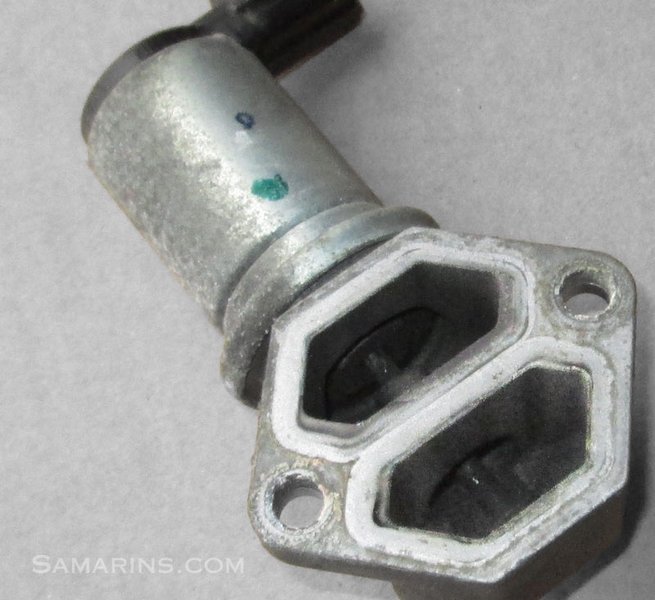
An example of a dirty Idle Air Control (IAC) valve, a common cause for P0505.
2. Vacuum Leaks
Vacuum leaks are a very common cause of idle problems and P0505. They occur when unmetered air enters the engine after the mass airflow (MAF) sensor has measured it. This "extra" air throws off the air-fuel ratio, confusing the engine's computer and making it unable to maintain a stable idle. Common sources of vacuum leaks include:
- Cracked or deteriorated vacuum hoses (PCV, brake booster, EVAP lines)
- Leaking intake manifold gaskets
- A faulty PCV (Positive Crankcase Ventilation) valve
- Loose connections in the air intake system

Illustration showing potential sources of rough idling, including vacuum leaks.
3. Dirty or Defective Throttle Body
Carbon buildup isn't exclusive to the IAC valve. It can also accumulate around the throttle plate and within the throttle body itself. This buildup can prevent the throttle plate from fully closing or obstruct the small idle bypass passages, restricting proper airflow at idle. In vehicles with electronic throttle control (often called "drive-by-wire"), issues with the electronic throttle actuator or its internal sensors can also lead to P0505. Some vehicles may also lose their "learned" idle position after a battery disconnect or thorough cleaning, requiring a specific re-learn procedure.
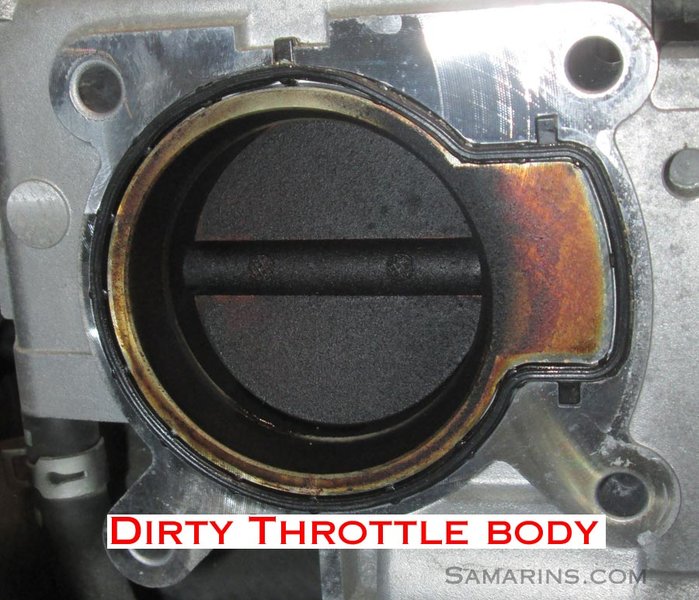
A dirty throttle body, characterized by carbon buildup, which can cause P0505.
4. Electrical Problems
The IAC valve and electronic throttle bodies rely on electrical signals from the PCM/ECM. Damaged, corroded, or loose wiring and connectors in the IAC circuit can disrupt these signals, preventing the valve or throttle actuator from functioning correctly. This electrical interference can manifest as erratic idle behavior and trigger the P0505 code.
5. Faulty Sensors (MAF, TPS, Oxygen Sensor)
While not direct causes of P0505, other engine sensors can indirectly contribute to idle control issues. A faulty Mass Airflow (MAF) sensor provides incorrect air intake data, a problematic Throttle Position Sensor (TPS) misreads throttle plate position, or a failing oxygen sensor disrupts the air-fuel mixture. Any of these can force the ECM to struggle with maintaining proper idle, sometimes triggering P0505.
6. Powertrain Control Module (PCM) / Engine Control Module (ECM) Failure
In rare instances, the engine computer itself can be the source of the problem. This could involve a faulty internal circuit responsible for controlling the IAC valve or electronic throttle. This is typically a last-resort diagnosis, occurring after all other potential causes have been thoroughly ruled out. Some specific vehicle models, notably certain Nissan/Infiniti vehicles from the early 2000s, are known to be susceptible to ECM damage if an IAC valve shorts out.
Diagnosing the P0505 Code: A Step-by-Step Approach
Diagnosing P0505 requires a systematic approach. Many steps are suitable for a confident DIYer, saving you diagnostic fees. Here's how to proceed:
Tools You'll Want:
- OBD-II scanner (preferably one with live data capabilities)
- Carburetor or throttle body cleaner
- Lint-free cloths or shop rags
- Basic hand tools (screwdrivers, socket set)
- Flashlight
- Optional: Smoke tester for vacuum leaks, multimeter
- Safety gear: Gloves, eye protection
Step 1: Confirm the Code and Check for Companions
- Connect your OBD-II scanner and read any present codes. Confirm P0505.
- Note any other related codes, such as P0506 (idle speed lower than expected) or P0507 (idle speed higher than expected), or any MAF/TPS codes.
- Check the "freeze-frame data" if your scanner provides it. This snapshot of engine conditions (RPM, engine temperature, load, etc.) when the code was set can offer valuable clues.
Step 2: Visual Inspection for Obvious Issues
- With the engine off and cool, visually inspect the entire air intake system. Look for cracks, tears, or loose connections in the air intake tube between the air filter box and the throttle body.
- Examine all vacuum hoses, including those connected to the PCV valve, brake booster, and EVAP system. Check for any signs of cracking, fraying, or disconnections.
- Inspect the electrical connectors and wiring leading to the IAC valve (if equipped) and the throttle body. Look for corrosion, bent pins, or damaged wiring.
Step 3: Check for Vacuum Leaks (The Hiss Test)
- Start the engine and let it idle. Listen carefully for any distinct "hissing" sounds around the engine bay, which could indicate a vacuum leak.
- While the engine is running (and with extreme caution around hot or moving parts), you can lightly spray carburetor or throttle body cleaner around suspected vacuum leak areas (hoses, intake manifold gaskets, PCV valve). If the engine RPM changes when you spray a specific spot, you've likely found a leak. Be careful with flammable cleaners near hot engine components.
- For a more thorough check, a smoke machine can be used to inject smoke into the intake system, making leaks visible.
Step 4: Clean the Throttle Body and IAC Valve
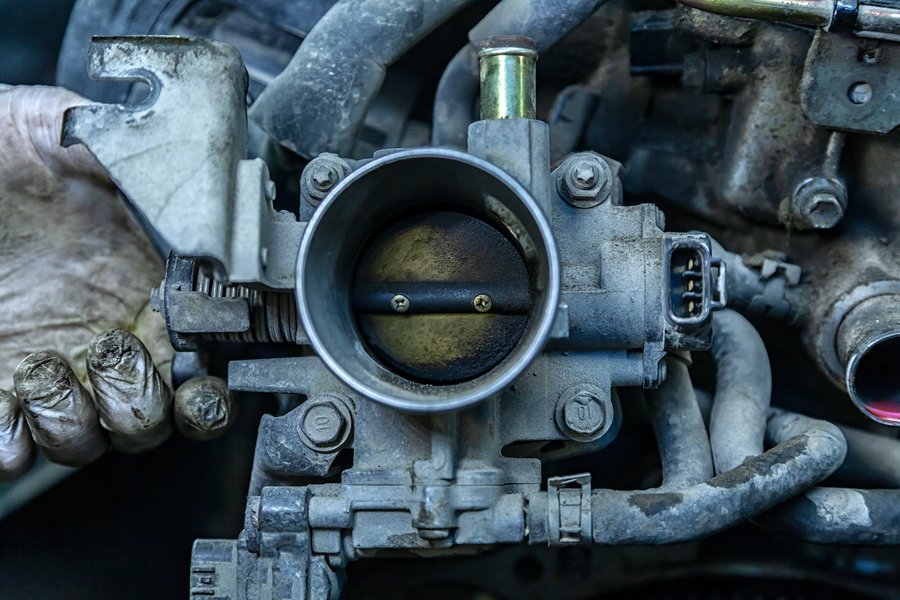
A view of a throttle body, the component that controls airflow into the engine.
- Disconnect the air intake duct from the throttle body.
- With the engine off, open the throttle plate (you might need to manually push it open on cable-throttle systems, or have a helper gently press the gas pedal on electronic throttles).
- Spray throttle body cleaner onto a lint-free cloth and thoroughly wipe away any carbon buildup from the throttle plate, the throttle bore, and any visible idle bypass ports. Ensure both sides of the throttle plate are clean.
- If your vehicle has a separate IAC valve, remove it (usually held by two bolts) and clean its pintle (the moving part) and seat with throttle body cleaner. Be gentle and do not force the pintle.
- Reassemble everything. This simple cleaning often resolves many P0505 issues.
Step 5: Perform an Idle Re-Learn Procedure
After cleaning the throttle body, replacing an IAC valve, or disconnecting the battery, the engine's computer might need to "re-learn" its idle parameters. This procedure varies by vehicle but commonly involves:
- Turn the ignition to the ON position (engine off) for about 10 seconds, then OFF for 10 seconds. Repeat 2-3 times.
- Start the engine. Allow it to idle without touching the accelerator for a specified period (e.g., 5-10 minutes) until it reaches operating temperature. Ensure all accessories (AC, radio, lights) are OFF.
- Turn on the AC and headlights, then let it idle for another 2-3 minutes.
- Take the vehicle for a short drive, including several stop-and-go cycles, to allow the computer to fully adapt.
Step 6: Live Data Analysis (Advanced DIY)
If you have an OBD-II scanner with live data capabilities, monitor these parameters while the engine is idling:
- Idle RPM Target vs. Actual: If the actual RPM fluctuates wildly while the target is steady, it points to mechanical issues like air leaks or a sticking IAC/throttle.
- Short/Long Term Fuel Trims: At idle, positive fuel trims above +10% strongly suggest a vacuum leak or unmetered air. Negative trims indicate a rich condition.
- MAF Sensor Reading: Compare your MAF reading at idle to specifications (typically 2-7 g/s for 4-cylinder engines). An unusually high or low reading can indicate a MAF sensor problem or an intake air issue.
- Throttle Position Sensor (TPS) at Closed Throttle: This should typically read close to 0-1%. On electronic throttle bodies, a "learned" closed throttle value might be higher (e.g., 6-18%), but consistency is key.
- Engine Coolant Temperature (ECT): If the ECT sensor reads cold when the engine is warm, the ECM might be using a high-idle strategy, causing elevated RPMs.
- A/C Load On/Off: Observe if the idle RPM slightly increases when the A/C is turned on, indicating the idle control system is compensating correctly. If the engine struggles or stalls, the system isn't adapting.
Step 7: Electrical Checks (If Needed)
If the issue persists after the above steps, you might need to test the electrical circuit:
- For IAC systems: Use a multimeter to check for reference voltage and ground at the IAC connector with the key ON (engine off). You can also test the resistance of the IAC valve's coils if you have the specifications.
- For electronic throttles: Inspect the throttle body's connector for corrosion or bent pins. A "wiggle test" of the wiring harness at idle can sometimes reveal intermittent connections if the RPM changes when you move the wires.
"Most P0505 fixes come from three key actions: eliminating vacuum leaks, thoroughly cleaning the throttle body and idle passages, and correctly performing an idle re-learn. Only after these steps should parts replacement be considered."
Navigating Repair Costs: DIY vs. Professional Service
The cost to resolve a P0505 code can vary significantly based on the root cause, whether you perform the repair yourself, and your vehicle's make and model. Here's a general breakdown:
| Repair Item | DIY Cost (Parts + Supplies) | Mechanic Cost (Parts + Labor) | Estimated Time |
|---|---|---|---|
| Throttle Body/IAC Cleaning | $10 - $25 (cleaner, rags) | $75 - $200 | 30 - 60 minutes |
| Vacuum Hose Replacement | $5 - $50 (hoses, clamps) | $90 - $300 | 1 - 3 hours |
| PCV Valve Replacement | $10 - $45 | $60 - $150 | 30 minutes - 1 hour |
| IAC Valve Replacement (parts) | $40 - $220 | $150 - $400 | 1 - 2 hours |
| Throttle Body Replacement (electronic) | $120 - $500 | $300 - $800 | 2 - 3 hours |
| Intake Manifold Gasket Replacement | $20 - $60 | $180 - $450 | 2 - 4 hours |
| Electrical Repair (wiring/connector) | $10 - $60 | $120 - $350 | 1 - 3 hours |
| PCM/ECM Repair/Replacement | N/A (complex, specialized) | $500 - $2000+ | 2 - 4+ hours |
Vehicles Most Susceptible to P0505 Issues
While any OBD-II compliant vehicle can develop a P0505 code, certain makes and models are more frequently affected due to design characteristics or common component wear patterns.
- Older Honda/Acura (e.g., Accord, Civic, Odyssey, TL) and Toyota/Lexus (e.g., Camry, Corolla, ES300) with traditional cable throttles are particularly prone to IAC valve carbon buildup and vacuum leaks.
- Nissan/Infiniti models (e.g., Maxima, Altima, I30) from the early 2000s are known for IAC valve failures that, in some cases, can unfortunately damage the engine computer (ECM) if the valve shorts out.
- Newer vehicles from various manufacturers (Toyota, Honda, GM, Ford) with electronic throttle control systems can still trigger P0505 due to dirty throttle bodies or incorrect idle re-learn procedures after maintenance.
- High-mileage vehicles of any brand are generally more susceptible, as vacuum hoses, PCV valves, and gaskets tend to deteriorate with age and use, leading to vacuum leaks.
When to Call in the Experts: Professional Mechanic Intervention
While many P0505 issues are addressable with DIY efforts, there are specific situations where seeking professional help is the safest and most efficient option:
- Persistent Issues: If you've diligently followed the diagnostic and repair steps (cleaning, checking for leaks, performing re-learns) and the P0505 code keeps returning, it's time for a professional diagnosis.
- Complex Diagnostics Required: If you suspect elusive vacuum leaks (which a smoke test can reveal) or intricate electrical problems that require specialized tools like advanced oscilloscopes or factory scan tools.
- Suspected ECM/PCM Failure: Issues with the engine's computer are complex. Replacement or repair often requires specialized programming and expertise that most DIYers don't possess.
- Safety Concerns: If your vehicle is frequently stalling, especially in traffic, or experiencing other severe symptoms that compromise safety, it's safer to have it towed to a mechanic. Loss of power steering or brake assist due to stalling can be dangerous.
- Lack of Tools or Confidence: If you don't have the necessary tools, aren't comfortable working on specific engine components, or simply prefer to leave it to the experts, a professional mechanic is the right choice.
Related Codes to Keep an Eye On
The P0505 code often doesn't appear alone. Other related diagnostic trouble codes can provide additional clues or point to a shared underlying problem. Always scan for and note all present codes.
- P0506: Idle Air Control System RPM Lower Than Expected. This indicates the idle speed is too low.
- P0507: Idle Air Control System RPM Higher Than Expected. This indicates the idle speed is too high.
- P0171 / P0174: System Too Lean (Bank 1/2). These codes frequently accompany P0505 when a vacuum leak is present, as extra air causes a lean condition.
- P0300 Series (P030X): Random/Multiple Cylinder Misfire Detected. Severe idle control issues or incorrect air-fuel mixtures can lead to engine misfires.
- P0100-P0104: Mass Airflow (MAF) Sensor Issues. A faulty MAF sensor can send incorrect air measurement data, disrupting idle control.
- P0120-P0124: Throttle Position Sensor (TPS) Issues. Problems with the TPS directly affect the PCM's understanding of throttle plate position, impacting idle control.
- P1505-P1509: Manufacturer-specific IAC system faults. These codes might offer more specific details about the IAC system malfunction in certain vehicles.
Proactive Maintenance: Preventing Future P0505 Woes
Once you've successfully resolved the P0505 code, adopting a regimen of preventative maintenance can significantly reduce the chances of it reappearing.
- Regular Throttle Body Cleaning: Periodically clean your throttle body, ideally every 30,000 to 50,000 miles, to prevent carbon buildup. This is a simple and inexpensive task.
- Inspect and Replace Vacuum Hoses: During routine oil changes or inspections, check all vacuum hoses for signs of cracking, hardening, or deterioration. Replace any worn hoses proactively.
- PCV Valve Maintenance: Replace the PCV valve according to your vehicle's maintenance schedule. A failing PCV valve can create vacuum leaks or disrupt crankcase ventilation.
- Air Filter Replacement: Ensure your air filter is replaced at recommended intervals. A clogged filter restricts airflow, while a poorly sealed one can allow dirt to reach sensitive components.
- Use Quality Fuel: Using reputable, quality fuel can help minimize carbon deposits in the engine and fuel system components.
- Address Minor Issues Promptly: Don't ignore small signs of rough idle or unusual engine behavior. Addressing minor issues early can prevent them from escalating into more significant problems like a P0505 code.
This video demonstrates the process of cleaning a throttle body and Idle Air Control (IAC) valve, a common and effective DIY fix for P0505.
Frequently Asked Questions About P0505
Conclusion: Reclaiming Your Car's Smooth Idle
Encountering a P0505 code and the frustrating symptoms of an unstable idle can be concerning. However, by systematically approaching the problem with the information provided in this guide, you can confidently diagnose and often resolve the issue. Whether it's a simple cleaning of the P0505 Idle Air Control valve, sealing a pesky vacuum leak, or performing a crucial idle re-learn, many of these repairs are within the grasp of a motivated DIYer.
Remember, prevention is key. Regular maintenance, including periodic throttle body cleaning and inspecting vacuum lines, can significantly reduce your chances of facing a P0505 code in the future. By understanding your vehicle's idle control system and knowing when to tackle a repair yourself or when to seek professional expertise, you'll ensure your car runs smoothly, reliably, and safely for many miles to come. A stable idle isn't just about comfort; it's about optimal engine performance and longevity.
