

Highlights of the Korean EV Siblings
- Shared Foundation, Distinct Personalities: Both the Ioniq 5 and EV6 leverage Hyundai Motor Group's advanced E-GMP platform, yet offer vastly different design philosophies and driving experiences.
- Charging Champions: With 800V architecture, both EVs boast ultra-fast charging capabilities, replenishing 10% to 80% in approximately 18-20 minutes, making long-distance travel significantly more convenient.
- Tailored for You: The Ioniq 5 excels in practicality, spaciousness, and value, while the EV6 shines with its sporty dynamics, sleek design, and slightly longer maximum range.
The electric vehicle (EV) market is accelerating at an unprecedented pace, and at the forefront of this revolution are two highly anticipated models from South Korea: the 2026 Hyundai Ioniq 5 and the 2026 Kia EV6. These electric crossovers, while sharing a common innovative platform, are engineered to appeal to different tastes and priorities. Understanding their unique attributes is key to making an informed decision in the rapidly evolving EV landscape.
Coming from the same parent company, Hyundai Motor Group, the Ioniq 5 and EV6 are often referred to as "cousins" or "twins" due to their shared Electric-Global Modular Platform (E-GMP). This common underpinning is responsible for their impressive performance, ultra-fast charging capabilities, and spacious interiors. However, each brand has skillfully infused its vehicle with a distinct character, from exterior aesthetics and interior ambiance to driving dynamics and overall value proposition. This comprehensive comparison aims to dissect these differences, guiding prospective buyers toward the EV that best aligns with their lifestyle and preferences.
A Glimpse into the 2026 Models: What's New?
For 2026, both the Ioniq 5 and EV6 have received thoughtful updates and refinements, enhancing their appeal and addressing consumer feedback. These enhancements build upon their already strong foundations, ensuring they remain competitive and relevant in a crowded market.
The Refreshed 2026 Hyundai Ioniq 5
The 2026 Hyundai Ioniq 5 continues its journey as a trendsetter, blending retro-futuristic design with cutting-edge EV technology. This model year sees refinements that underscore its family-friendly practicality and commitment to value.
Design Evolution and Interior Enhancements
While retaining its iconic pixel-inspired lighting and angular silhouette, the 2026 Ioniq 5 features subtle design tweaks that sharpen its already distinctive look. Inside, the focus remains on creating an open, airy, and highly adaptable cabin. Updates include improved material quality in certain trims and enhanced ergonomics for key controls. Its flat floor design and movable center console continue to provide unparalleled flexibility for passengers and cargo alike.

The spacious and minimalist interior of the 2026 Hyundai Ioniq 5.
Performance and Efficiency Updates
Under the skin, the Ioniq 5 receives battery optimizations and powertrain refinements aimed at enhancing both range and efficiency. While exact figures vary by trim, expect competitive EPA-estimated ranges that allow for confident long-distance travel. The Ioniq 5 N, the high-performance variant, continues to push the boundaries of electric performance with its exhilarating power output.
Technological Advancements
The infotainment system sees improvements in processing speed and responsiveness, alongside enhanced voice recognition. Critically, Hyundai is actively transitioning to NACS (North American Charging Standard) compatibility, which will grant Ioniq 5 owners access to Tesla's extensive Supercharger network, significantly alleviating range anxiety.
The Dynamic 2026 Kia EV6
The 2026 Kia EV6 builds on its reputation as a stylish, sporty, and driver-focused electric crossover. Following a significant refresh in 2025, the 2026 model refines these characteristics, offering a more polished and engaging experience.
Sharper Aesthetics and Driver-Centric Cabin
The EV6 maintains its sleek, coupe-like profile and aggressive stance, often updated with new wheel designs and subtle front/rear fascia revisions that amplify its dynamic presence. The interior continues its driver-centric theme with a curved panoramic display that wraps around the driver, emphasizing control and engagement. Higher trims may see further enhancements in material luxury and finish.
The redesigned rear fascia and sporty lines of the 2026 Kia EV6.
Enhanced Range and Performance
The EV6 continues to offer a compelling balance of range and power. Certain RWD configurations boast an impressive EPA-estimated range, often slightly surpassing its Ioniq 5 counterpart due to its more aerodynamic silhouette. The EV6 GT remains the performance flagship, delivering blistering acceleration and a genuinely sporty driving experience that rivals many dedicated performance cars.
Connectivity and Charging Upgrades
Kia's infotainment system receives similar software upgrades, ensuring a smooth and intuitive user experience. A major highlight for the 2026 EV6 is the standard integration of the NACS port on refreshed models, providing immediate access to the Tesla Supercharger network. This forward-thinking move significantly expands charging options for EV6 owners.
Design Philosophy: Retro Charm vs. Athletic Grace
While sharing platform components, the Ioniq 5 and EV6 diverge significantly in their design philosophies, offering distinct visual and tactile experiences.
Ioniq 5: A Modern Nod to the Past
The Ioniq 5 is a masterclass in retro-futuristic design. Its angular lines, sharp creases, and distinctive parametric pixel lighting draw inspiration from Hyundai's past, specifically the 1970s Pony Coupe concept. This approach results in a unique, almost concept-car-like aesthetic that stands out in a sea of conventional crossovers.
Exterior Presence
The Ioniq 5's proportions are more squared-off and upright, contributing to a substantial road presence. The short overhangs and long wheelbase create a sense of solidity and modernity. The pixel graphics aren't just for show; they feature prominently in the headlights and taillights, forming a consistent design motif.

A side-profile comparison showcasing the distinct silhouettes of the Ioniq 5 (left) and EV6 (right).
Interior Ambiance
Inside, the Ioniq 5 embraces a "living space" concept. The cabin feels exceptionally open and spacious, partly due to the flat floor and the innovative, movable "Universal Island" center console. The wide-spanning dual 12.3-inch displays are integrated seamlessly, and the overall design promotes a relaxed, comfortable environment. Eco-friendly materials are widely used, reinforcing its sustainable credentials.
"The Ioniq 5's interior feels like a lounge on wheels—perfect for family road trips." - MotorTrend tester
EV6: Sculpted for Sportiness
The Kia EV6, conversely, presents a more aggressive, athletic, and contemporary design. It leans into a crossover-coupe aesthetic, characterized by its sleek, flowing lines and a lower, wider stance.
Exterior Dynamics
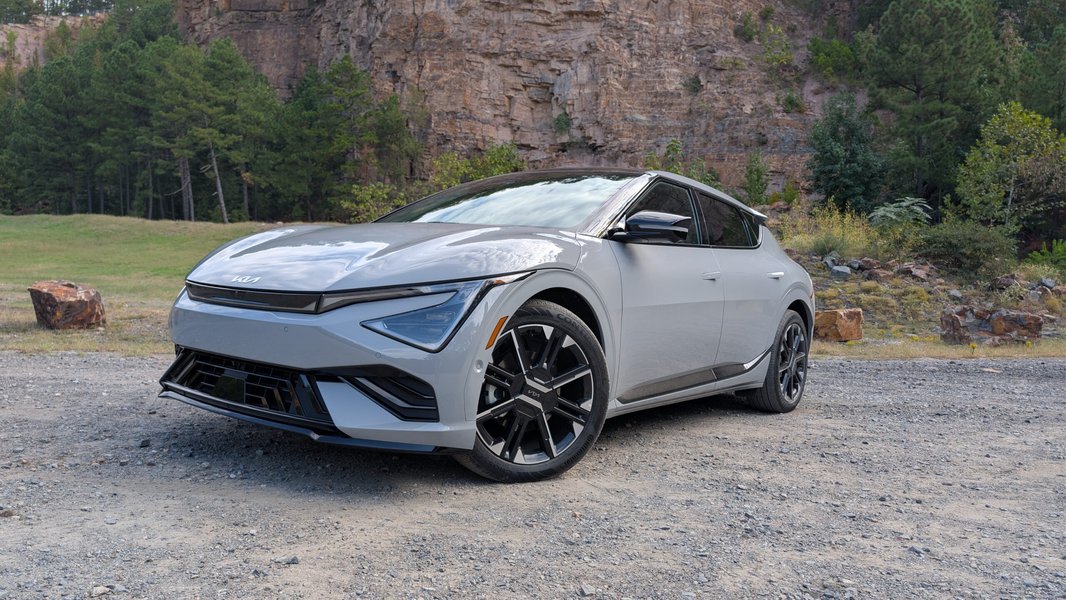
With its swept-back windshield, tapering roofline, and prominent rear haunches, the EV6 projects a sense of motion even when stationary. Its "Digital Tiger Face" grille design and sequential LED lighting elements give it a sharp, modern, and slightly predatory look. The aerodynamic shape isn't just for show; it contributes to its impressive efficiency and range.

The dynamic front styling of the 2026 Kia EV6, highlighting its aggressive headlights.
Interior Focus
The EV6's cabin is driver-oriented, featuring a curved panoramic display that integrates the instrument cluster and infotainment screen, subtly angled toward the driver. While still spacious, the seating position is lower, and the overall feel is more "cockpit-like" than the Ioniq 5's open lounge. High-quality, soft-touch materials and available premium audio systems contribute to a more upscale atmosphere in certain trims.
"The EV6 feels like a sports car trapped in an SUV body. It's thrilling on back roads." - Car and Driver Reviewer
Performance and Driving Dynamics: Comfort Cruiser vs. Sporty Performer
Sharing the E-GMP platform means both vehicles boast strong performance figures. However, their suspension tuning, steering calibration, and overall driving philosophies differ markedly.
Ioniq 5: Smooth, Serene, and Capable
The Ioniq 5 prioritizes a comfortable and composed ride. Its suspension is tuned to absorb road imperfections, making it an excellent choice for daily commuting and long-distance cruising. The steering is light and precise, making urban maneuvers effortless. While certainly capable of quick acceleration, especially in AWD configurations, the Ioniq 5's default demeanor is one of calm confidence.
Powertrain Options and Output
- Base RWD: Offers adequate power for most drivers, focusing on efficiency.
- Long-Range RWD: Delivers a substantial 225 horsepower, providing brisk acceleration.
- Dual Motor AWD: With around 320 horsepower and 446 lb-ft of torque, this configuration offers thrilling acceleration (0-60 mph in about 4.5 seconds) while maintaining a refined ride.
- Ioniq 5 N: The performance halo, boasting a staggering 641 horsepower, track-focused suspension, and advanced driving modes for enthusiasts.
Driving Feel
The Ioniq 5's higher seating position provides excellent visibility, contributing to a relaxed driving experience. Its regenerative braking is smooth and intuitive, and the vehicle generally handles with predictable poise.
EV6: Engaging, Agile, and Potentially Extreme
The EV6 offers a more engaging and spirited driving experience. Its suspension is generally firmer, providing better body control through corners. The steering is weighted more heavily, offering increased feedback to the driver, which appeals to those who enjoy a dynamic drive.
Powertrain Options and Output
- Base RWD: Similar to the Ioniq 5's entry-level offering, providing efficient urban travel.
- Long-Range RWD: Also produces 225 horsepower, often paired with slightly better range due to aerodynamics.
- Dual Motor AWD: Matching the Ioniq 5's 320 horsepower in standard AWD, but higher-trim GT-Line models can reach up to 576 horsepower.
- EV6 GT: This high-performance variant unleashes 641 horsepower, similar to the Ioniq 5 N, and features upgraded brakes, adaptive dampers, and a dedicated GT driving mode for an exhilarating experience.
Driving Feel
The EV6's lower center of gravity and athletic tuning translate to a more planted feel on the road. It carves corners with greater enthusiasm, and the overall feedback to the driver is more direct. The EV6 GT, in particular, transforms the crossover into a genuine performance machine.
"The Kia EV6 GT is a genuine performance outlier with up to 641 hp plus adaptive hardware and stouter brakes." - MotorTrend
Range, Charging, and Efficiency: The Marathon and the Sprint
Both EVs are built on the 800V E-GMP architecture, a significant advantage that enables incredibly fast charging speeds. However, there are subtle differences in their EPA-estimated ranges.
Battery Capacities and Range
The 2026 models typically offer two main battery sizes: a standard-range (around 58-63 kWh) and a long-range (around 77.4-84 kWh). The EPA-estimated range varies significantly by battery size, drivetrain (RWD vs. AWD), and wheel choice.
- Hyundai Ioniq 5: Long-range RWD models typically achieve an EPA-estimated range of over 300 miles, with specific configurations reaching around 303 miles.
- Kia EV6: The EV6 often holds a slight edge in maximum range due to its more aerodynamic design. Select RWD long-range trims can achieve up to an EPA-estimated 319 miles.
The 800V Advantage: Ultra-Fast Charging
This is where both vehicles truly shine. Their 800V electrical architecture allows for significantly faster charging compared to most other EVs on the market that use 400V systems. When connected to a 350 kW DC fast charger (which is becoming more common), both the Ioniq 5 and EV6 can charge from 10% to 80% in approximately 18-20 minutes. This capability drastically reduces road trip charging stops.
Charging Port Evolution
- Hyundai Ioniq 5: Historically used the CCS (Combined Charging System) standard. Hyundai is actively transitioning to NACS (North American Charging Standard) for future models, which will grant access to Tesla's Supercharger network. Buyers should confirm the charging port on the specific 2026 model they are considering.
- Kia EV6: Refreshed 2026 EV6 models now come standard with the NACS port, providing immediate and seamless access to the vast Tesla Supercharger infrastructure. This is a significant convenience factor for many prospective owners.
"The 800V architecture is a game-changer for road trips. I've added 210 miles of range in just 18 minutes at compatible stations." - EV6 owner testimonial
Efficiency Metrics (MPGe)
MPGe (Miles Per Gallon equivalent) is the standard metric for comparing EV efficiency. Both vehicles demonstrate excellent efficiency, though the EV6 often has a slight edge on the highway due to its sleeker design.
- Ioniq 5: Typically achieves around 114-117 MPGe combined, with city and highway figures varying by trim.
- EV6: Often boasts a slightly higher combined MPGe, sometimes reaching 117-119 MPGe, particularly in its more efficient RWD configurations.
Interior Space, Comfort, and Practicality
Despite being built on the same platform with similar exterior dimensions, the differing design philosophies lead to noticeable differences in interior feel, cargo capacity, and overall practicality.
Hyundai Ioniq 5: The Spacious Sanctuary
The Ioniq 5 truly excels in interior volume and user-friendliness. Its taller, boxier design translates directly into more usable space for passengers and cargo.
Passenger Comfort
With its long wheelbase and flat floor, the Ioniq 5 offers exceptional legroom in both the front and rear. The upright seating position provides excellent headroom, even for taller occupants. The optional "Relaxation Comfort Seats" in the front, which recline almost flat, add a touch of luxury during charging stops or breaks.
Cargo and Storage
The Ioniq 5's more vertical tailgate design is a boon for cargo. It offers 27.2 cubic feet of cargo space behind the rear seats, expanding to an impressive 59.3 cubic feet with the rear seats folded. Additionally, AWD versions include a small "frunk" (front trunk) for storing charging cables or small items. The movable "Universal Island" center console is another practical highlight, allowing for customization of interior storage.
Kia EV6: The Sporty Cocoon
The EV6, with its sleek, sloping roofline, trades some outright vertical space for a more dynamic interior aesthetic. While still comfortable and spacious, its feel is distinctly different from the Ioniq 5.
Passenger Comfort
The EV6 provides ample legroom, thanks to the E-GMP platform, but its lower roofline means slightly less headroom, especially for very tall rear passengers. The seating position is lower and more reminiscent of a traditional sedan or sportier crossover, contributing to its driver-focused feel.
Cargo and Storage
Cargo space in the EV6 measures 24.4 cubic feet behind the rear seats, expanding to 50.2 cubic feet with the seats folded. While still generous for most needs, it's slightly less than the Ioniq 5, particularly in terms of vertical loading space. The EV6 typically does not offer a significant frunk in most configurations, though some earlier models had a very small one in RWD variants. The center console is fixed but includes clever storage solutions.
Technology, Infotainment, and Driver Assistance Systems
Both Hyundai and Kia equip their flagship EVs with state-of-the-art technology, offering a blend of convenience, connectivity, and safety features that rival and often surpass competitors.
Infotainment and Connectivity
The core infotainment experience in both vehicles is centered around dual 12.3-inch screens for the digital instrument cluster and touchscreen infotainment. These systems are highly responsive and user-friendly.
- Shared Features: Both offer navigation, over-the-air (OTA) updates, Bluetooth connectivity, and advanced voice recognition. Wireless Apple CarPlay and Android Auto are becoming standard or widely available on 2026 models, a welcome improvement.
- User Interface: The Ioniq 5 typically presents a more minimalist and intuitive interface with larger touch targets, while the EV6's system, particularly in higher trims, can feel slightly more premium with additional customization options and a sleek curved display.
- V2L (Vehicle-to-Load) Capability: A standout feature in both, V2L allows the vehicle's battery to power external devices. The Ioniq 5 usually offers both an interior outlet and an exterior adapter, while the EV6 often provides an exterior port and sometimes an interior second-row outlet. This is incredibly useful for camping, tailgating, or as an emergency power source.
Advanced Driver Assistance Systems (ADAS)
Hyundai and Kia are industry leaders in standard safety and driver-assistance features. Many advanced systems come standard, with even more sophisticated capabilities available on higher trims.
Standard ADAS Highlights
- Forward Collision-Avoidance Assist (FCA): Detects potential collisions with vehicles, pedestrians, and cyclists, and can apply emergency braking.
- Lane Keeping Assist (LKA) & Lane Following Assist (LFA): Helps keep the vehicle centered in its lane.
- Blind-Spot Collision-Avoidance Assist (BCA): Provides alerts and can intervene to prevent collisions when changing lanes.
- Rear Cross-Traffic Collision-Avoidance Assist (RCCA): Warns of approaching vehicles when backing out of a parking spot and can brake automatically.
- Adaptive Cruise Control (ACC) with Stop & Go: Maintains a set distance from the vehicle ahead, even in stop-and-go traffic.
Available Advanced Features
- Highway Driving Assist 2 (HDA 2): A sophisticated semi-autonomous system that combines ACC, LFA, and can perform automatic lane changes with driver supervision.
- Remote Smart Parking Assist (RSPA): Allows the vehicle to be parked or exited from a parking space remotely using the key fob.
- Blind-Spot View Monitor (BVM): Displays a live camera feed of the blind spot in the digital instrument cluster when the turn signal is activated.
- Surround View Monitor (SVM): Provides a 360-degree bird's-eye view of the vehicle's surroundings, invaluable for parking.
Pricing and Value Proposition
While both are premium electric offerings, their pricing strategies and overall value propositions can differ, influencing which vehicle might be more attractive to budget-conscious buyers or those seeking specific features.
MSRP Comparison and Trim Levels
Historically, the Ioniq 5 has often held a price advantage, especially at entry-level trims, and Hyundai has reportedly pursued a strategy of making the 2026 Ioniq 5 even more accessible.
Hyundai Ioniq 5 Pricing
- Starting Price: Expected to begin in the mid-$30,000s, making it highly competitive.
- Trim Levels: Typically includes SE Standard Range, SE, SEL, XRT (a rugged-looking variant), Limited, and the high-performance N model.
- Value Focus: Hyundai often positions the Ioniq 5 as a strong value, offering a compelling package of features, range, and fast charging at a lower price point compared to many rivals.
Kia EV6 Pricing
- Starting Price: Generally higher than the Ioniq 5, potentially beginning in the mid-$40,000s.
- Trim Levels: Common trims include Light, Light Long Range, Wind, GT-Line, and the extreme EV6 GT.
- Premium Positioning: The EV6 often commands a slightly higher premium, justified by its sportier design, slightly better range in some configurations, and a perceived more upscale interior finish in higher trims.
Ownership Costs and Resale Value
Beyond the initial purchase price, several factors contribute to the overall cost of ownership for an EV.
- Insurance: Generally similar for both models, though performance variants (Ioniq 5 N, EV6 GT) may incur higher premiums.
- Maintenance: Both EVs benefit from significantly lower maintenance costs compared to internal combustion engine (ICE) vehicles, as they have fewer moving parts.
- Charging Costs: Identical for both, as they share similar efficiency metrics and charging speeds. Costs depend on local electricity rates and charging habits (home vs. public fast charging).
- Warranty: Both Hyundai and Kia offer an excellent warranty package, typically including a 10-year/100,000-mile battery and powertrain warranty in the U.S., providing peace of mind.
- Resale Value: Both vehicles are expected to hold their value well due to strong demand for EVs, advanced technology, and reputable brands. The Ioniq 5, having garnered multiple awards, might have a slight edge in some resale value assessments.
The Final Verdict: Which EV is Right for You?
The choice between the 2026 Hyundai Ioniq 5 and Kia EV6 ultimately comes down to personal priorities and preferences. Both are exceptional electric vehicles built on a world-class platform, but they cater to slightly different drivers.
Choose the Hyundai Ioniq 5 if:
- You prioritize interior space, comfort, and a truly open, airy cabin feel.
- Value and a lower entry price are key considerations for your budget.
- You appreciate a unique, retro-futuristic design that stands out from the crowd.
- A smooth, composed, and relaxed driving experience is more appealing than outright sportiness.
- Maximum cargo flexibility and ease of loading bulky items are important for your lifestyle.
- You value the convenience of a front trunk (frunk) for small items or charging cables.
An in-depth review and drive of the updated 2026 Hyundai Ioniq 5, showcasing its features and driving experience.
"After test driving both, I chose the Ioniq 5 for its incredible interior space and unique design. For my family of four, the practicality won over the sportiness of the EV6." - Sarah J., Ioniq 5 owner
Choose the Kia EV6 if:
- You desire a sportier driving experience with more responsive steering and firmer suspension tuning.
- A sleek, aerodynamic, and aggressive design resonates more with your aesthetic preferences.
- You want the highest possible EPA-estimated range, even if it's a slight advantage.
- A driver-focused cockpit with a lower seating position and wraparound displays appeals to you.
- Access to the Tesla Supercharger network via a native NACS port is a high priority.
- You are interested in the high-performance EV6 GT, offering supercar-rivalling acceleration and dynamics.
Ultimately, both the 2026 Hyundai Ioniq 5 and Kia EV6 represent compelling choices in the electric crossover segment. They demonstrate how two vehicles sharing the same advanced underpinnings can still offer wildly different personalities. The best way to make your decision is to experience both firsthand. Test drive them, compare the interiors, and consider how each fits into your daily routine and long-term travel plans. Whichever you choose, you'll be driving a state-of-the-art electric vehicle that offers impressive performance, rapid charging, and a wealth of advanced technology.
Frequently Asked Questions (FAQ)
Conclusion
The 2026 Hyundai Ioniq 5 and Kia EV6 stand as shining examples of innovation within the electric vehicle market. Born from the same cutting-edge E-GMP platform, these "Korean twins" impressively carve out distinct identities to cater to a broad spectrum of preferences. The Ioniq 5 appeals with its spacious, lounge-like interior, retro-futuristic aesthetic, and compelling value, making it an ideal choice for families and those prioritizing comfort and practicality. On the other hand, the EV6 captivates with its sleek, sporty design, driver-centric cockpit, slightly superior range in certain configurations, and dynamic driving performance, particularly in its potent GT trim. Both vehicles offer the game-changing advantage of 800V ultra-fast charging and advanced safety features, reinforcing their positions as top contenders. Ultimately, the decision between these two exceptional EVs is a personal one, best made after considering your lifestyle needs and experiencing their unique personalities firsthand.
