

Decoding Hybrid Battery Imbalance: Why Cells Go Rogue
To truly understand hybrid battery cell balancing, we must first grasp the fundamental nature of a hybrid battery pack. Unlike a single, large battery, these packs are composed of numerous individual battery cells (often NiMH modules in older hybrids) connected in series and parallel. Imagine an orchestra where each musician plays a crucial role; for the performance to be harmonious, every instrument must be perfectly in tune. Similarly, for a hybrid battery pack to function optimally, all its individual cells must operate in unison, maintaining comparable voltage levels and states of charge (SOC).
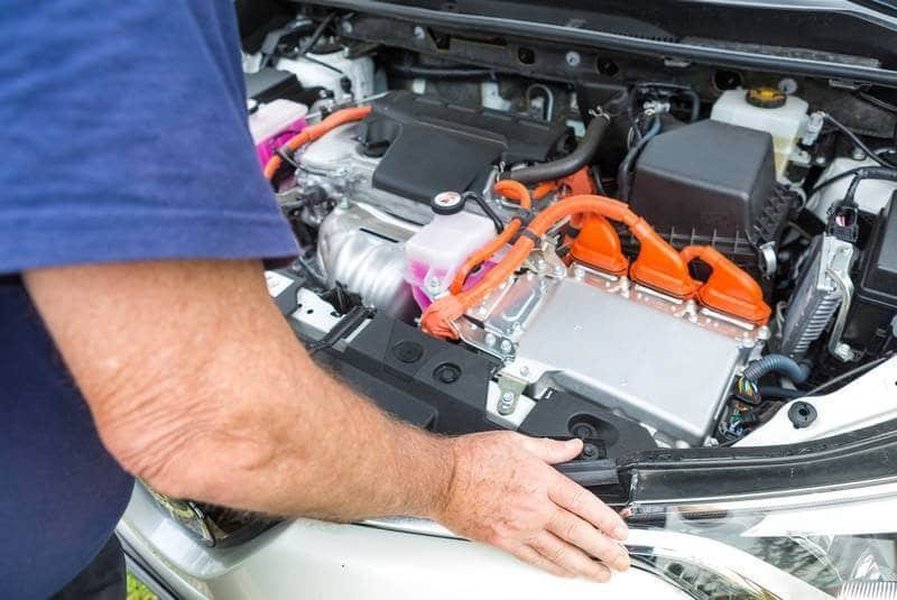
An intricate look inside a hybrid battery pack, showcasing individual cells.
However, various factors conspire to disrupt this delicate equilibrium:
- Manufacturing Imperfections: Even with stringent quality control, slight variations in manufacturing processes can lead to marginal differences in cell capacity or internal resistance.
- Uneven Usage Patterns: Aggressive driving, frequent short trips, or prolonged periods of inactivity can cause certain cells to charge and discharge more rapidly or frequently than others.
- Thermal Stress: The battery pack's cooling system, while designed for efficiency, might not always distribute temperature perfectly evenly across all cells. Hotter cells tend to degrade faster.
- Natural Aging: Over time, as a battery ages, individual cells will naturally degrade at different rates, leading to a wider spread in their performance characteristics.
When these imbalances occur, the battery pack's overall capacity is dictated by its weakest link. The Battery Management System (BMS) often limits the entire pack's operation based on the least performing cell to prevent damage, resulting in reduced usable energy, diminished power output, and a noticeable decline in fuel efficiency.
The Art and Science of Cell Balancing and Reconditioning
At its core, hybrid battery cell balancing is the process of equalizing the voltage and state of charge across all individual cells within a battery pack. This meticulous procedure aims to restore the battery's inherent health, optimize its performance, and significantly extend its operational lifespan. The fundamental principle is straightforward: prevent any single cell from being overcharged or excessively discharged, which can lead to accelerated degradation or outright failure.
The Reconditioning Process Explained
For Nickel Metal Hydride (NiMH) batteries, commonly found in many older hybrid models, the reconditioning process often involves a cyclical approach:
- Initial Diagnostics: Professional services begin with thorough diagnostic testing to identify individual cell voltages, capacities, and internal resistances. This pinpoints the "rogue" cells.
- Deep Discharging: The battery pack is carefully discharged to a specific, safe voltage level. This step is crucial for NiMH batteries, as it helps to reverse the "memory effect" or "voltage depression" that can occur from repeated partial charges and discharges. This memory effect makes the battery "forget" its full capacity, reporting a lower state of charge than it truly possesses.
- Controlled Recharging and Balancing: Following the deep discharge, the battery is slowly and meticulously recharged. During this phase, specialized equipment actively or passively balances the cells, ensuring they all reach the same voltage level at the top end of the charge cycle.
- Cycling and Verification: This charge-discharge-balance cycle may be repeated multiple times to optimize the battery's recovery. Finally, verification testing confirms that the cells are balanced and that the battery's usable capacity has been restored.
It's important to differentiate between "balancing" and "reconditioning." Balancing is a part of reconditioning. While balancing equalizes cell voltages, reconditioning encompasses the broader process of deep cycling to break down voltage depression and restore lost capacity, truly rejuvenating the battery.
Passive vs. Active Balancing: Two Approaches
The method by which cells are balanced primarily falls into two categories:
Passive Balancing
This is the simpler and often more cost-effective method. Passive balancing works by dissipating excess energy from higher-charged cells as heat, typically through resistors, until all cells reach a similar charge level. It's a "bleed-off" system. While straightforward, it can be slow, especially for significant imbalances, and less energy-efficient as excess energy is wasted as heat. It usually occurs only during the charging phase.
Active Balancing
A more advanced and efficient technique, active balancing actively transfers energy from higher-charged cells to lower-charged ones. Instead of wasting energy, it re-routes it, making the process faster and more energy-conservative. This method requires more complex circuitry and is typically found in more sophisticated Battery Management Systems or professional reconditioning setups. Some modern systems also employ "hybrid balancing," combining elements of both passive and active methods for optimized efficiency and speed.
The Tangible Rewards: Benefits of Hybrid Battery Reconditioning
Choosing to recondition your hybrid battery rather than replacing it outright comes with a host of compelling advantages, benefiting both your wallet and the environment.
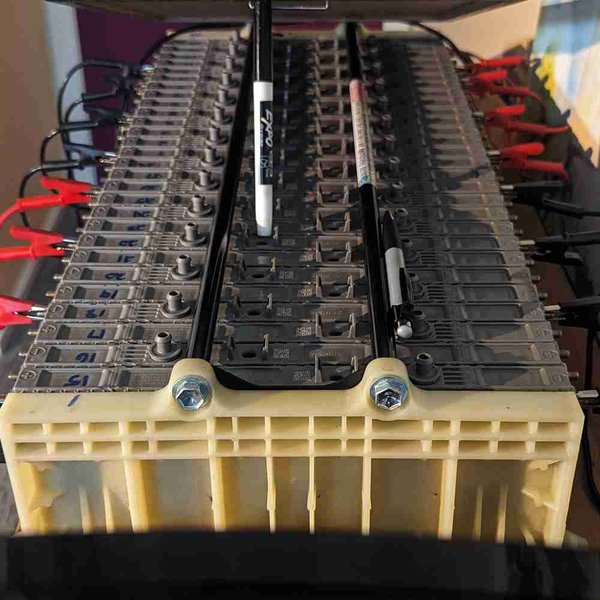
Professional equipment used for capacity testing and reconditioning of hybrid battery modules.
Significant Cost Savings
Perhaps the most immediate and attractive benefit is the cost. Professional reconditioning services typically range from $600 to $2,000, which is a fraction of the cost of a new battery replacement, which can easily soar to $3,000 - $6,000 or even higher depending on the vehicle model. This makes reconditioning an excellent value proposition for budget-conscious owners looking to extend their vehicle's life without breaking the bank.
Extended Battery Lifespan and Capacity Restoration
A successful reconditioning can restore 80-90% of the battery's original usable capacity. This means you can postpone the need for a full replacement by several years, adding considerable life to your hybrid vehicle. It's not a permanent fix, but it buys you valuable time and performance.
Improved Vehicle Performance and Fuel Efficiency
When cells are balanced and capacity is restored, your hybrid's overall performance improves dramatically. You'll notice better fuel economy as the electric motor assists more effectively, smoother power delivery, and more consistent performance, especially in stop-and-go traffic. The internal combustion engine will run less frequently, bringing your hybrid closer to its original operational efficiency.
Positive Environmental Impact
Opting for reconditioning over replacement is a win for the environment. By extending the life of an existing battery, you reduce the amount of hazardous waste entering landfills and decrease the demand for new battery production, which consumes significant resources and energy. This aligns with circular economy principles and reduces your vehicle's overall carbon footprint.
Reduced Warning Lights and Errors
Many hybrid owners seek reconditioning due to persistent battery-related warning lights or diagnostic trouble codes (DTCs) on their dashboard. Balancing often resolves these issues by bringing the battery pack back within acceptable operating parameters, giving you peace of mind.
Reconditioning vs. Replacement: Making the Right Call
Deciding whether to recondition or replace your hybrid battery hinges on several critical factors, including the battery's age, the severity of its symptoms, your budget, and how long you plan to keep the vehicle.
Telltale Signs Your Hybrid Battery Needs Attention:
- Decreased Fuel Economy: You're visiting the gas station more often than usual.
- Reduced Electric-Only Range: Your car relies more on its gasoline engine, even at low speeds or during light acceleration.
- Frequent Engine Kick-In: The internal combustion engine starts more often and runs for longer periods.
- Battery Warning Lights: Dash indicators like the "Check Hybrid System" or battery-related fault codes (e.g., P0A80 for "Replace Hybrid Battery Pack") appear.
- Erratic Battery Gauge: The battery charge indicator on your dashboard fluctuates wildly, showing full one moment and empty the next.
- Reduced Power/Sluggish Acceleration: The vehicle feels less responsive, especially when accelerating from a stop.
- Cooling Fan Constantly Running: The battery cooling fan works harder to compensate for an inefficient or overheating pack.
It's crucial to get a professional diagnosis, as some of these symptoms can overlap with other vehicle issues. A qualified technician can assess the health of individual battery modules and determine if reconditioning is a viable solution.
This video demonstrates the process of balancing individual cells within a Toyota hybrid battery. It is relevant because it visually explains a key technical aspect of hybrid battery reconditioning, showcasing the precision and careful handling required during the balancing phase. This visual aid complements the explanation of cell balancing as a critical step in restoring battery health.
If your hybrid battery is approaching or exceeding 7-8 years of age, especially with severe symptoms or multiple failing modules, the cost-effectiveness of reconditioning can diminish. In such scenarios, investing in a high-quality remanufactured or new replacement pack might offer better long-term reliability and value.
The DIY Dilemma: At-Home Reconditioning Considerations
For the mechanically inclined and those comfortable with high-voltage systems, at-home hybrid battery reconditioning can seem like an attractive option to save even more money. However, it's critical to approach this with extreme caution and a thorough understanding of the risks involved.
Essential Tools and Supplies for DIY Reconditioning
Embarking on an at-home reconditioning project requires a specific set of tools and a commitment to safety:
- OEM Service Manual: Absolutely crucial for your specific vehicle model to understand battery removal, safety procedures, and wiring.
- High-Voltage Safety Gear: Class 0 rated insulated gloves, eye protection, and insulated tools are non-negotiable.
- Multimeter: To accurately measure individual cell and pack voltages.
- Battery Discharger: A controlled discharge unit designed for hybrid battery packs (e.g., specialized "Prolong" or "Maxx-Volts" systems).
- Battery Charger/Balancer: A system capable of slowly charging and balancing individual modules or the entire pack.
- OBD2 Scanner/Diagnostic Tool: To read fault codes and monitor battery block voltages and temperatures.
- Cooling Fan Control (Optional but Recommended): A method or app to force the battery's cooling fan to run at high speed during stationary cycling to prevent overheating.
- Replacement Parts: New bus bars, nuts, and dielectric grease, especially if corrosion is present.
General Workflow for At-Home Reconditioning (NiMH Batteries)
While specific steps vary by vehicle, a general DIY workflow for NiMH batteries includes:
- Thorough Diagnosis: Use your OBD2 scanner to identify specific fault codes and analyze individual block voltages. This helps determine if reconditioning is even feasible.
- Safe Isolation and Removal: Follow your OEM manual precisely to power down the vehicle, disconnect the 12V battery, remove the high-voltage service plug, and wait the specified time for capacitors to discharge. Safely remove the battery pack from the vehicle.
- Visual Inspection and Cleaning: Carefully open the battery case (again, following the manual). Inspect bus bars for corrosion and clean or replace them as needed. Ensure cooling ducts and fans are clear of debris.
- Deep Discharge Cycle: Connect your specialized discharger. Slowly discharge the battery to a safe, recommended low voltage per module (e.g., around 6V for NiMH). This can take many hours or even days. Monitor temperatures closely.
- Controlled Charge and Balance: Connect your charger/balancer. Slowly recharge the battery, allowing the balancing process to occur. For passive systems, this means giving time for higher cells to bleed off energy.
- Repeat Cycles: For optimal results, repeat the discharge-charge-balance cycle two to three times.
- Reassembly and Testing: Carefully reassemble the battery pack, reinstalling bus bars with correct torque. Reinstall the pack in the vehicle, reconnect the service plug and 12V battery. Clear any stored codes and perform a test drive while monitoring battery parameters.
Professional Service: The Safer, More Reliable Path
While DIY reconditioning is possible for some, for the majority of hybrid owners, professional services offer significant advantages, primarily centered on safety, expertise, and guaranteed results.
Why Choose a Professional?
- Specialized Equipment and Expertise: Professional shops possess advanced diagnostic tools and automated reconditioning benches specifically designed for various hybrid battery types. Their technicians have specialized training and experience in handling high-voltage systems safely.
- Comprehensive Diagnostics: Beyond simple voltage checks, professionals can perform detailed capacity tests, internal resistance analysis, and thermal imaging to precisely identify weak cells or underlying issues that DIY methods might miss.
- Warranty Protection: Reputable professional services often provide a warranty on their reconditioning work, offering peace of mind that your investment is protected.
- Efficiency and Convenience: Professional reconditioning is typically completed within 2-3 business days, minimizing vehicle downtime. You avoid the significant time commitment and steep learning curve of a DIY approach.
- Safety Assurance: Professionals adhere to strict safety protocols, reducing the risk of injury or damage associated with working with high-voltage batteries.
The Verdict: Is Hybrid Battery Cell Balancing Worth the Cost?
For many hybrid owners experiencing diminished battery performance, hybrid battery cell balancing and reconditioning is absolutely worth the cost. It presents a significantly more affordable alternative to a full battery replacement, capable of restoring a substantial portion of the battery's original capacity and extending the vehicle's operational life by several years. This makes it an environmentally conscious choice that helps defer the significant expense of purchasing a new car or battery.

A display of a reconditioned hybrid battery pack, ready for installation.
However, it is not a miraculous cure-all. If your battery is extremely old (e.g., over 8-10 years), has suffered physical damage, or exhibits multiple completely failed modules that cannot hold a charge, reconditioning alone may not be sufficient. In such cases, replacing individual faulty modules or opting for a high-quality remanufactured or new battery pack might be the more sensible long-term solution.
The best course of action is always to consult with a qualified hybrid technician. They can perform a thorough diagnostic assessment of your specific vehicle and battery, providing personalized recommendations based on the battery's current health, your vehicle's age, and your ownership plans. This informed decision-making process ensures you get the most out of your investment and continue to enjoy the benefits of your hybrid for years to come.
Frequently Asked Questions
Conclusion
In the evolving landscape of hybrid vehicle ownership, hybrid battery cell balancing and reconditioning stands out as a compelling, cost-effective, and environmentally friendly solution for maintaining your vehicle's optimal performance. By intelligently addressing the natural degradation and imbalances that occur in battery packs, it offers a viable alternative to immediate, expensive replacements.
Whether you opt for a professional service or, with extreme caution, undertake a DIY approach, understanding the nuances of cell balancing empowers you to make informed decisions for your hybrid. It's an investment that can revitalize your driving experience, improve fuel efficiency, and extend the life of your vehicle, proving that proactive battery care can indeed be worth the cost.
