

Navigate the used EV market with confidence, understanding battery health, inspection essentials, and hidden values beyond the odometer.
Highlights: Your Essential Used EV Battery Inspection Insights
- Mileage is Secondary: For electric vehicles, battery State of Health (SOH) and calendar age are often more critical indicators than mileage. Many modern EVs maintain excellent battery health well beyond 100,000 miles.
- Comprehensive Inspection is Key: A thorough inspection including VIN history, visual checks, in-car diagnostics, and OBD2 scanner data is crucial for an informed purchase. Prioritize a verifiable battery report over assumptions.
- Warranty and Negotiation Power: Most EV batteries come with extensive warranties (typically 8 years/100,000 miles) that often transfer to new owners. Leverage battery health findings to negotiate a fair price, especially if SOH is below optimal levels.
The electric vehicle revolution continues to accelerate, bringing a growing market of used EVs within reach for budget-conscious buyers and enthusiasts alike. While the allure of lower running costs and environmental benefits is strong, the prospect of purchasing a used EV with 100,000 miles or more often raises a critical question: Is it safe to buy a used EV with 100k miles? The short answer is yes, buying a used EV with 100k miles can be a safe and sensible choice, but it absolutely requires thorough due diligence, particularly concerning the battery's health. Unlike gasoline cars, where high mileage typically signals significant wear on numerous mechanical components, an EV’s primary concern revolves around its high-voltage battery. A detailed Used EV Battery Inspection is crucial to understanding its current condition and ensuring a smart purchase.
In the bustling US used car market, electric vehicles are rapidly gaining popularity, offering a compelling alternative to traditional combustion engines. With competitive pricing on models like the Chevrolet Bolt, Ford Mustang Mach-E, and even early Teslas, a high-mileage EV could provide significant savings. However, success hinges on a comprehensive understanding of EV battery health and the unique factors influencing their longevity. This guide will walk you through everything you need to know about buying a used electric car with high mileage, focusing on essential battery inspection techniques for 2026 and beyond.
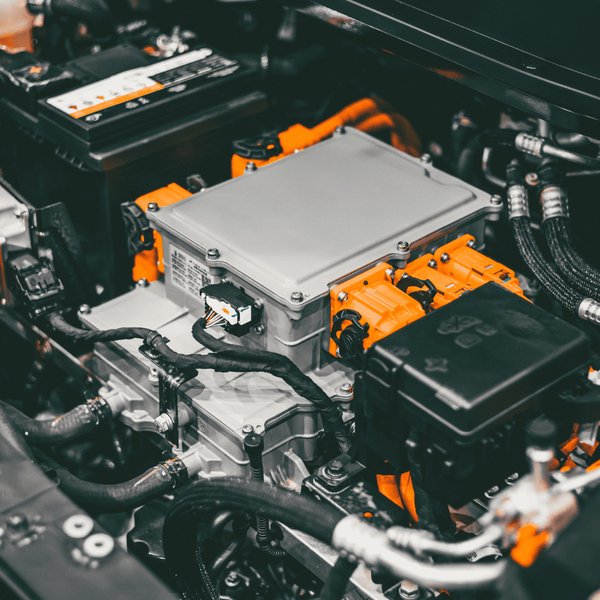
A technician performs a diagnostic check on an EV battery, highlighting the importance of thorough inspection.
Demystifying EV Battery Degradation: What 100,000 Miles Really Means
Electric vehicle batteries, like all rechargeable batteries, naturally experience a gradual loss of capacity over time and use. This process, known as degradation, leads to a slight reduction in overall driving range. However, modern EV batteries are remarkably resilient. Many reputable sources, including studies from Recurrent Auto, indicate that most contemporary EVs retain 85-90% of their original battery capacity even after 100,000 miles. This means you might experience a 10-15% reduction in driving range compared to when the vehicle was new. This level of degradation is normal and, for most owners, shouldn't significantly impact daily driving needs.
It's crucial to understand that battery degradation isn't always linear. Batteries often experience their most rapid capacity loss in the first year or two of ownership, after which the rate of degradation tends to stabilize. This means a five-year-old EV with 100,000 miles might show similar degradation to a five-year-old EV with only 30,000 miles, as "calendar aging" (degradation due to time) plays a significant role alongside "cycle aging" (degradation due to charging/discharging cycles).
The Factors Influencing Battery Longevity
Charging Habits and Their Impact
Frequent reliance on DC fast charging (or Level 3 charging) can accelerate battery degradation compared to slower Level 1 or Level 2 charging. While occasional fast charging is designed to be safe, consistent high-power charging, especially in warm climates, puts more stress on the battery cells. Ideally, batteries are maintained between a 20% and 80% state of charge for daily use to maximize their lifespan.
Climate Exposure and Thermal Management
Extreme temperatures, both hot and cold, can affect battery health. Prolonged exposure to very high heat can accelerate degradation, while very cold temperatures can temporarily reduce range and charging speed. Modern EVs are equipped with sophisticated thermal management systems (liquid cooling being most effective) to maintain optimal battery temperatures. Vehicles without active thermal management, such as older Nissan Leaf models, tend to exhibit faster degradation, particularly in hot climates.
Storage Conditions and Driving Patterns
Storing an EV for extended periods at very high (near 100%) or very low (near 0%) states of charge can also contribute to degradation. Smooth, consistent driving is generally better for battery health than aggressive acceleration and heavy regenerative braking, though the latter also helps recover energy.
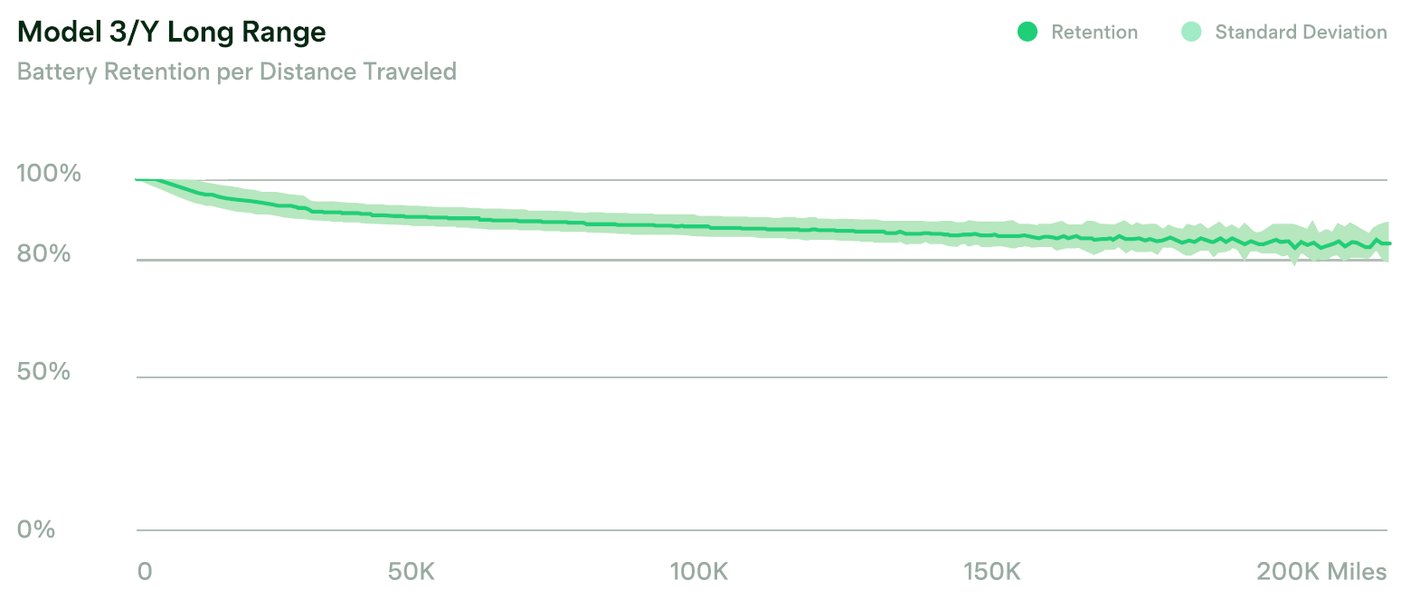
An example of battery degradation over mileage for certain Tesla models, showcasing the non-linear nature.
Your Ultimate Used EV Battery Health Check Guide for 2026
Before making an investment, a thorough inspection is paramount. This checklist combines pre-purchase research with hands-on assessment to give you the clearest picture of a used EV's battery health.
Step 1: Pre-Purchase Research & Documentation
Unveiling the Vehicle's Past
- VIN History Report (Carfax): Obtain a comprehensive Carfax report. Look for any records of accidents, especially those involving the undercarriage or battery pack, flood damage, or major structural repairs. Also, verify ownership history and maintenance records.
- Service Records: Request all available service records. These should detail routine maintenance, software updates, and any battery-related checks or repairs performed by authorized US dealerships. Consistent service history is a strong positive indicator.
- Original EPA Range: Research the original EPA-rated range for the specific year, make, and model you are considering. This serves as your baseline for comparison when assessing the current estimated range.
- Warranty Status: Verify the remaining battery and powertrain warranty. Most EVs come with an 8-year/100,000-mile or 8-year/120,000-mile battery warranty that often transfers to subsequent owners.
Step 2: Visual Inspection: More Than Meets the Eye
Physical Condition & Charging Infrastructure
- Exterior and Interior: Look for overall wear and tear. Uneven tire wear can indicate alignment issues, possibly related to battery weight. Check all electronics, infotainment systems, and driver-assist features for full functionality.
- Charging Port & Cables: Carefully inspect the charging port for any signs of damage, corrosion, bent pins, or loose components. A compromised charging port can indicate improper care or exposure to harsh weather. Ensure all original charging cables and adapters are present and in good condition.
- Coolant Levels: For EVs with liquid-cooled batteries, check the coolant reservoir(s) if accessible. The level should be stable; a low level could signal a leak in the thermal management system, which can be costly to repair.
- Underbody & Battery Pack: If possible, inspect the vehicle's undercarriage for any signs of impact damage, scrapes, or leaks around the battery enclosure. Even if the battery pack is largely encased, visible damage could indicate serious underlying issues.

A mechanic inspects the undercarriage of an electric vehicle, focusing on the battery pack for signs of damage or leaks.
Step 3: Digital Deep Dive: How to Inspect Used EV Battery 2026
Leveraging Onboard and External Diagnostics
- In-Car Display & Manufacturer Apps:
- Displayed Range: Fully charge the EV to its maximum (or as close as possible). Note the estimated range displayed on the dashboard. Compare this to the original EPA range. Significant discrepancies (beyond the expected degradation for mileage/age) should be investigated.
- Tesla Battery Health Check: For a used Tesla battery inspection checklist, utilize the Tesla app or in-car display for estimated range. Newer Tesla software versions (e.g., 2025.8.4 and beyond) offer a dedicated Battery Health Test within the service menu, which may require the vehicle to be connected to an AC charger for up to 24 hours to provide a detailed analysis of usable battery capacity.
- Nissan Leaf: Older Nissan Leaf models feature a "capacity bars" display on the dashboard (12 bars when new). Fewer bars indicate reduced capacity.
- State of Charge (SoC) Observation: During a test drive, observe how quickly the SoC drops relative to the miles driven. An abnormally rapid decrease could signal battery issues.
- OBD2 Scanners and Third-Party Tools:
For the most detailed assessment, investing in an OBD2 scanner and specialized apps is highly recommended. These tools allow you to access critical Battery Management System (BMS) data.
- Recommended OBD2 Tools:
- Veepeak OBDCheck BLE+ (Bluetooth compatible with most EV diagnostic apps)
- OBDLink MX+ (Advanced features for comprehensive diagnostics)
- BlueDriver Bluetooth Pro (User-friendly with excellent app support)
- EV-Specific Diagnostic Apps:
- LeafSpy Pro: The definitive tool for Nissan Leaf owners, providing exact State of Health (SOH) percentage, usable kWh, individual cell voltages, and charge cycle history.
- Car Scanner ELM OBD2: A versatile app that works with multiple EV brands, offering detailed battery metrics, High Voltage Battery State of Health (HVB SoH), cell voltages, and temperature data.
- Scan My Tesla / Teslafi: Third-party apps that provide deeper insights into Tesla battery data when used with an OBD2 adapter.
- Key Metrics to Monitor: Focus on the "State of Health" (SOH) percentage, which indicates remaining capacity. Also, look for consistent cell voltages (minimal variation, typically less than 0.1V difference) and temperatures. Significant discrepancies can point to failing cells or BMS issues.
- Recommended OBD2 Tools:
- Professional Battery Health Reports:
Consider obtaining an independent battery health report from specialized companies. These reports offer an objective evaluation.
- Recurrent: A AAA-recommended company that provides comprehensive battery history reports for many EV models by tracking and analyzing factors affecting battery health. Many dealerships in the US offer free Recurrent reports.
- DEKRA/Aviloo: Offer sophisticated, precise battery tests providing independent assessments of residual battery capacity.
Expert Recommendation:
For high-value purchases, request a professional diagnostic check from an EV-certified mechanic or a brand dealership. A dealer report, while potentially costing $150-$300, can provide an in-depth physical and diagnostic inspection, sometimes even a deeper report costing up to $2,000 for complex cases.
Step 4: Test Drive & Performance Evaluation
Real-World Assessment of Range and Drivability
- Monitor Energy Consumption: Drive a known route and pay attention to how quickly the State of Charge (SoC) drops in relation to the miles driven. Compare this to the expected efficiency for the model.
- Test Regenerative Braking: Ensure the regenerative braking system engages smoothly and effectively recovers energy.
- Evaluate Performance: Check for strong and consistent acceleration, ensuring the vehicle's performance meets expectations for its model. Listen for any unusual motor noises.

An EV charging, symbolizing the critical need to test charging capabilities during inspection.
Understanding State of Health (SOH) and Used Electric Car Battery Degradation Test Results
The State of Health (SOH) percentage is your most important metric when evaluating a used EV battery. It represents the current usable capacity of the battery compared to its original capacity when new. Here’s what different SOH percentages typically mean for a high-mileage EV:
- 90-100% SOH: Excellent. Minimal degradation, strong range, and charging performance.
- 85-89% SOH: Good. Normal wear for age/mileage. The range should still be sufficient for most daily needs.
- 80-84% SOH: Fair. Noticeable range reduction. The price should reflect this, and you should ensure the remaining range meets your requirements.
- 75-79% SOH: Significant capacity loss. This warrants a substantial discount or careful consideration, as the usable range will be noticeably affected.
- Below 75% SOH: Poor. This level of degradation indicates a significant loss of capacity, potentially approaching the manufacturer's warranty threshold (often 70%). This is a red flag, and battery replacement might be a future consideration.
Beyond SOH, look at cell balance (minimal voltage variation between individual cells indicates a healthy pack) and usable kWh remaining compared to the original specification. Consistent cell voltages and temperatures are signs of a healthy battery management system.
Average Battery Degradation at 100,000 Miles by Brand
Battery degradation varies significantly between manufacturers, models, battery chemistries (e.g., LFP vs. NMC), and how the vehicle was used and maintained. The following table provides a general overview of what to expect around 100,000 miles for popular US EV brands:
| EV Model (Example) | Cooling System | Typical SOH at 100k Miles (Estimated) | Expected Range Reduction | Notes for Buyers |
|---|---|---|---|---|
| Tesla Model 3/Y (NMC) | Liquid | 90-94% | 5-10% | Robust thermal management; often stabilizes after initial drop. |
| Tesla Model 3 (LFP) | Liquid | Potentially 95%+ | <5% | LFP batteries tolerate 100% charging better, less degradation. |
| Nissan Leaf (Pre-2018) | Air | 70-85% (or lower) | 15-30%+ | Lacked active thermal management, more degradation in hot climates. |
| Chevrolet Bolt EV | Liquid | 88-92% | 8-12% | Many older Bolts received new battery packs under recall. |
| Hyundai Ioniq/Kona EV | Liquid | 90-95% | 5-10% | Effective thermal management systems contribute to good health. |
| Ford Mustang Mach-E | Liquid | 88-92% | 8-12% | Newer model; data still emerging, but expected to perform well. |
| BMW i3 | Air/Liquid (year-dependent) | 85-90% | 10-15% | Smaller battery, so percentage loss impacts range more significantly. |
Important Guidance:
These figures are estimates. Always verify the battery health of the specific vehicle you are considering with a dedicated battery report and physical inspection.
Remaining Warranty Coverage: Your Essential Safety Net for Used EVs
One of the most critical considerations when evaluating whether is high mileage EV worth buying is the remaining battery warranty. Most EV manufacturers offer extensive warranties on their high-voltage batteries and drive units, which typically transfer to subsequent owners.
Understanding Typical EV Battery Warranties in the US
- Coverage Period: Most common warranties are 8 years or 100,000 miles (whichever comes first). Some manufacturers offer longer terms, such as 8 years/120,000 miles or even 10 years/150,000 miles, depending on the model and state regulations (e.g., California emissions warranty).
- Capacity Retention: Warranties usually guarantee a minimum State of Health (SOH) percentage, often 70%. If the battery's capacity drops below this threshold within the warranty period, the manufacturer is obligated to repair or replace the battery.
- Transferability: The vast majority of EV battery warranties are fully transferable to new owners, often at no cost. Always confirm this with a brand dealership using the Vehicle Identification Number (VIN).
How to Verify Remaining Warranty
- Contact Dealership: Provide the VIN to any authorized dealership of the brand. They can typically access the vehicle's service history and remaining warranty status.
- Online Tools: Some manufacturers offer online tools on their websites where you can input a VIN to check warranty details.
- Vehicle Documentation: Review original purchase and warranty documents if they are available from the seller.
Pro-Tip:
A documented dealer battery health check can be vital for future warranty claims and boosts resale confidence. Always keep your inspection reports and OBD2 battery report PDFs.
Negotiating Price Based on Battery Health Findings
The information gathered during your Used EV Battery Inspection is your strongest leverage during price negotiation. Kelley Blue Book (KBB) and similar valuation tools are increasingly incorporating battery health into their used EV valuations, providing an industry benchmark.
Factors to Leverage for Price Reduction
- Low State of Health (SOH): If the SOH is significantly below 90% (e.g., 80-84%) and not covered by warranty for replacement, this justifies a price reduction. Each percentage point of capacity loss below the optimal could warrant a 1-2% price adjustment.
- Out-of-Warranty: A vehicle with no remaining battery warranty carries a higher risk. This should translate to a lower asking price.
- Charging Limitations: If the vehicle exhibits significantly slower-than-spec DC fast charging rates or frequent throttling due to thermal issues, this impacts usability and value.
- Noticeable Range Reduction: A significant difference between the current real-world range and the original EPA estimate (beyond normal degradation expectations) should be accounted for in the price.
Effective Negotiation Strategies
- Present Concrete Evidence: Use your professional battery health report (from an OBD2 scan, dealer diagnostic, or third-party service) to support your claims.
- Compare to Market Value: Research prices for similar models with comparable mileage but better battery health on platforms like KBB.
- Estimate Replacement Costs: While battery replacement is less common than feared, knowing the potential cost ($5,000 - $20,000, depending on the model) can be a powerful negotiation tool if the degradation is severe and out of warranty.
- Request Remedies: Instead of just a price drop, you might negotiate for the seller to perform a BMS recalibration, software updates, or a coolant system diagnostic.
Who Should Consider a High-Mileage EV? Balancing Risks and Benefits
The decision to purchase a high-mileage EV depends largely on your specific needs, budget, and risk tolerance.
Ideal Candidates for a High-Mileage EV
- Budget-Conscious Buyers: High-mileage EVs offer significant savings on the initial purchase price, providing an affordable entry point into electric ownership.
- Second Car Needs / Short Commutes: If the vehicle will primarily be used for local driving or as a second family car, a slightly reduced range due to degradation may not be a major issue.
- Experienced EV Owners: Those familiar with EV ownership, charging infrastructure, and the nuances of battery management may be more comfortable with a high-mileage vehicle.
- Drivers with Home Charging: Consistent access to home charging mitigates the impact of range degradation, as you can "top off" the battery overnight.
Who Should Exercise Caution
- Long-Distance Commuters: If you regularly need maximum range for long commutes or frequent road trips, significant battery degradation could be a daily frustration.
- First-Time EV Owners: Reduced range and potential charging limitations might create a less-than-ideal first EV experience.
- Those Without Reliable Home Charging: Dependence on public charging can make range reduction more impactful and inconvenient.
Frequently Asked Questions (FAQ)
Conclusion: Drive with Confidence, Electrically
Purchasing a used electric vehicle with 100,000 miles can be an exceptionally smart and economical decision for the right buyer. While the battery will have experienced some level of degradation, modern EVs are engineered to maintain sufficient capacity for daily driving even at higher mileages. The key to a successful purchase lies in conducting a thorough Used EV Battery Inspection and understanding precisely what level of range reduction you can accept.
By diligently following the pre-purchase checklist, utilizing diagnostic tools, carefully assessing warranty status, and understanding the nuances of battery health, you can confidently acquire a high-mileage EV that offers years of reliable, low-cost transportation. Remember, an informed buyer is a powerful negotiator, and with the right data, you can secure an excellent deal on your next electric car.
