

Understanding the dangers of high-voltage electrical leaks in electric vehicles and how to respond safely.
Key Insights into the P0AA6 Isolation Fault
- Immediate Danger: A P0AA6 code signifies a critical high-voltage electrical leak, posing a severe risk of electric shock, fire, and sudden vehicle failure. Driving with this fault is highly unsafe.
- Common Culprits: The most frequent causes include damaged high-voltage cables, water ingress into critical components, and internal battery pack insulation failures.
- Professional Intervention Required: Due to the inherent dangers of high-voltage systems, diagnosis and repair of a P0AA6 fault must only be performed by certified EV technicians using specialized tools and safety equipment.
The P0AA6 code on your electric or hybrid vehicle is a grave warning: it indicates a "Hybrid/EV Battery Voltage System Isolation Fault." This means that the crucial electrical separation between your vehicle's high-voltage (HV) system and its grounded chassis has been compromised, creating a dangerous pathway for electricity where none should exist. This fault demands immediate attention from certified professionals to ensure safety and prevent further damage.
Understanding the P0AA6 Code Meaning
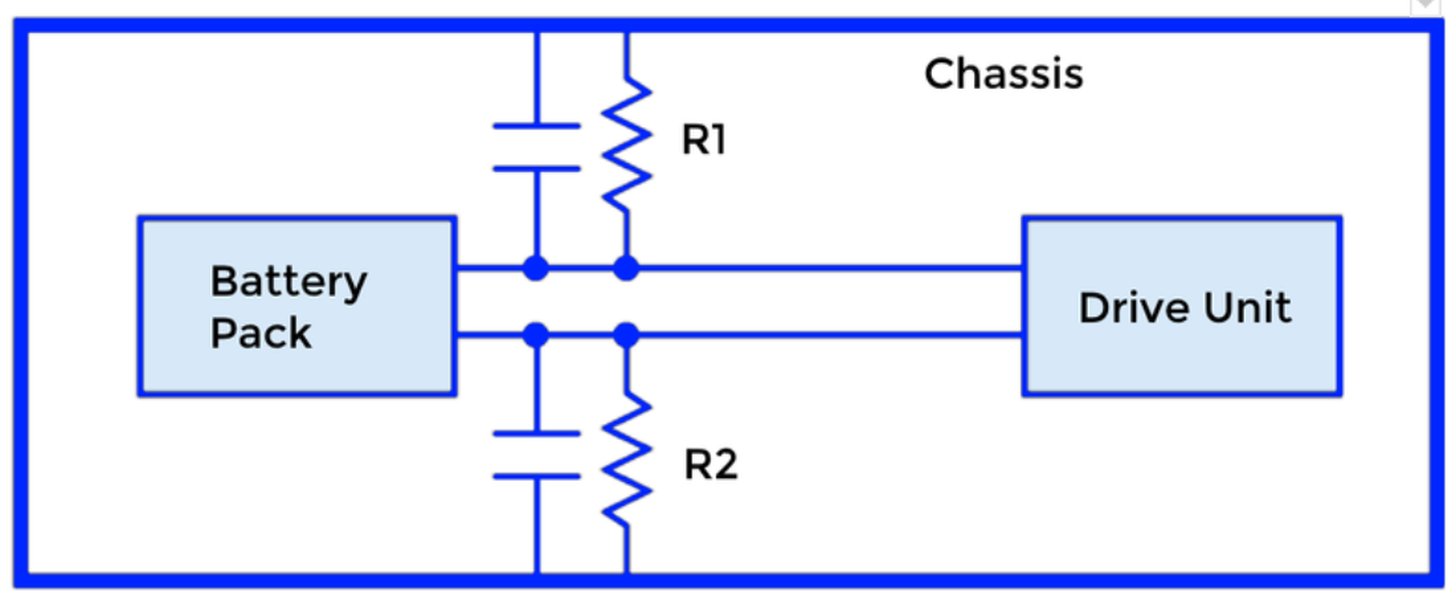
The P0AA6 diagnostic trouble code (DTC) is triggered when your EV's onboard computer, typically the Battery Management System (BMS) or Powertrain Control Module (PCM), detects a breach in the electrical isolation of the high-voltage system. In simpler terms, electricity from the HV battery or other components is "leaking" to unintended areas, such as the vehicle's metal frame (chassis ground) or the low-voltage 12-volt system. The high-voltage system is specifically designed to be "floating" or "unearthed," meaning it's intentionally separated from the vehicle's chassis to act as a crucial safety barrier. This design prevents a single point of failure from creating a dangerous electrical path to ground, protecting occupants and service personnel from electrocution.
When the internal isolation monitoring system detects that the insulation resistance between the high-voltage system and the vehicle chassis falls below a safe threshold—often around 500 ohms per volt (as per NHTSA safety guidelines) or a specific manufacturer threshold (e.g., typically below 380 kOhms for some Nissan Leaf models)—the P0AA6 fault code is set. This triggers various warning lights on your dashboard, and the vehicle will often enter a "limp mode" with reduced power, or even prevent starting altogether, to ensure safety. This strict requirement is a cornerstone of EV safety standards and regulations in the US, designed to protect everyone in and around the vehicle.
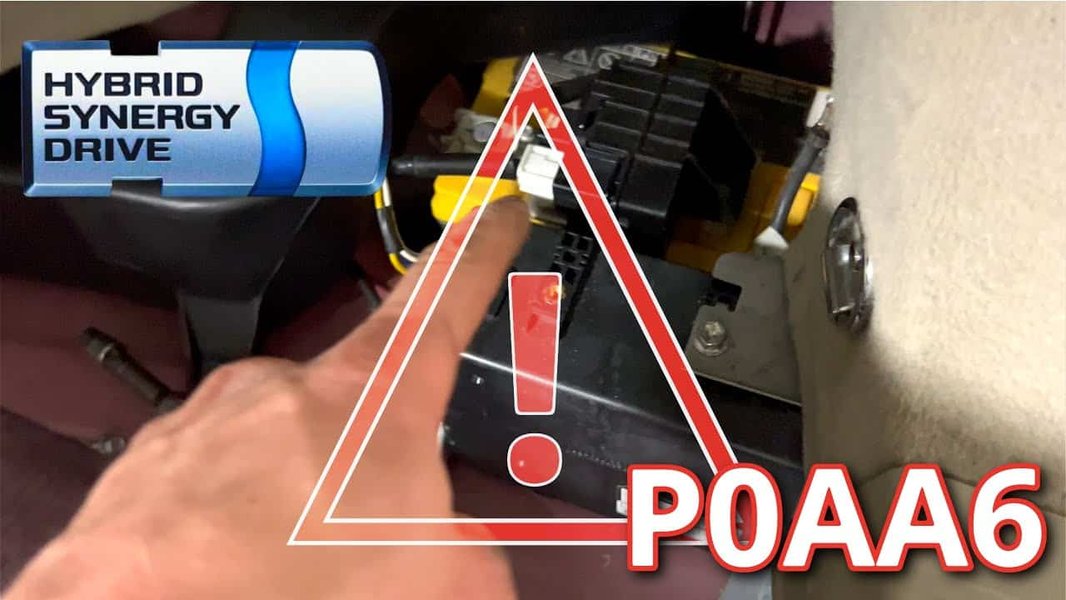
A typical dashboard display indicating a P0AA6 high-voltage isolation fault.
The Critical Role of High Voltage Isolation in EV Safety
Electric vehicles operate with battery packs that can exceed 400 volts, with some newer models reaching 800 volts. Proper electrical insulation and isolation are fundamental safety features in EV design. This isolation prevents electrocution by ensuring that if a person accidentally touches a high-voltage component, there isn't a direct path for current to flow through their body to the ground. An isolation fault bypasses this vital safety barrier, creating a hazardous situation where touching the vehicle's chassis or other metal components could result in a severe, potentially fatal, electrical shock. The integrity of this isolation is continuously monitored by the vehicle's systems to promptly detect any breach.
P0AA6 Symptoms and Causes: What to Look For
Recognizing the symptoms of a P0AA6 code is vital for EV owners. If you experience any of these, discontinue driving immediately and seek professional help.
Common P0AA6 Symptoms You May Notice:
- Illuminated Warning Lights: The "Check Engine" light, "Service Hybrid System" warning, a general EV system warning, or a "Yellow Wrench" icon (common in Ford models) will likely appear on your dashboard. Some vehicles may also display a "Red Triangle of Death" or "Stop Safely Now" message.
- Reduced Power or Performance: The vehicle may enter a "limp home" mode, severely limiting power output and speed to protect components and occupants.
- Inability to Start or Drive: In severe cases, the vehicle may not start at all, or it may stop operating shortly after starting. Owners of vehicles like the Nissan Leaf have reported the car preventing them from driving or charging.
- Charging Failures: The charging system may be disabled as a safety measure, or charging attempts may abort unexpectedly.
- Unusual Noises or Smells: Though less common, severe electrical faults can sometimes be accompanied by burning smells, buzzing, or arcing sounds.
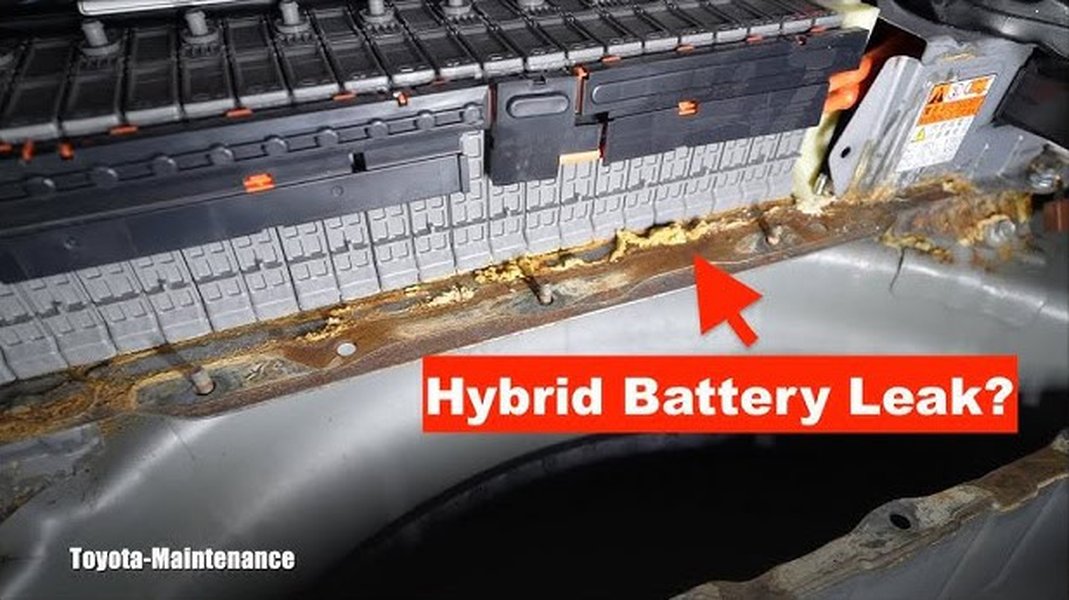
Signs of internal battery degradation can often manifest as a P0AA6 fault.
Most Common Causes of P0AA6 Isolation Fault:
Understanding the potential sources of an EV isolation fault is key for accurate diagnosis. Causes range from environmental factors to component failures, typically ranked from most to least likely based on US service center reports.
-
Damaged High-Voltage (HV) Cables and Connectors:
Wear and tear, physical damage (e.g., from road debris, accidents, or even rodent damage), or improper installation can compromise the thick orange insulation of HV cables. This exposes conductive material to the vehicle's chassis. Tesla and Nissan Leaf owners have reported issues related to physical damage on HV cables and connectors. Corrosion in terminals or compromised seals can also lead to electrical leakage.
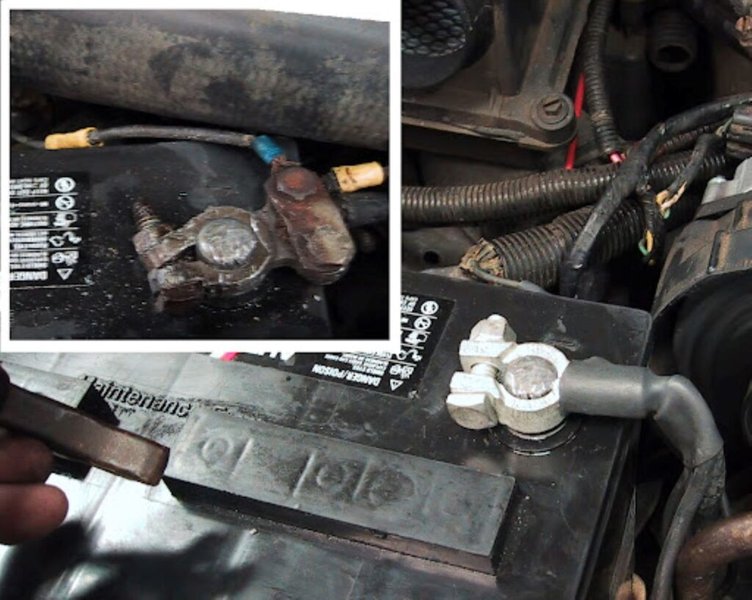
Improperly installed or damaged high-voltage cable connectors can lead to isolation faults. -
Water Ingress:
Moisture or excessive humidity can infiltrate high-voltage components, especially the battery pack, inverters, or electric motors. Since water is conductive, it can create a path for electricity to leak to ground. This is a common culprit in many P0AA6 cases, particularly in specific models like the Volkswagen Golf GTE or Audi E-tron, and can affect any EV if seals are compromised due to factors like heavy rain, car washes, or even driving through deep puddles.
-
Internal Battery Pack Insulation Failure:
Within the high-voltage battery pack, individual cells or modules are rigorously insulated from each other and the pack casing. If this internal insulation degrades, perhaps due to age, manufacturing defects, or physical damage (e.g., electrolyte leaks from a cell), the HV current can leak to the pack's metal casing, which is connected to the chassis. This is a frequently cited cause for vehicles like the Toyota Prius and Nissan Leaf, where battery degradation is common.
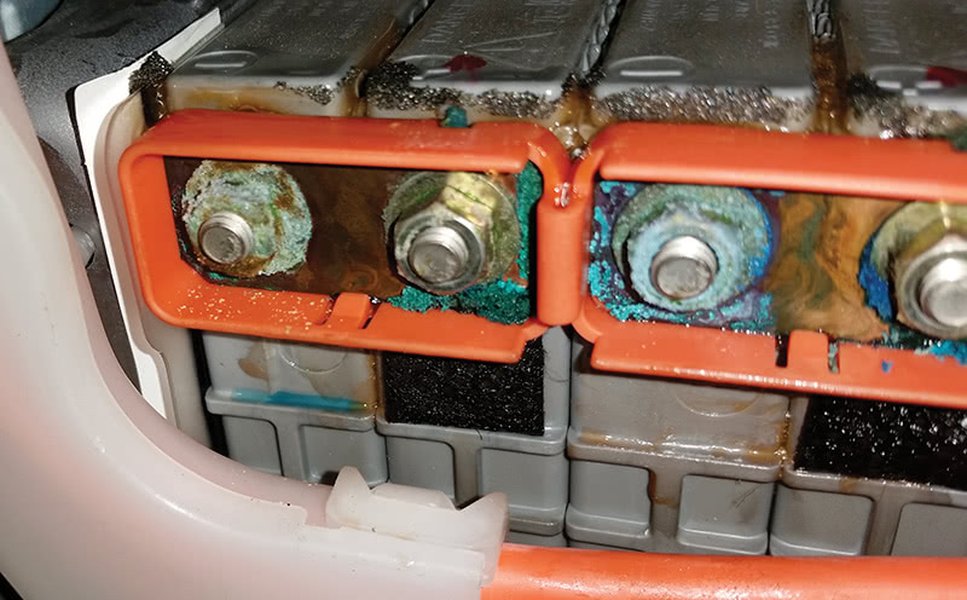
Electrolyte leakage from battery cells can severely compromise high-voltage isolation. -
Faulty High-Voltage Components:
Other high-voltage components, such as the electric motor, inverter, DC-DC converter, or even the high-voltage A/C compressor, can develop internal insulation faults. If the windings or internal circuitry of these components short to their own casing, it can lead to a P0AA6 code. This is particularly noted in some Toyota Prius models where a bad inverter can trigger the code, or in Hyundai Ioniqs where a faulty PTC heater or 3-phase motor insulation was identified.
-
Battery Management System (BMS) or Isolation Monitoring Device (IMD) Malfunction:
While less common, the very system designed to detect isolation faults can sometimes malfunction itself, leading to false P0AA6 readings. However, this is usually ruled out after other potential causes are thoroughly investigated by professionals.
Is It Safe to Drive with a P0AA6 Code? Never Drive with This Code Warning!
NHTSA safety regulations and common US high voltage safety standards emphasize immediate action for high-voltage faults. Ignoring this warning could not only lead to serious injury or death but may also void your vehicle's warranty or have legal repercussions if an incident occurs.
EV Isolation Fault Diagnosis: A Safety-First Guide for Professionals
Diagnosing a P0AA6 code requires specialized knowledge, tools, and strict adherence to safety protocols. This section outlines the professional diagnostic process; do not attempt these steps yourself unless you are a certified, high-voltage trained technician with appropriate safety gear.
Critical Pre-Diagnosis Safety Steps:
-
Vehicle Disablement:
The first and most crucial step is to safely disable the high-voltage system. This involves locating and removing the HV service disconnect, often a bright orange or yellow pull plug. For example, in a Tesla, specific procedures are followed to ensure external isolation. -
Verify Zero Voltage:
After disabling the HV system, a qualified technician uses a CAT III or CAT IV rated multimeter with insulated probes to confirm that there is no residual high voltage present across relevant points in the HV system, such as at the service disconnect terminals or inverter terminals. This step is paramount for preventing electric shock. -
Personal Protective Equipment (PPE):
Technicians must wear appropriate PPE, including Class 0 (1000V rated) HV gloves with leather protectors, safety glasses/face shield, and other insulating gear. The work area should be dry, level, and marked with warning signs and barrier tape.
A certified technician safely working on an EV's high-voltage system with appropriate PPE.
Detailed Diagnostic Steps (Performed by Certified Technicians):
-
Scan for Codes and Data:
Using a diagnostic scan tool (e.g., Tesla Diagnostic System (TDS) for Teslas, Leaf Spy for Nissan Leaf, or manufacturer-specific tools), the technician will read the P0AA6 code and any associated sub-codes or pending codes. They will also monitor real-time data parameters related to isolation resistance. This initial scan helps identify related codes like P0DE7, P0AA7, and P0AA8, which can narrow down the fault location. -
Visual Inspection for Physical Damage and Moisture:
A thorough visual inspection is performed on all accessible high-voltage components, including orange HV cables, connectors, the battery pack casing, inverter, motor, and AC compressor. Technicians look for signs of physical damage, chafed wiring, corrosion, moisture, or leaks (e.g., coolant or battery electrolyte). -
Insulation Resistance Testing:
This is the definitive test for an insulation resistance fault. A specialized insulation resistance tester (megohmmeter or "megger") is used. This device applies a high DC voltage (up to 1000V or more, depending on the system) and measures the resistance between the high-voltage circuits (positive and negative) and the chassis ground. The readings are compared against manufacturer specifications (e.g., 500 ohms/volt or minimum thresholds like 380 kOhms for Nissan Leaf). This test helps pinpoint the general area of the fault.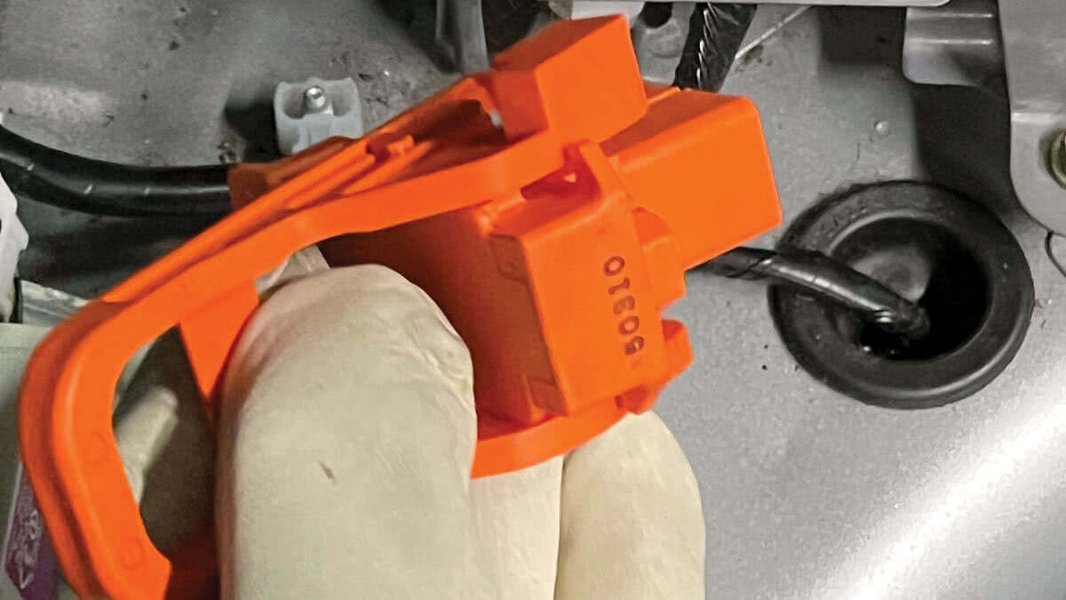
Using an insulation resistance tester is crucial for pinpointing the exact location of the P0AA6 fault. -
Component Isolation Testing (Divide and Conquer):
If the initial insulation resistance test indicates a fault, technicians will systematically disconnect sections of the HV system (e.g., the HV battery, inverter, motor, AC compressor, on-board charger) one at a time and re-test the remaining circuits. If isolation resistance returns to normal after disconnecting a specific component, that component or its associated wiring is highly suspect. This process of elimination is critical for accurate diagnosis. -
Harness Inspection:
Careful tracing of orange HV cables along the underbody and engine bay is performed to check for chafe points, crushed conduits, and any contact with ground. Damaged sections and seals are then repaired or replaced. -
Reassembly and Verification:
Once the fault is identified and repaired, all HVIL (high-voltage interlock) loops are restored, DTCs are cleared, OEM isolation tests are performed, and normal ready/charge behavior is confirmed.
How to Fix P0AA6 Code Safely and Repair Cost Estimates
The core principle here is that most P0AA6 fixes require expert intervention. Due to the high voltage risks, DIY repairs are strongly discouraged for this code. The repair typically involves replacing the failed item and restoring proper insulation resistance.
Typical Repair Scenarios and Cost Estimates (US Market):
Repair costs for a P0AA6 can vary significantly depending on the root cause, the specific EV model, and labor rates in your region of the US. These are general estimates.
| Repair Type | Description | Estimated Cost (USD) | Common Vehicles Affected |
|---|---|---|---|
| Diagnosis Only | Comprehensive HV system inspection and insulation resistance testing to pinpoint the fault. | $150 - $600 | All EVs |
| HV Cable/Connector Repair | Repairing or replacing damaged high-voltage wiring, bus bars, or connectors. | $500 - $2,000 | Tesla, Nissan Leaf, Chevy Bolt |
| Moisture Ingress Remediation | Locating and addressing water leaks, drying out components, and potentially replacing corroded parts. | $300 - $1,500+ | Ford Focus Electric, VW Golf GTE |
| Faulty HV Component Replacement | Replacing components like the AC compressor, inverter, or DC-DC converter. | $1,000 - $5,000+ (component cost varies greatly) | Toyota Prius (inverter), Hyundai Ioniq (PTC heater, motor) |
| Battery Pack Internal Repair/Replacement | Repairing individual modules, addressing electrolyte leaks, or full battery pack replacement. This is the most expensive repair. | $3,000 - $20,000+ (depending on pack size/type and vehicle) | Nissan Leaf, Toyota Prius, Chevy Volt |
Vehicles Most Affected by P0AA6 in the US Market:
Any EV or hybrid can set a P0AA6 code, but some models in the US market tend to report it more frequently:
- Nissan Leaf: Often linked to battery pack insulation degradation, especially in older models. Degradation of the battery itself can lead to internal shorts and isolation breaches.
- Toyota Prius/Prius Prime: Can be caused by internal battery leaks (electrolyte) from aging cells or, in some cases, a faulty inverter.
- Chevrolet Bolt: Degradation of battery modules, wiring issues, or problems with the cooling system for the hybrid battery have been reported as causes.
- Ford Mustang Mach-E / Focus Electric: Internal coolant leaks leading to battery insulation faults or issues with HV cabling are sometimes reported.
- Hyundai Ioniq: Issues with the PTC heater or 3-phase motor insulation have been identified as causes.
- Tesla: While the code P0AA6 is not always displayed directly to the user (they often present specific "external isolation" alerts like BMS_a035, BMS_f151), the underlying issue of high-voltage isolation fault is the same. Moisture, physical damage to HV cables, bus bars, and connectors are common culprits.
Related Diagnostic Trouble Codes to Check
When a P0AA6 code appears, it often comes with other related codes that can help a technician pinpoint the exact issue. Always check for these in conjunction with P0AA6:
- P0DE7: Often indicates a hybrid battery pack deterioration or a specific component-related isolation/ground fault.
- P0AA7: Relates to the hybrid battery voltage isolation sensor circuit, suggesting a problem with the sensor itself or its wiring.
- P0AA8: Can indicate an additional isolation degradation, often related to the isolation monitoring device or specific parts of the HV system.
- P1A0A: Though not a direct isolation fault, this code points to hybrid battery coolant system performance issues, which can indirectly lead to isolation faults if coolant leaks into HV components.
OEM sub-codes or "INF" codes provide even more granular detail, helping to identify the precise location of the leak (e.g., battery, inverter, A/C compressor).
Frequently Asked Questions About P0AA6 Isolation Fault
The P0AA6 code means your EV has detected an electrical leak between its high-voltage system (battery, motor, inverter) and the vehicle's chassis or low-voltage system. This breach in isolation is a critical safety concern, as it indicates a potential pathway for dangerous electrical current.
No, it is absolutely not safe to drive with a P0AA6 code. This fault indicates a serious electrical hazard, posing a significant risk of electric shock, which can be fatal. You should stop driving immediately and arrange for professional towing to a certified EV repair facility.
Common causes include damaged high-voltage cables or connectors, moisture ingress into HV components (like the battery pack or inverter), internal insulation breakdown within the battery pack, or a fault in other HV components such as the electric motor or AC compressor. Degradation over time can also contribute to these issues.
Certified technicians follow strict safety protocols, starting with disabling the HV system. They use specialized scan tools to read codes and monitor isolation parameters, conduct thorough visual inspections for damage or moisture, and perform insulation resistance tests using a megohmmeter to pinpoint the exact location of the electrical leak.
No. Due to the extremely dangerous high voltages involved, attempting to diagnose or repair a P0AA6 code yourself without specialized training, equipment, and personal protective gear is highly dangerous and can lead to severe injury or death. Always seek assistance from a certified EV technician.
The cost varies widely, typically ranging from a few hundred dollars for minor cable repairs up to several thousand for component replacements like inverters, and potentially over $10,000 for internal battery pack repairs or replacements. Diagnosis itself can cost $150-$600. Warranty coverage for HV components can significantly impact out-of-pocket expenses.
Conclusion
The P0AA6 isolation fault code represents one of the most serious warnings your electric vehicle can display. While the repair process can be complex and potentially costly, addressing this issue promptly and professionally is absolutely essential for your safety, the safety of others, and your vehicle's longevity. Always consult with certified EV technicians who have the proper training, equipment, and expertise to handle high-voltage systems safely and effectively. Prioritizing safety by understanding and responding correctly to this critical fault ensures that you remain protected on the road.
